Benefits of Becoming an RN in California
Basic Overview
Becoming a Registered Nurse (RN) in California offers opportunities to work directly with patients, pursue diverse healthcare career paths, and join one of the state’s largest healthcare professions. California Registered Nurses reported a statewide median annual wage of approximately $144,206, or about $69.33 per hour.¹ Employment is projected to grow 12.9% between 2022 and 2032.¹

Why Become a Registered Nurse?
If you are exploring healthcare careers, becoming a Registered Nurse (RN) is one of the most recognized and versatile pathways available.
Registered Nurses play a vital role in patient care, healthcare coordination, education, and advocacy. California continues to employ one of the largest nursing workforces in the country, creating opportunities across a variety of healthcare settings.
Understanding the benefits of becoming an RN in California can help you determine whether this career aligns with your interests, goals, and preferred work environment.
What Is a Registered Nurse?
A Registered Nurse (RN) is a licensed healthcare professional who provides patient care, coordinates treatment plans, educates patients and families, and collaborates with healthcare teams.¹
Registered Nurses often:
- Assess patient conditions
- Develop nursing care plans
- Administer medications and treatments
- Coordinate patient care
- Educate patients and families
- Communicate with healthcare teams
Because of their broad responsibilities, Registered Nurses play an important role across many areas of healthcare.
What Are the Benefits of Becoming an RN?
Students pursue Registered Nursing for many different reasons. However, several benefits consistently attract people to the profession.
Direct Patient Impact
Registered Nurses work directly with patients throughout their healthcare journey. Whether they are providing care, offering education, coordinating treatment plans, or supporting recovery, nursing provides opportunities to make a meaningful impact on individuals and families.
Diverse Career Opportunities
Registered Nurses work in a wide variety of healthcare settings.
Examples include:
- Hospitals
- Outpatient clinics
- Community health organizations
- Schools
- Home healthcare settings
- Skilled nursing facilities
As a result, you can explore different specialties and healthcare environments throughout your career.
Opportunities for Professional Growth
Nursing offers multiple educational and professional pathways. For example, some Registered Nurses pursue specialty certifications or move into areas such as leadership, healthcare administration, or nursing education. Others continue their education through graduate-level nursing programs, such as a Master of Science in Nursing (MSN), which can support advanced practice, education, leadership, and other specialized nursing roles. Consequently, many nurses continue expanding their knowledge, skills, and professional responsibilities throughout their careers.
What Is the Job Outlook for Registered Nurses in California?
According to the California Employment Development Department (EDD), Registered Nurses continue to experience strong demand across California.¹ Employment for Registered Nurses is projected to grow 12.9% between 2022 and 2032.¹ As healthcare systems continue to evolve and patient needs increase, Registered Nurses remain essential members of healthcare teams.
What Is the Salary Outlook for Registered Nurses in California?
According to the California Employment Development Department (EDD), Registered Nurses reported a statewide median annual wage of approximately $144,206, or about $69.33 per hour.¹
Compensation varies based on factors such as:
- Geographic location
- Employer type
- Experience level
- Specialty area
- Work setting
Salary information should be reviewed alongside educational requirements, responsibilities, and career interests when evaluating healthcare careers.
What Degree Do You Need to Become an RN?
To become a Registered Nurse, you generally complete one of two educational pathways:
Associate Degree in Nursing (ADN)
An Associate Degree in Nursing prepares students for Registered Nurse licensure requirements and entry-level nursing practice.
Some students choose an ADN pathway because it may provide a shorter educational timeline than a bachelor’s degree program. In addition, ADN graduates can pursue Registered Nurse licensure requirements, including the NCLEX-RN examination and applicable state requirements, and begin working in nursing roles while evaluating future educational goals.
After gaining experience, some Registered Nurses choose to continue their education through RN-to-BSN completion programs.
Bachelor of Science in Nursing (BSN)
A Bachelor of Science in Nursing includes additional coursework in areas such as:
- Leadership
- Community and public health nursing
- Research and evidence-based practice
- Healthcare systems and management
Many students choose a BSN pathway because it provides comprehensive nursing education and can support future educational and professional opportunities. Furthermore, some healthcare employers prefer or require a BSN for certain nursing positions, leadership roles, and advancement opportunities.²
After completing an approved nursing program, graduates pursue Registered Nurse licensure requirements, including the NCLEX-RN examination and applicable state requirements.
The right educational pathway depends on your goals, preferred timeline, professional interests, and long-term career objectives.
Exploring Nursing Education at Stanbridge University
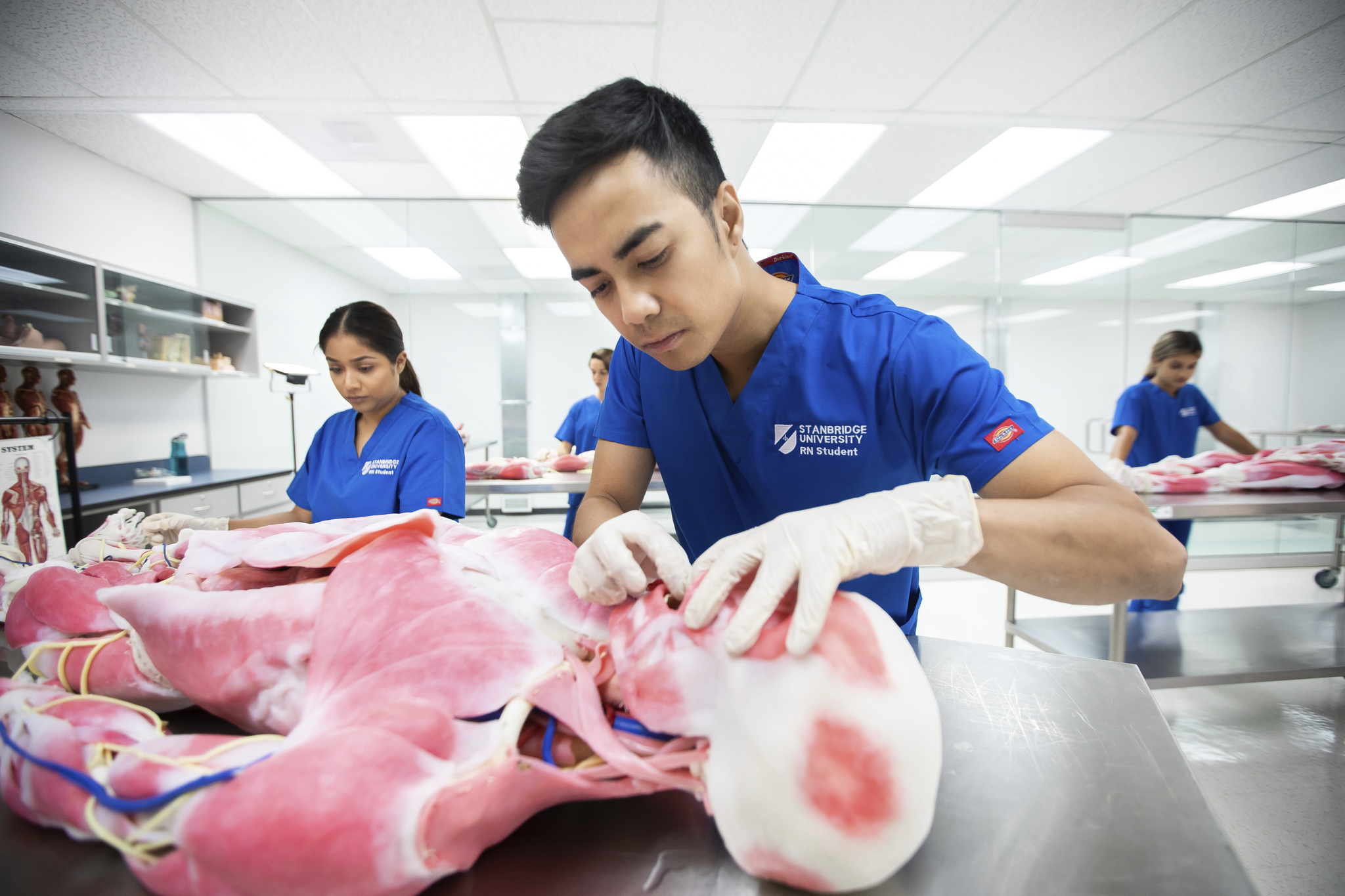
If you are interested in becoming a Registered Nurse, you can explore the Bachelor of Science in Nursing (BSN) program at Stanbridge University.
The Stanbridge University BSN program prepares students for Registered Nurse career pathways through:
- Nursing coursework
- Clinical education experiences
- Simulation-based learning
- Hands-on training opportunities
The BSN program is designed to be completed in approximately 36–37 months.³ 4
The BSN program is offered at Stanbridge University’s Orange County, Los Angeles, Riverside, and San Diego campuses. In addition, Stanbridge University was ranked #1 Best College for Nursing in California for 2026.5

Is Becoming an RN Right for You?
Becoming a Registered Nurse may be a good fit if you:
- Enjoy helping others
- Are interested in healthcare and science
- Value patient interaction
- Want a career with diverse practice settings
- Enjoy collaboration and problem-solving
Understanding nursing responsibilities, educational pathways, and workforce trends can help you make an informed decision about your future.
Frequently Asked Questions
Benefits of becoming an RN in California include direct patient interaction, diverse career opportunities, professional growth pathways, and strong demand across healthcare settings.¹
Registered Nurses assess patients, coordinate care, administer treatments, educate patients and families, and collaborate with healthcare teams.¹
You generally complete an Associate Degree in Nursing (ADN) or a Bachelor of Science in Nursing (BSN) before pursuing Registered Nurse licensure requirements.
According to the California Employment Development Department, Registered Nurses reported a statewide mean annual wage of approximately $144,206, or about $69.33 per hour.¹
Employment for Registered Nurses is projected to grow 12.9% between 2022 and 2032.¹
You can explore the Bachelor of Science in Nursing (BSN) program at Stanbridge University to learn more about nursing education pathways.
Footnotes
¹ California Employment Development Department (EDD) Registered Nurses Occupational Profile
https://labormarketinfo.edd.ca.gov/cgi/databrowsing/occExplorerQSDetails.asp?searchCriteria=Nursing&careerID=&menuChoice=&geogArea=0601000000&soccode=291141&search=Explore+Occupation
² American Association of Colleges of Nursing (AACN)
https://www.aacnnursing.org/
³ Stanbridge University Bachelor of Science in Nursing Program Information
https://www.stanbridge.edu/program/bsn
4Program duration is subject to change. Completion times vary depending on cohort schedules and individual circumstances that may impact progression. Program schedules are also subject to change.
5Source: Niche.com, 2026 Best Colleges for Nursing in California. https://www.niche.com/colleges/search/best-colleges-for-nursing/s/california/.