Skills Labs Versus Simulation Labs in Healthcare Education: What’s the Difference?
Skills labs and simulation labs both give healthcare students opportunities to practice what they learn in class, but they serve different purposes. A skills lab typically focuses on learning and repeating specific clinical or technical skills in a structured setting. A simulation lab brings several skills together through realistic patient-care scenarios that may require assessment, communication, teamwork, clinical reasoning, and decision-making. Many healthcare programs use both approaches to help students build skills before and alongside supervised clinical education or fieldwork.¹
What is a Skills Lab in Healthcare Education?
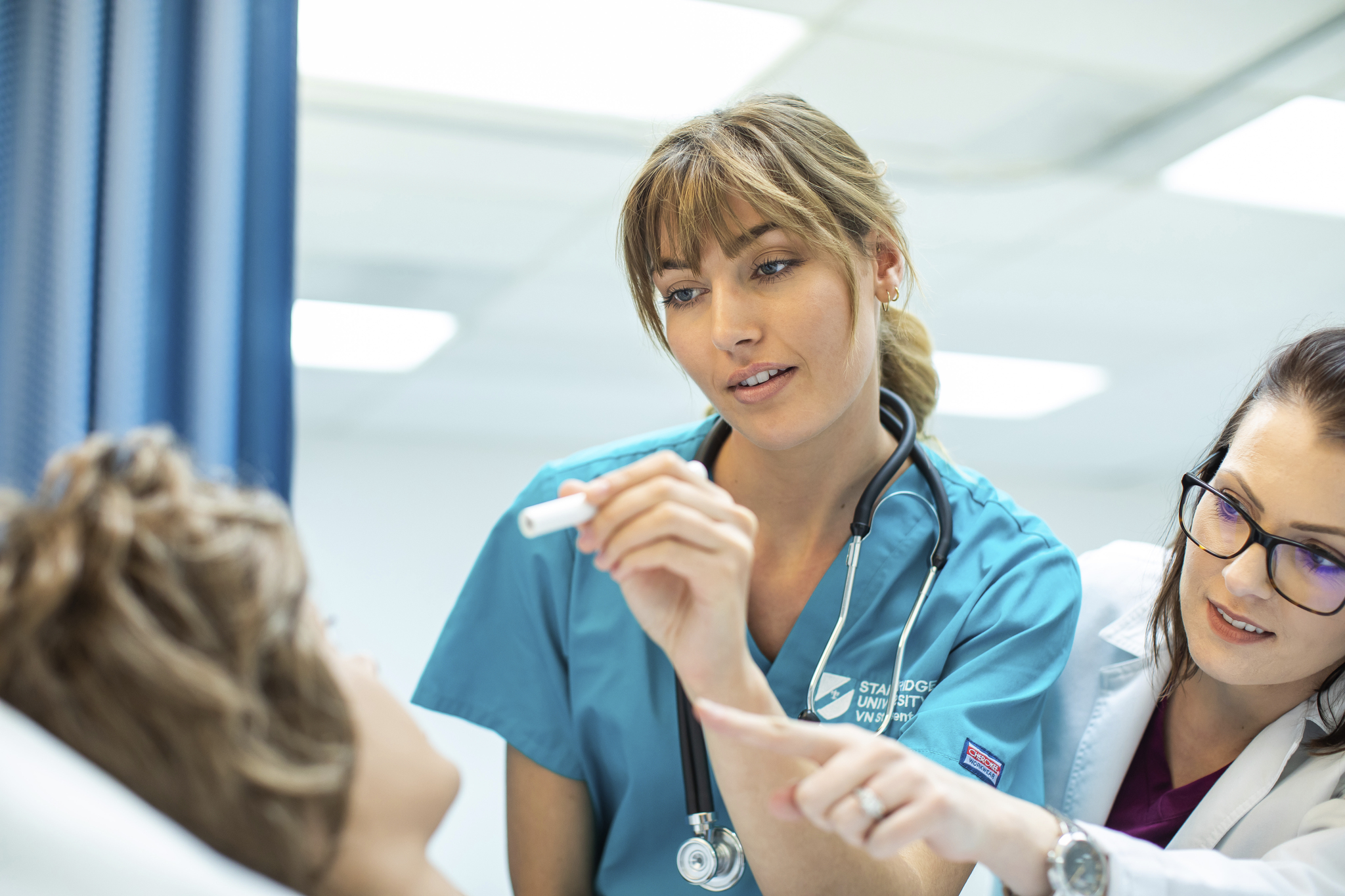
A skills lab is a structured learning environment where you can learn and practice specific healthcare techniques. Rather than moving immediately from a classroom lecture to patient care, you have opportunities to observe a technique, practice it under faculty guidance, receive feedback, and repeat it.
Depending on your healthcare program, skills lab activities may involve:
- Patient assessment
- Measuring vital signs
- Patient positioning and transfers
- Medication administration concepts
- Mobility techniques
- Therapeutic activities
- Documentation
- Use of healthcare equipment
The exact activities depend on your field of study and program level. For example, nursing students may practice medication-related skills. Meanwhile, physical therapist assistant students may practice mobility and rehabilitation techniques, while occupational therapy students may work with adaptive equipment or therapeutic activities. Although the skills differ, the purpose is the same: practicing specific techniques in a structured educational setting.
What is a Simulation Lab?
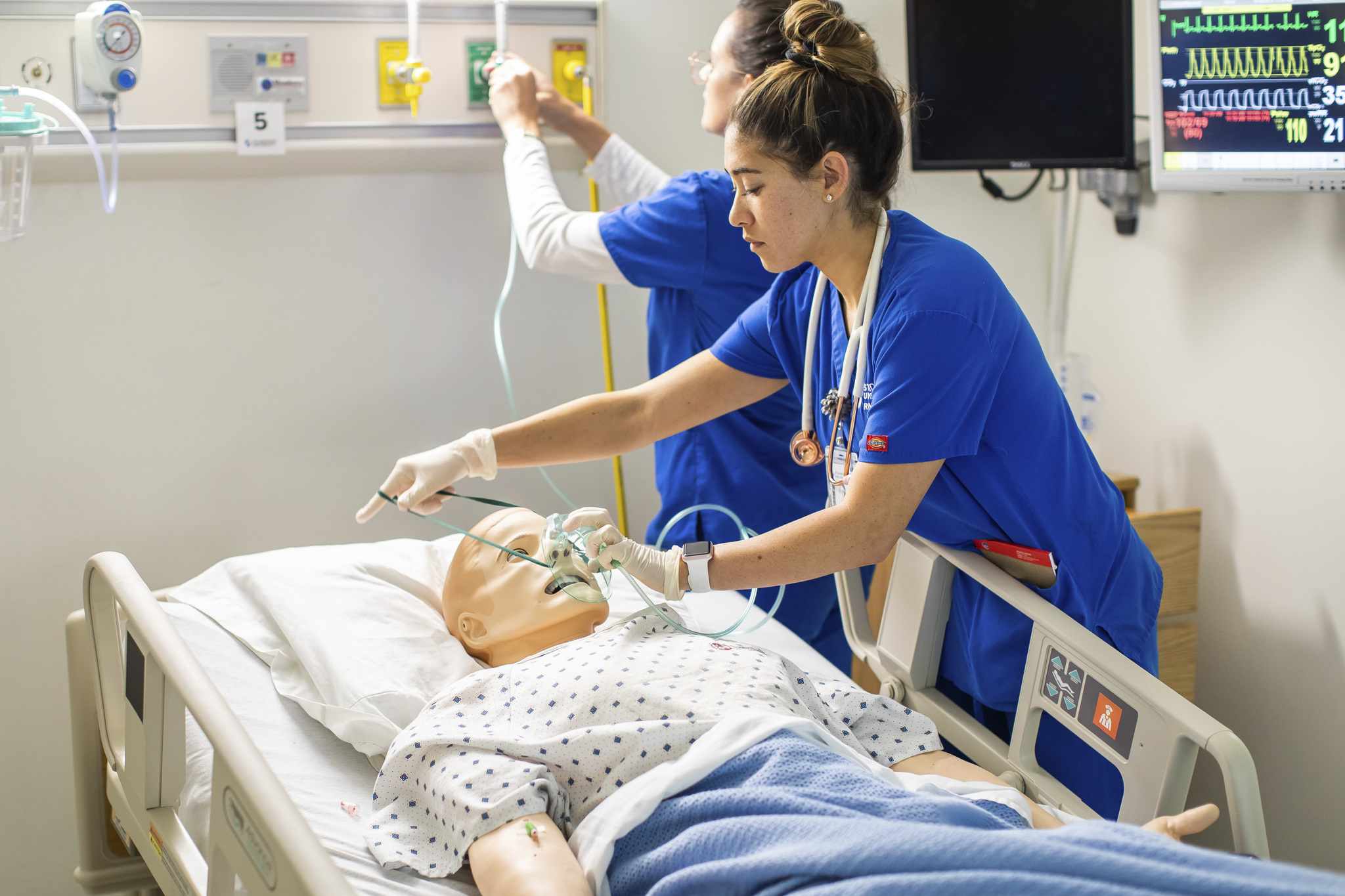
A simulation lab, on the other hand, places you in a realistic healthcare scenario where you apply knowledge and skills together. Rather than concentrating on one procedure, a simulation may ask you to assess a situation, communicate with a patient, identify relevant information, perform appropriate skills, work with a team, and respond as the scenario changes.¹
Healthcare simulation labs may include high-fidelity patient simulators, hospital-style patient rooms, medical equipment, task trainers, monitoring technology, and other tools designed to recreate elements of patient care.¹
For example, a nursing simulation could involve a patient whose condition changes during the scenario. You may need to recognize the change, communicate with other members of the healthcare team, prioritize your response, and apply skills you previously practiced in a skills lab. Afterward, faculty may guide you through a review of the experience so you can reflect on your decisions and identify areas for improvement.
What is the Main Difference Between a Skills Lab and a Simulation Lab?
The simplest distinction is skill practice versus scenario application. A skills lab helps you learn, practice, and repeat individual techniques. In this environment, the focus is on building confidence and accuracy through repetition of specific clinical skills. A simulation lab, on the other hand, gives you opportunities to decide which skills you should apply in a given situation, and to combine those techniques with communication, clinical reasoning, teamwork, and decision-making in a realistic scenario that mirrors patient care situations.
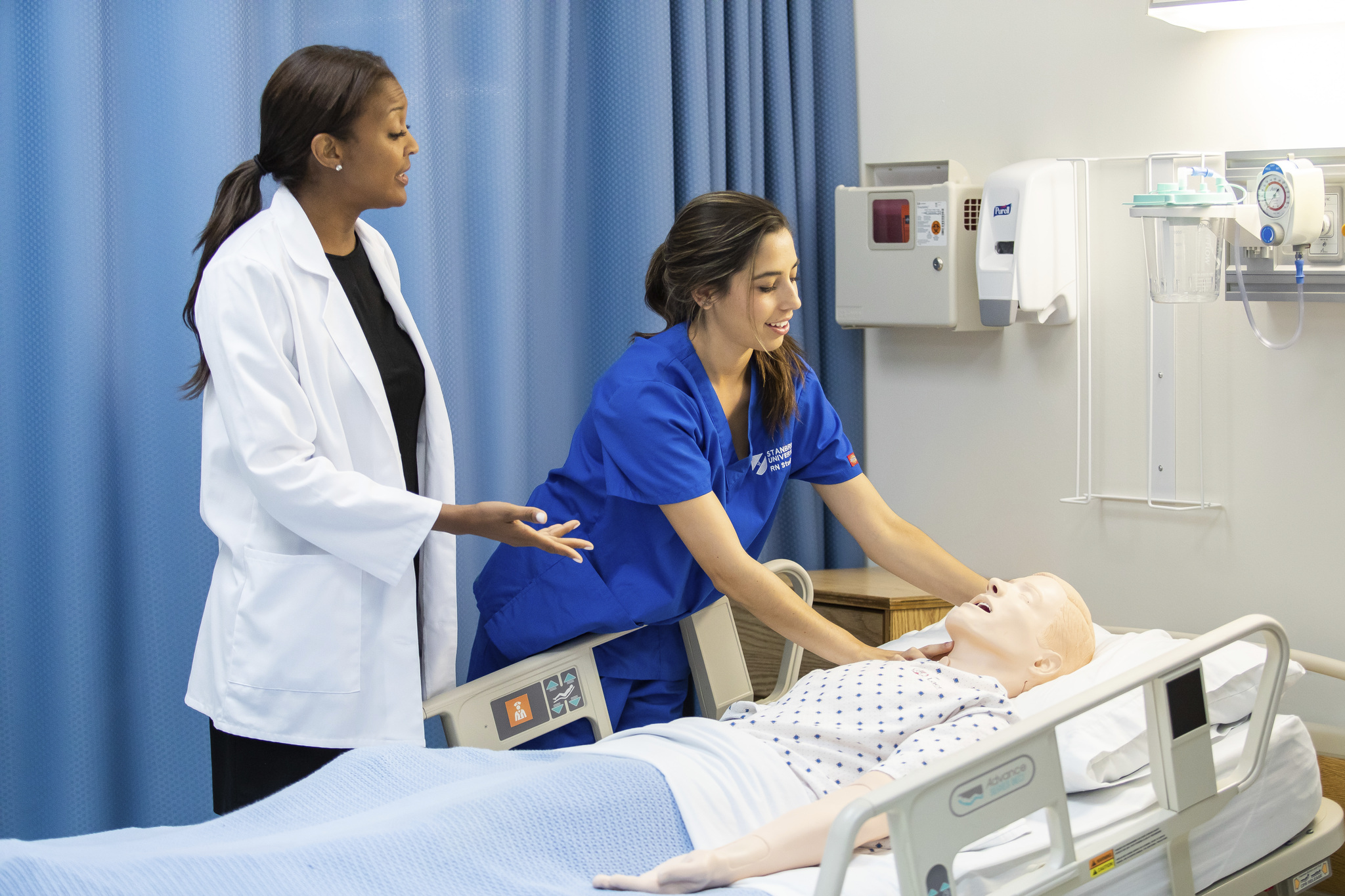
Skills labs typically focus on specific techniques and allow for repeated skill practice in a structured setting. They often use task trainers, manikins, and other healthcare equipment to help students develop proper form and procedural accuracy. Faculty demonstrate individual skills, provide step-by-step coaching, and offer immediate feedback to support learning.
Simulation labs focus on realistic patient-care scenarios where multiple skills are used together. These environments may include high-fidelity simulators and realistic clinical settings designed to replicate real-world healthcare experiences. Instead of isolating one skill, students are expected to assess situations, communicate effectively, and make decisions as the scenario unfolds. Faculty observe student responses and guide reflection after the experience to reinforce learning.
The two environments are not competing approaches. Instead, they build on one another throughout healthcare education.
How Do Skills Labs and Simulation Labs Work Together?
Healthcare learning often develops in stages. First, classroom instruction introduces the knowledge behind a healthcare concept or procedure. A skills lab can then give you opportunities to practice the related technique. After you’ve developed familiarity with individual skills, simulation can place those skills within a more complex situation.
For example, a nursing student may first learn how to measure vital signs in a skills lab. Later, a simulation scenario may require the student to perform an assessment, recognize a change in the patient’s condition, communicate the findings, and decide what action should come next. As a result, skills practice provides a foundation that simulation can build upon.
Supervised clinical education or fieldwork adds another stage by allowing you to apply your education in healthcare or community settings with actual patients under appropriate supervision.²
Why is Repetition Important in a Skills Lab?
Learning a healthcare skill often requires more than seeing it demonstrated once. Skills labs give you opportunities to repeat techniques while receiving guidance from faculty. As you practice, you can focus on details such as sequence, communication, equipment use, safety, and technique. If you make a mistake, faculty can provide feedback and help you correct your approach before you move forward. Over time, through this type of practice, you will grow more capable and more confident in your healthcare skills.
Repeated practice often also makes it easier to focus on more complex aspects of a patient-care situation later. Once you become familiar with the mechanics of a skill, you can devote more attention to communication, clinical reasoning, and the patient’s overall needs.
Why are Realistic Scenarios Used in Simulation Labs?
Healthcare situations do not always unfold in predictable ways. A patient may report a new symptom, vital signs may change, or new information may require the healthcare team to reconsider its approach. Simulation scenarios give you opportunities to practice responding to these types of changes in a controlled educational environment.¹
Depending on the activity, a simulation may help you practice patient assessment, communication, documentation, teamwork, clinical reasoning, or professional decision-making.¹ In addition, simulation allows faculty to pause, review, or discuss an experience without placing an actual patient at risk.
The goal is not to replace supervised clinical education. Instead, simulation complements clinical learning by providing another environment in which you can apply and reflect on healthcare concepts.¹
What Technology Might You Find in a Skills or Simulation Lab?
The technology used in these types of hands-on training depends on the program and learning objective. Skills labs may include hospital beds, patient manikins, task trainers, mobility equipment, electronic charting tools, and other equipment related to specific healthcare procedures. Simulation labs may add more advanced technology, including high-fidelity patient simulators that can recreate changes in breathing, heart rate, symptoms, or other patient responses.
However, technology itself is not the purpose of either lab. What matters is how faculty use the equipment to support learning. A sophisticated simulator can create a realistic scenario, but the educational value comes from applying knowledge, making decisions, receiving feedback, and reflecting on the experience.
Do Only Nursing Students Use Skills and Simulation Labs?
Hands-on laboratory and simulation learning often support several healthcare education pathways. Nursing students may use these environments to practice assessment, communication, medication-related concepts, patient care, and clinical judgment.
Likewise, occupational therapy and occupational therapy assistant students may use hands-on learning to explore patient interactions, therapeutic activities, adaptive equipment, and clinical reasoning before supervised fieldwork.
Physical therapist assistant students may practice mobility techniques, rehabilitation concepts, communication, and decision-making before participating in clinical education.¹ The specific activities vary because each healthcare profession has different responsibilities and educational requirements.
How Are Lab Experiences Different From Clinical Education?
Skills labs and simulation labs are educational environments. Clinical education, on the other hand, takes learning into healthcare settings. During a lab, you may practice with classmates, manikins, simulators, task trainers, or other educational technology under faculty guidance. During supervised clinical education, you apply appropriate knowledge and skills while participating in patient care within an actual healthcare environment.
Depending on the profession, these experiences may be called clinical rotations, clinical education, fieldwork, or practicums.² Because of the differences between them, simulation should not be viewed as a replacement for clinical education or fieldwork. Each experience serves a different purpose within healthcare education.
What Do Skills and Simulation Labs Look Like at Stanbridge University?
Stanbridge University incorporates hands-on laboratories and simulation-based learning across its healthcare education programs.³ The university’s instructional facilities include Nursing Skills Labs and separate Simulation Labs, along with Therapy Labs, Virtual Reality Labs, Synthetic Cadaver Labs, and other program-specific learning environments.⁴
In the Nursing Skills Labs, students can practice procedures and patient-care techniques in environments equipped with hospital beds, manikins, and healthcare equipment. Simulation experiences can then introduce more complex patient-care situations.
Stanbridge University’s high-fidelity patient simulators can recreate scenarios such as cardiac arrest and childbirth. The Orange County and Los Angeles Simulation Labs also include SimMom and SimNewB technology designed to simulate aspects of childbirth and newborn care.³
Beyond nursing, Stanbridge’s Innovation & Technology resources include Virtual Reality learning, SynDaver Synthetic Cadavers, Rehabilitation Robotics, Social Robotics, and Driving Simulation.³ The specific technologies and lab experiences available to you depend on your program and campus. To explore the technology and hands-on learning environments available at Stanbridge University, visit Innovation & Technology resources.
How Can Hands-on Lab Learning Support Healthcare Education?
Healthcare education requires both knowledge and opportunities to apply it. Skills labs allow you to concentrate on individual techniques. Simulation labs can then challenge you to combine those skills with communication, teamwork, and decision-making. Finally, supervised clinical education or fieldwork gives you opportunities to continue developing your abilities within healthcare or community settings. Together, these learning environments help connect classroom concepts with practical application.
If you’re comparing healthcare education programs, consider asking how skills practice, simulation, and supervised experiential learning fit together within the curriculum. Understanding that progression can tell you more than simply knowing whether a school has a simulation lab.
Frequently Asked Questions
A skills lab gives you opportunities to learn and repeat specific healthcare techniques, while a simulation lab asks you to apply several skills during realistic patient-care scenarios. Simulation may also involve communication, teamwork, clinical reasoning, and decision-making.
Depending on your program, you may practice vital signs, mobility techniques, therapeutic activities, equipment use, or other healthcare skills. The specific activities vary by profession and course.
During a simulation, you’ll participate in a realistic healthcare scenario that may require you to assess a situation, communicate, perform appropriate skills, and respond to changes. Faculty may then guide you through feedback and reflection after the scenario.¹
No. Simulation labs are controlled educational environments where you practice with simulators and other learning tools. Clinical rotations take place in healthcare settings where you participate in supervised patient care experiences.²
The structure varies by program. However, skills practice and simulation can serve different learning goals that complement each other. Skills labs can help you develop individual techniques, while simulation can help you apply multiple skills within realistic scenarios.
Stanbridge University uses high-fidelity patient simulators and other healthcare education technology across applicable programs. Its broader Innovation & Technology resources also include Virtual Reality, SynDaver Synthetic Cadavers, Rehabilitation Robotics, Social Robotics, and Driving Simulation.³
Footnotes
¹ Stanbridge University Blog What Is a Simulation Lab in Healthcare Education? https://blog.stanbridge.edu/what-is-a-simulation-lab-in-healthcare-education/
² Stanbridge University Blog What Is Clinical Education in Healthcare Programs? https://blog.stanbridge.edu/what-is-clinical-education-in-healthcare-programs/
³ Stanbridge University Innovation & Technology https://www.stanbridge.edu/innovation-technology
⁴ Stanbridge University Catalog Instructional Facilities https://catalog.stanbridge.edu/home/instructional-facility/