What Is a Synthetic Cadaver Lab?
Healthcare education continues to evolve as institutions explore new ways to support student learning. One innovation that has gained attention in recent years is the synthetic cadaver lab.
For students considering careers in nursing, occupational therapy, physical therapy, or other healthcare fields, understanding anatomy is a vital part of their education. Synthetic cadavers offer an alternative learning tool that allows students to study anatomical structures through hands-on experiences in a controlled educational environment.
So, what exactly is a synthetic cadaver lab, and how is it used in healthcare education?
What Is a Synthetic Cadaver?
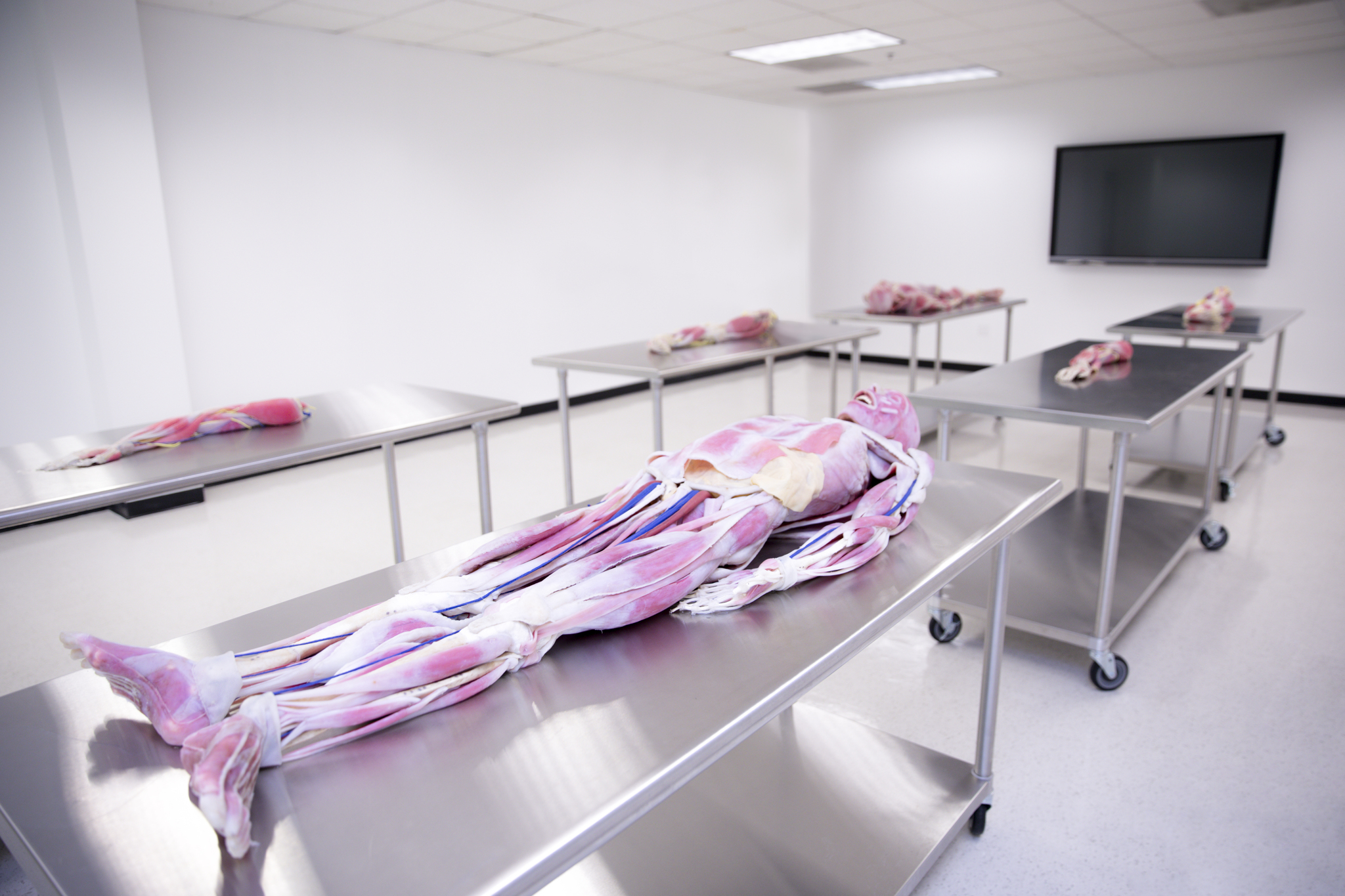
A synthetic cadaver is a highly detailed anatomical model designed to replicate the structures and systems of the human body.¹
Unlike traditional anatomical models, synthetic cadavers are created to provide realistic representations of muscles, organs, blood vessels, nerves, and other anatomical structures. Depending on the design, students may be able to examine multiple body systems and explore anatomical relationships through hands-on interaction.¹
Synthetic cadavers are used in educational settings to support anatomy instruction and help students visualize concepts that are often introduced through textbooks, lectures, and digital learning resources.
What Is a Synthetic Cadaver Lab?
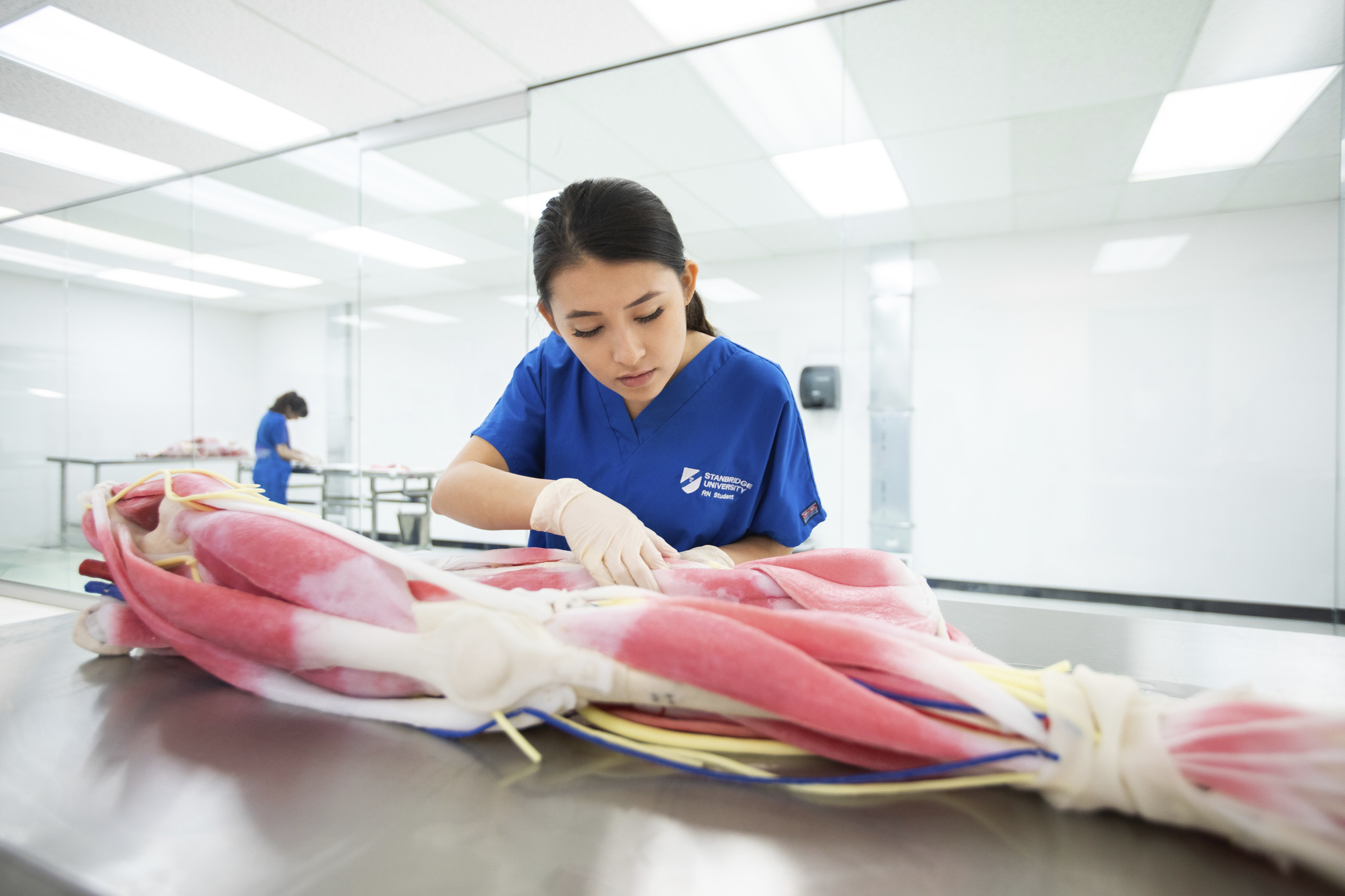
A synthetic cadaver lab is a laboratory where students use synthetic cadavers and other educational technologies to study human anatomy and physiology.¹
These labs may be incorporated into healthcare education programs that require a strong understanding of body systems and anatomical structures.
Students may use synthetic cadavers to:
- Explore anatomical structures and body systems
- Study relationships between muscles, nerves, and organs
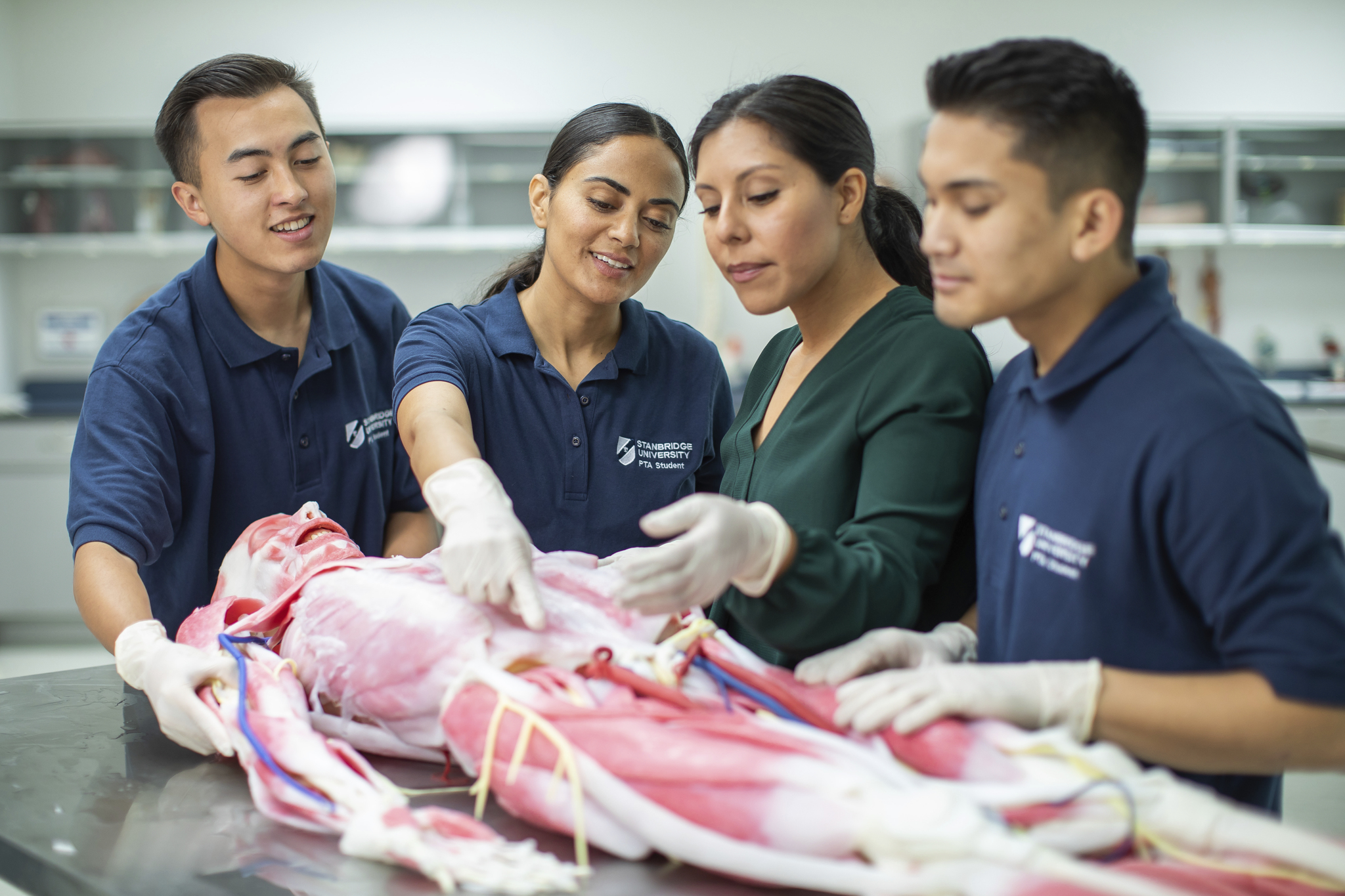
- Reinforce classroom concepts through hands-on learning
- Develop familiarity with human anatomy in a supervised educational setting
Synthetic cadaver labs are one example of how healthcare education continues to integrate innovative learning tools into the classroom experience.
How Is a Synthetic Cadaver Lab Different From a Traditional Cadaver Lab?
Traditional cadaver labs use donated human bodies to support anatomy education and provide students with opportunities to study human anatomical structures firsthand.
A synthetic cadaver lab uses advanced anatomical models that are designed to replicate many of the structures and systems of the human body. Synthetic cadavers allow students to explore anatomy through hands-on observation and interaction in a laboratory environment.¹
Both traditional and synthetic cadaver labs are used as educational tools to support anatomy instruction. Synthetic cadavers are one example of how healthcare education continues to incorporate technology-enhanced learning resources alongside more traditional teaching methods.
For students, the goal remains the same: developing a deeper understanding of human anatomy and how body systems work together.
Why Is Anatomy Education Important in Healthcare Programs?
Many healthcare professions require a foundational understanding of human anatomy.
Professionals in fields such as nursing, occupational therapy, physical therapy, and other healthcare disciplines regularly apply anatomical knowledge when evaluating patients, developing treatment plans, and supporting patient care.²
Learning anatomy can help students:
- Understand how body systems function
- Recognize anatomical structures and relationships
- Connect classroom concepts to clinical applications
- Build confidence when discussing healthcare topics
Hands-on learning experiences may help reinforce these concepts throughout a student’s educational journey.
What Are the Potential Benefits of Synthetic Cadavers?
Synthetic cadavers are designed to support anatomy education in several ways.
Hands-On Learning Opportunities
Many students learn effectively when they can actively engage with educational materials. Synthetic cadavers provide opportunities to interact with anatomical structures in ways that complement lectures, textbooks, and digital resources.
Consistent Learning Experiences
Because synthetic cadavers are manufactured models, they provide a consistent educational experience for students studying anatomy.
Visualizing Complex Anatomical Structures
Human anatomy can be challenging to understand through diagrams alone. Synthetic cadavers help students visualize how different body systems connect and interact.
Integration With Modern Educational Technology
Many healthcare programs incorporate multiple learning tools, including simulation technology, Virtual Reality, and anatomy models. Synthetic cadavers complement these educational resources within a broader learning environment.¹
How Do Synthetic Cadavers Fit Into Modern Healthcare Education?
Healthcare education increasingly incorporates technology-enhanced learning experiences to support student engagement and understanding.
Examples include:
- Synthetic Cadavers
- Virtual Reality simulations
- Clinical Simulation Technology
- Interactive Learning Modules
- Simulated Learning Environments
These tools are designed to support educational objectives by providing students with opportunities to explore concepts through multiple learning methods.¹
Innovation and Technology at Stanbridge University
Stanbridge University incorporates innovative educational technologies across all of our healthcare programs to support student learning.³
Through its Innovation & Technology initiatives, students have opportunities to learn using resources such as:
- Synthetic Cadavers
- Virtual Reality learning experiences
- Clinical Simulation Technology
- High-Fidelity Simulations
- Simulated Learning Environments
These technologies are designed to complement classroom instruction and help students engage with healthcare concepts in interactive ways.³
Students interested in learning more can explore Stanbridge University’s Innovation & Technology resources.
How Is Healthcare Education Continuing to Evolve?
Healthcare education continues to evolve as institutions explore new ways to support learning and engagement.
While traditional teaching methods remain important, technology-enhanced educational tools can provide additional opportunities for students to interact with healthcare concepts in practical and visual ways.
Synthetic cadaver labs represent one example of how healthcare programs are incorporating innovation into anatomy education while supporting hands-on learning experiences.
Frequently Asked Questions
A synthetic cadaver lab is an educational environment where students use realistic anatomical models to study human anatomy and physiology through hands-on learning experiences.¹
A synthetic cadaver is a detailed anatomical model designed to replicate structures and systems of the human body for educational purposes.¹
Synthetic cadavers are used in healthcare education to support anatomy instruction, reinforce classroom concepts, and provide hands-on opportunities to explore human anatomy.¹
Students in nursing, occupational therapy, physical therapy, and other healthcare-related disciplines may encounter anatomy-focused learning experiences that utilize educational technologies such as synthetic cadavers.²
Synthetic cadaver labs may support hands-on learning, help students visualize anatomical structures, reinforce classroom concepts, and complement other educational technologies used in healthcare education.¹
You can explore Stanbridge University’s Innovation & Technology resources to learn more about educational technologies used throughout our healthcare programs.³
Footnotes
¹ Stanbridge University Innovation & Technology Resources, https://www.stanbridge.edu/innovation-technology
² National Library of Medicine (NLM) and National Center for Biotechnology Information (NCBI) Anatomy and Healthcare Education Resources, https://www.nlm.nih.gov/, https://www.ncbi.nlm.nih.gov/
³ Stanbridge University Educational Technology Information, https://www.stanbridge.edu/innovation-technology