Which Technologies Are Driving Innovation in Healthcare Programs?
Healthcare education continues to evolve as new technologies change how students learn clinical skills, practice patient care, and prepare for healthcare environments.
Some healthcare programs now incorporate simulation technology, Virtual Reality, Synthetic Cadavers, rehabilitation robotics, digital learning tools, and interactive training environments designed to support hands-on learning experiences.
If you are researching healthcare programs, you may want to understand how educational technology is used within nursing and allied health education and how these tools can support skill development before entering clinical settings.
Why Technology Matters in Healthcare Education
Healthcare professionals often work in fast-paced environments that require technical knowledge, communication skills, and clinical decision-making.
Educational technology can help healthcare students:
- Practice patient care skills
- Build confidence in clinical settings
- Experience simulated healthcare scenarios
- Strengthen critical thinking and teamwork
- Apply classroom knowledge in controlled environments
Let’s take a look at some of the educational technology advancements that may be available depending on the institution and healthcare program.
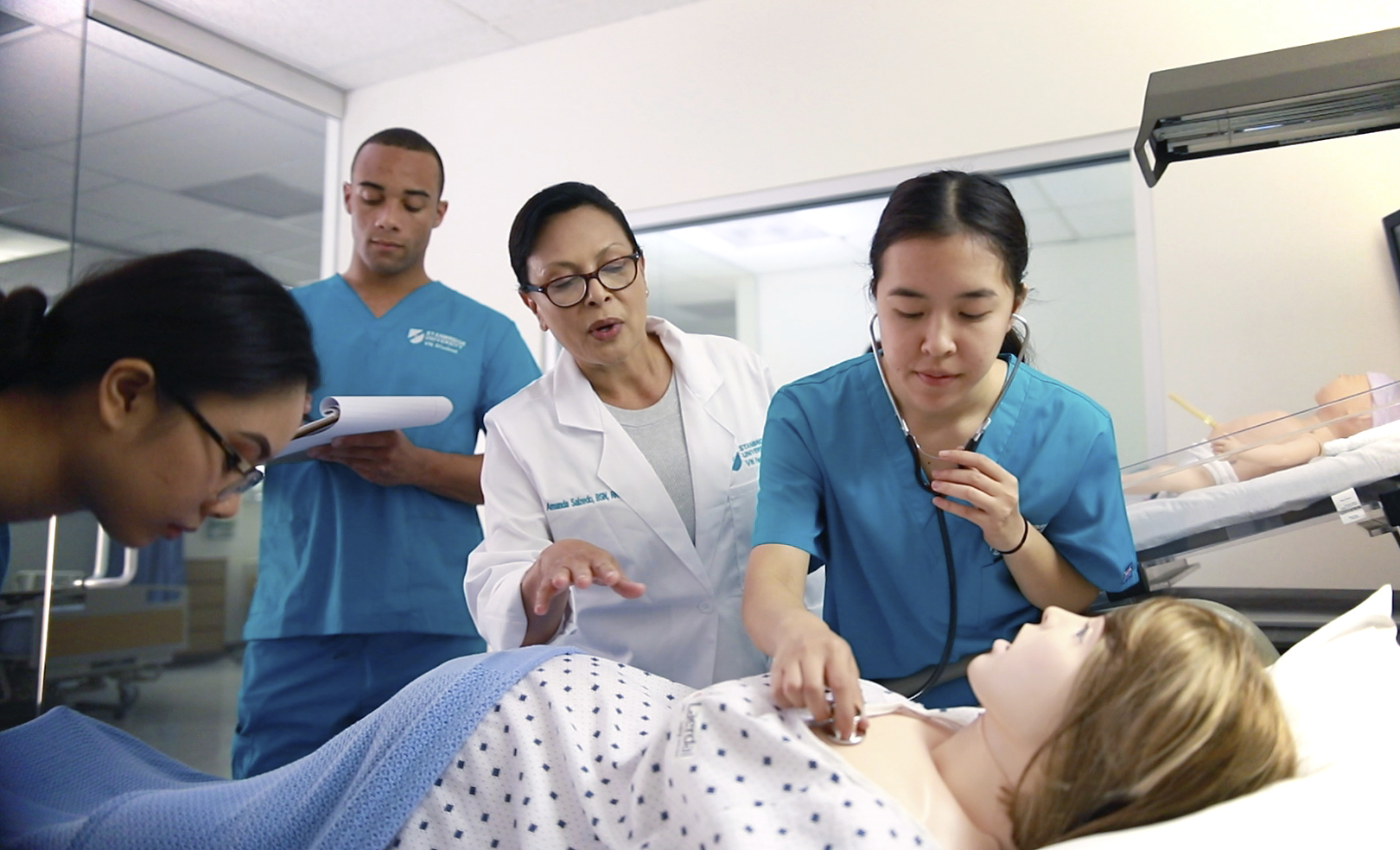
Nursing Simulation Laboratories
Nursing Simulation Laboratories are designed to replicate healthcare environments where students can practice clinical skills in supervised educational settings.¹
Simulation laboratories may include:
- High-fidelity simulation manikins
- Patient assessment equipment
- Simulated treatment environments
- Clinical monitoring systems
At Stanbridge University, High-Fidelity Simulations are used to present realistic healthcare scenarios that allow students to practice nursing concepts and procedures in a controlled learning environment. Examples may include responding to changing patient conditions and participating in simulation-based emergency care scenarios.¹
The Simulation Laboratories at the Orange County and Los Angeles campuses also feature SimMom® and SimNewB®, advanced simulation manikins designed to replicate aspects of maternal and newborn care. These technologies allow students to participate in simulation-based learning experiences involving labor, delivery, postpartum care, and newborn assessment scenarios.¹
Simulation-based learning is designed to complement classroom instruction and clinical education experiences by providing opportunities for observation, practice, feedback, and reflection in a structured educational environment.
Virtual Reality in Healthcare Training
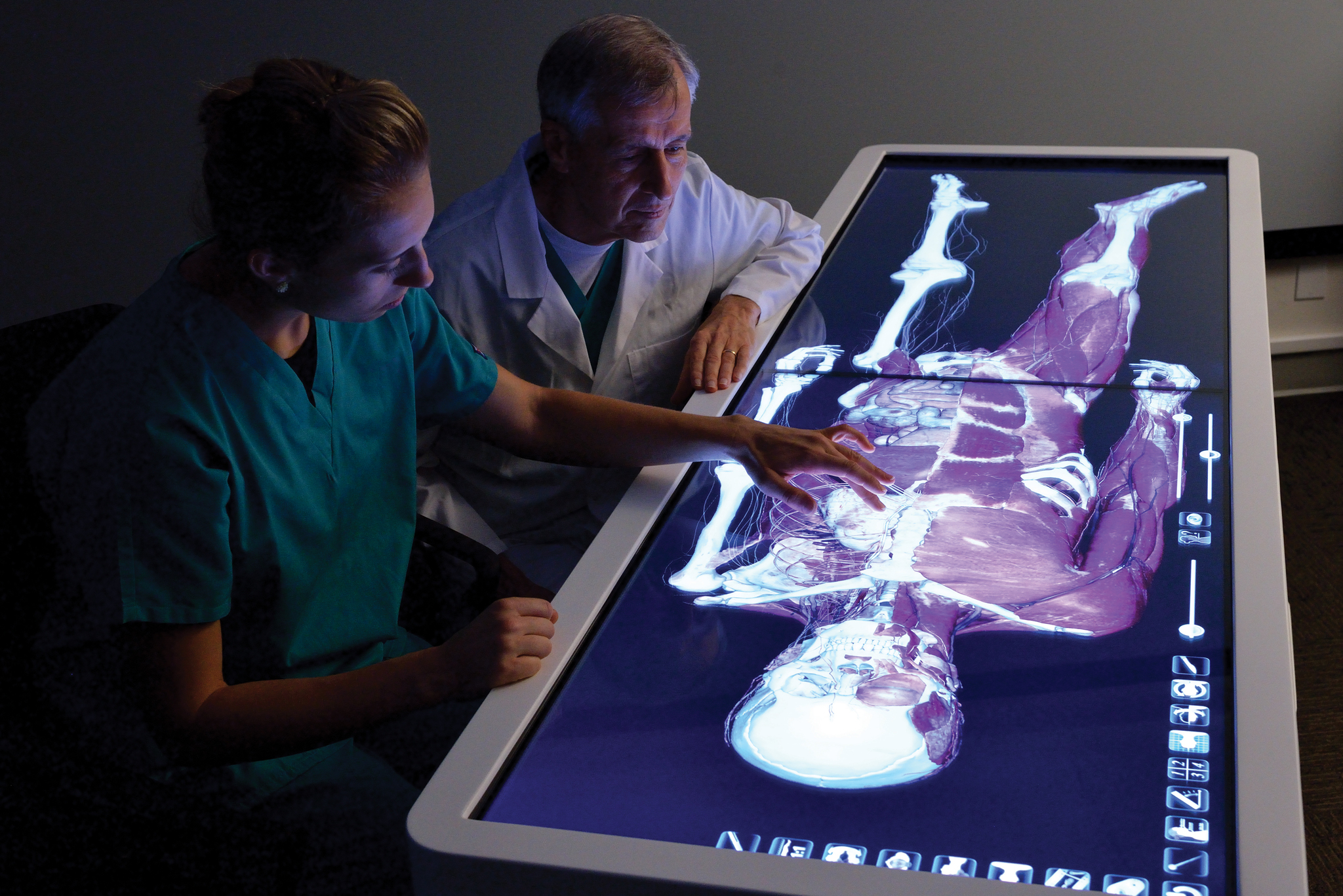
Virtual Reality (VR) technology is increasingly used in healthcare education to create immersive learning experiences.¹
At Stanbridge University, the Virtual Reality Lab utilizes zSpace augmented and virtual reality (AR/VR) technology to create a multi-sensory learning environment where students can explore anatomy and biology concepts in three dimensions. Students can view virtual anatomical models, examine structures from multiple perspectives, and interact with them in ways that complement traditional classroom instruction.¹
The Virtual Reality Lab also features the Anatomage Table, an advanced anatomy visualization system that allows students to study full-scale human anatomical models through virtual dissection experiences.¹
Educational technologies such as Virtual Reality and advanced anatomy visualization systems can help students:
- Explore anatomy and physiology concepts in 3D
- Visualize relationships between body systems and structures
- Interact with detailed anatomical models
- Reinforce concepts introduced through classroom instruction
These learning tools are designed to complement other educational resources and support anatomy-focused learning experiences.¹
Synthetic Cadavers
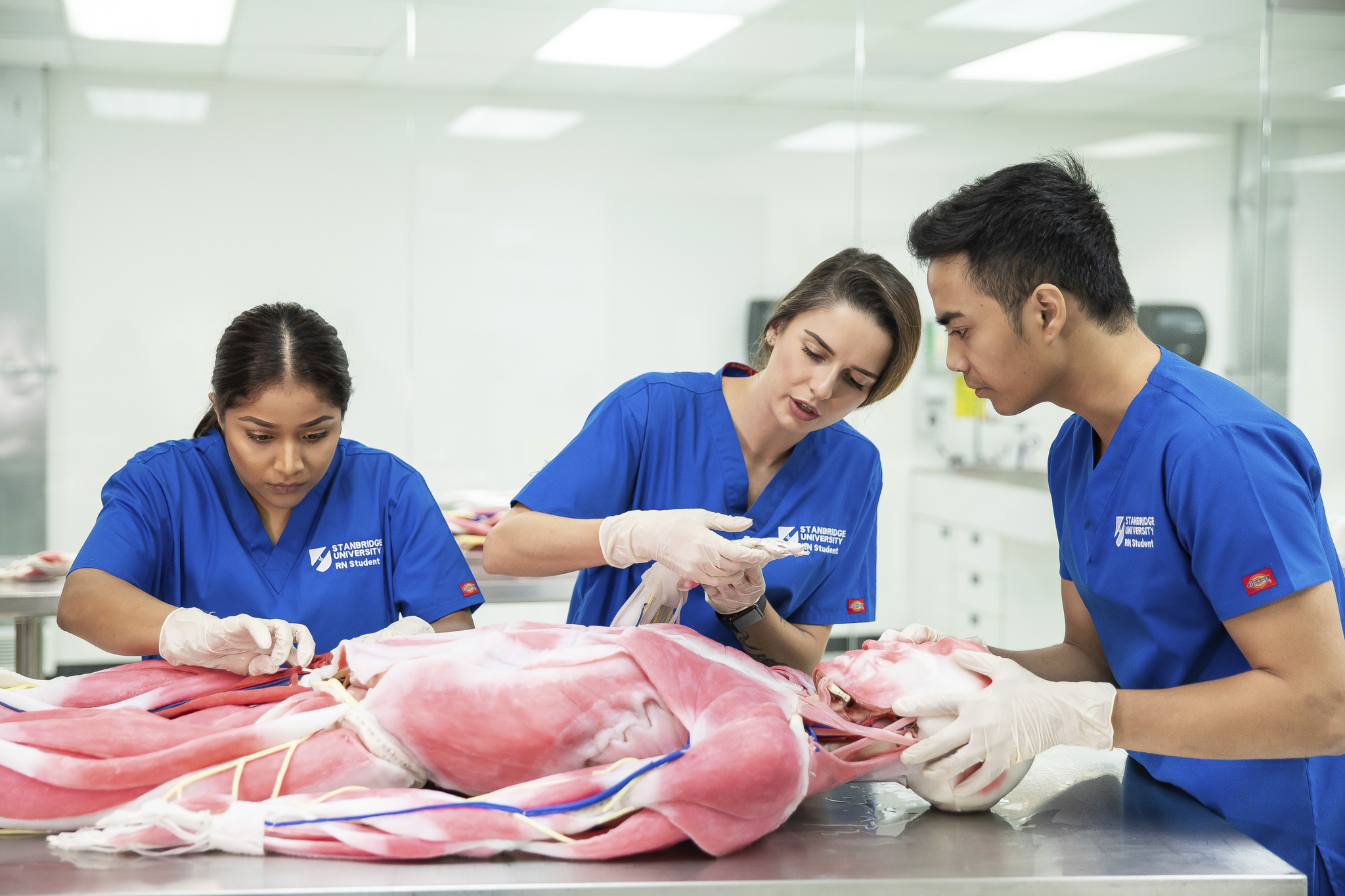
Synthetic Cadavers are advanced anatomical models designed to provide students with hands-on opportunities to study human anatomy and body systems in a laboratory setting.¹
At Stanbridge University’s Orange County campus, students may have access to the first SynDaver Synthetic Cadaver Lab on the West Coast.¹ Synthetic Cadavers are designed to replicate the appearance and structure of human tissues, muscles, organs, nerves, and vascular systems, providing an interactive way to explore anatomy.
Students may use Synthetic Cadavers to:
- Examine major body systems and anatomical structures
- Explore relationships between muscles, nerves, vessels, and organs
- Study anatomy from multiple perspectives through hands-on observation
- Reinforce concepts introduced through anatomy and physiology coursework
Synthetic Cadavers provide opportunities for students to engage with complex anatomical concepts in an interactive learning environment while complementing classroom instruction and other educational technologies.¹
Rehabilitation Robotics
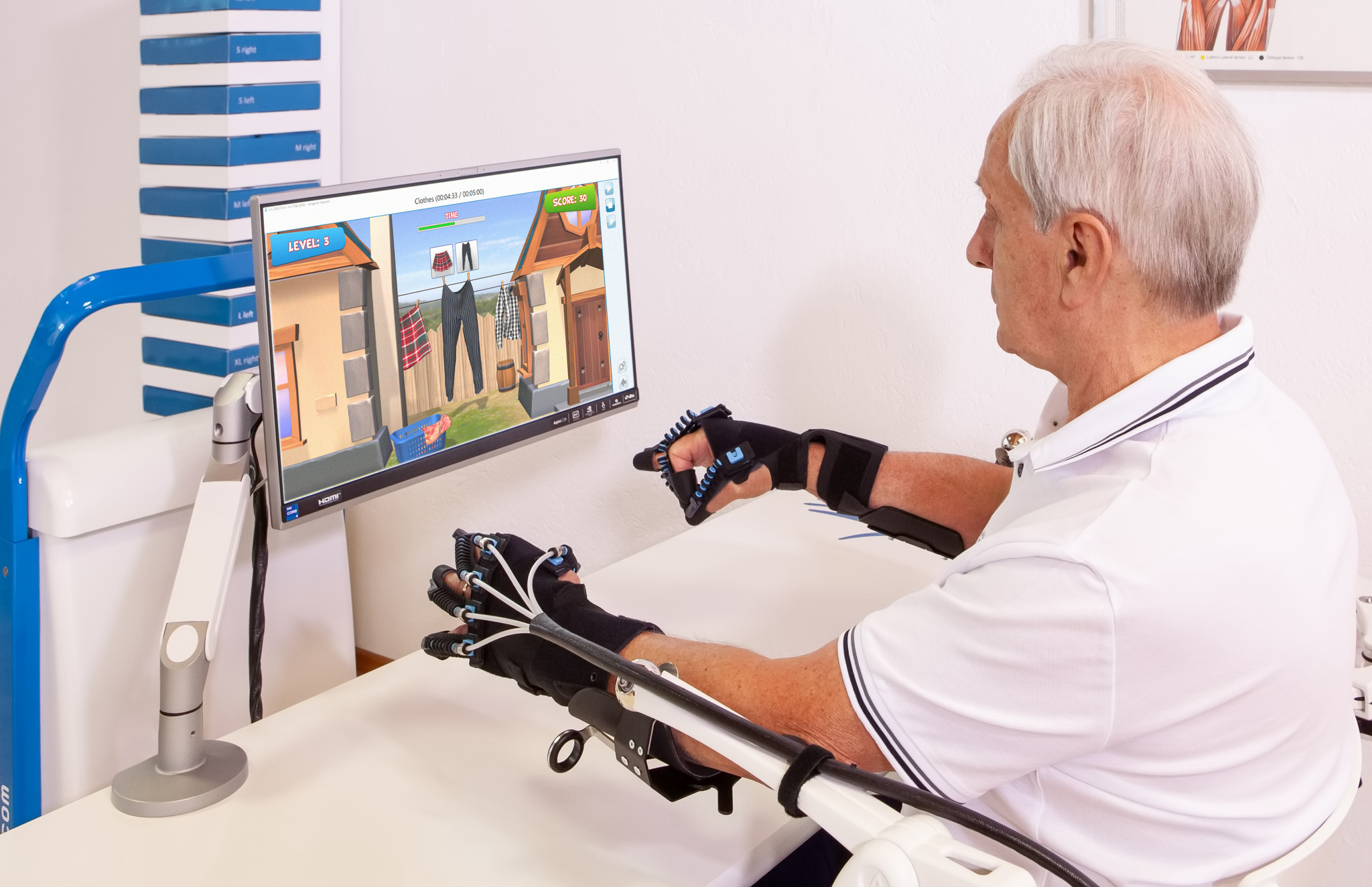
Rehabilitation Robotics is an emerging area of healthcare education and research that combines technology with rehabilitation-focused interventions.¹
At Stanbridge University’s Orange County campus, the Robotics and Intelligent Sciences Lab features the first Gloreha Sinfonia® and MediTouch® robotic devices in California.¹
The Robotics and Intelligent Sciences Lab supports exploration of therapist-driven mobilization approaches and neurocognitive rehabilitation concepts through advanced rehabilitation technologies.
Students may use rehabilitation robotics to:
- Explore rehabilitation-focused technologies
- Examine neurosensory and motor function concepts
- Participate in research-based learning experiences
- Study technology applications in rehabilitation settings
Rehabilitation robotics is one example of how healthcare education continues to incorporate innovative technologies to support learning, research, and interdisciplinary collaboration.¹
Exploring Innovation and Technology at Stanbridge University
Students interested in healthcare education technology can explore the Innovation & Technology resources at Stanbridge University.¹
Educational technology resources at Stanbridge University include:
- Nursing Simulation Laboratories
- Virtual Reality learning experiences
- Interactive healthcare training environments
- Technology-supported clinical education
Stanbridge University healthcare programs incorporate hands-on learning experiences designed to support nursing and allied health education pathways.²
How Can Students Compare Healthcare Education Technology?
Students comparing healthcare programs consider several factors related to educational technology and learning environments.
Questions students may ask include:
- Are Nursing Simulation Laboratories available?
- Does the program use Virtual Reality or simulation technology?
- How are clinical skills practiced before fieldwork?
- What types of healthcare technology are incorporated into training?
- How does the program support hands-on learning experiences?
Comparing educational technology alongside curriculum structure, clinical opportunities, and student support services can help students make more informed decisions.
Frequently Asked Questions
Healthcare programs may incorporate technologies such as Nursing Simulation Laboratories, High-Fidelity Simulations, Virtual Reality systems, Synthetic Cadavers, rehabilitation robotics, and other simulation-based educational tools to support student learning experiences.¹
Simulation technology can provide opportunities for students to practice healthcare concepts, communication techniques, and clinical procedures in controlled educational environments before participating in supervised clinical or fieldwork experiences.¹
Virtual Reality technology may be used to support anatomy and physiology education through interactive, three-dimensional learning experiences. At Stanbridge University, students may use zSpace AR/VR technology and the Anatomage Table to explore anatomical structures and body systems from multiple perspectives.¹
Nursing Simulation Laboratories are educational environments that use High-Fidelity Simulations, simulation manikins, patient assessment equipment, and healthcare technologies to support learning. At Stanbridge University, simulation laboratories include technologies such as SimMom® and SimNewB® that support maternal and newborn care learning experiences.¹
Synthetic Cadavers are advanced anatomical models designed to replicate human anatomy and body systems. Students may use Synthetic Cadavers to study anatomical structures, explore body systems, and reinforce anatomy concepts through hands-on learning experiences.¹
Rehabilitation Robotics refers to technology used in rehabilitation-focused education and research. At Stanbridge University, the Robotics and Intelligent Sciences Lab features Gloreha Sinfonia® and MediTouch® technologies that support exploration of rehabilitation and neurocognitive concepts within educational settings.¹
Stanbridge University’s Innovation & Technology resources include Nursing Simulation Laboratories, Virtual Reality technology, Synthetic Cadavers, rehabilitation robotics, and interactive learning environments. These technologies are designed to complement classroom instruction and support hands-on learning experiences across healthcare education programs.¹
Students comparing healthcare programs may evaluate simulation laboratories, Virtual Reality integration, anatomy learning resources, rehabilitation technologies, clinical training resources, and opportunities for hands-on learning when exploring educational options.
Footnotes
¹ Stanbridge University, “Innovation & Technology,” https://www.stanbridge.edu/innovation-technology
² Stanbridge University, https://www.stanbridge.edu/