What Is the Fastest Way to Become a Nurse?
Basic Overview
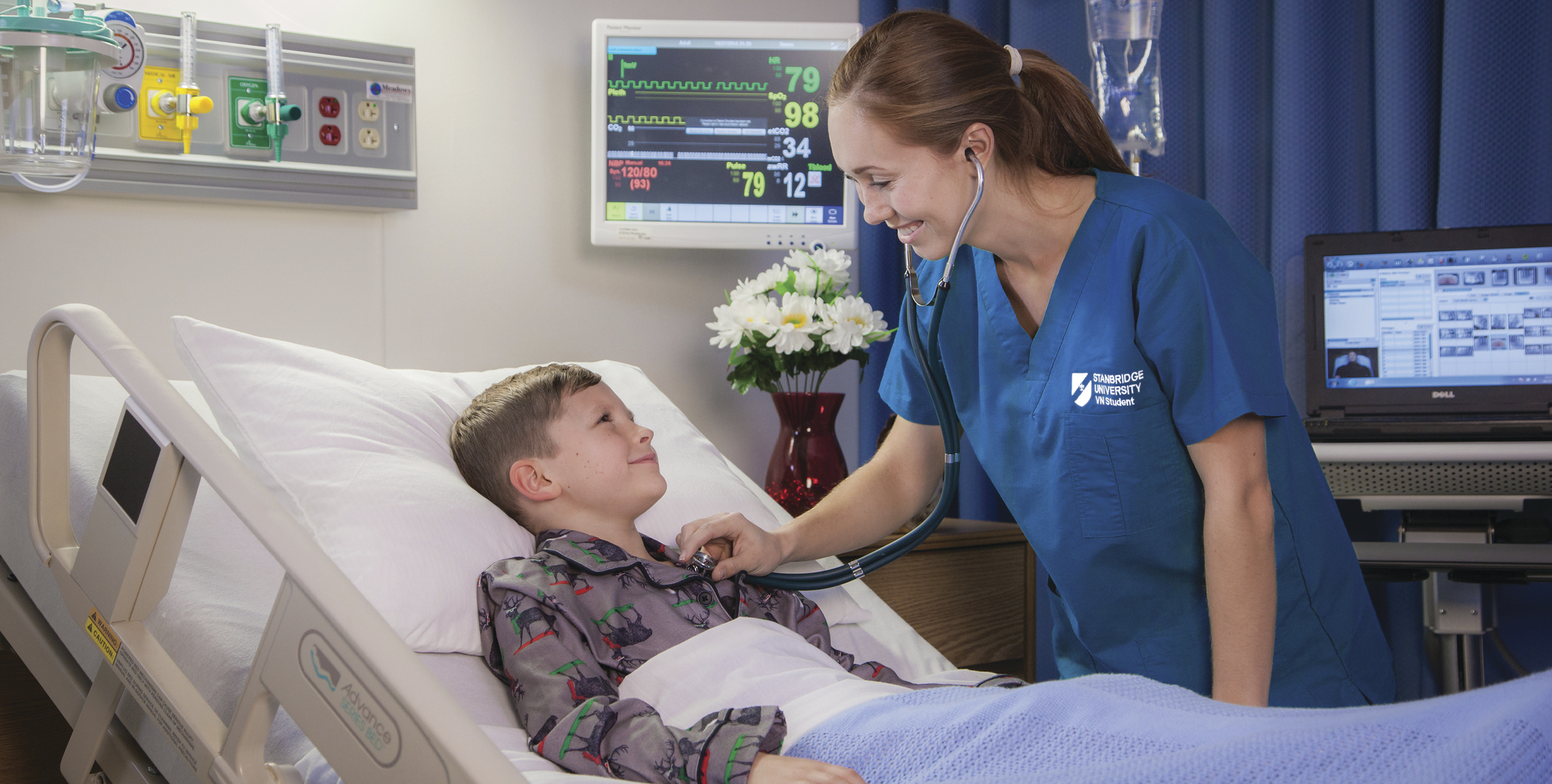
The fastest way to become a nurse is often through a Licensed Vocational Nurse (LVN) program. At Stanbridge University, the Vocational Nursing program is designed to be completed in approximately 17–19 months for full-time students. However, students interested in broader nursing responsibilities and Registered Nurse (RN) licensure may choose pathways such as an ADN or Bachelor of Science in Nursing (BSN), which typically require additional education and time. The best pathway depends on your career goals, preferred timeline, and long-term professional objectives.
Understanding Nursing Career Pathways
Many healthcare students ask the same question: What is the fastest way to become a nurse?
The answer depends on your career goals, preferred educational pathway, and the type of nursing role you hope to pursue. Some students prioritize entering the workforce as quickly as possible, while others focus on pursuing broader nursing responsibilities and long-term career options.
Understanding the differences between nursing pathways can help you determine which option aligns with your goals.
Is There More Than One Path to Becoming a Nurse?
Yes. Nursing offers multiple educational pathways depending on the type of nursing profession you wish to pursue.
Two common nursing career pathways include:
- Licensed Vocational Nurse (LVN)
- Registered Nurse (RN)
Both roles contribute to patient care, but they differ in responsibilities, education requirements, and scope of practice.¹
LVN vs RN: What Is the Difference?
Licensed Vocational Nurses and Registered Nurses both play important roles in patient care, but their responsibilities differ.
Licensed Vocational Nurses (LVNs)
- Provide basic nursing care
- Work under supervision of RNs and physicians
- Monitor patients and document care
- Support treatment plans
Registered Nurses (RNs)
- Perform patient assessments
- Develop nursing care plans
- Coordinate patient care
- Educate patients and families
Education requirements, licensure requirements, and scope of practice vary between these nursing professions.¹
What Is the Fastest Nursing Pathway?
For students focused on entering the nursing profession as quickly as possible, becoming a Licensed Vocational Nurse may be one of the shortest educational pathways into nursing.¹
Licensed Vocational Nurses provide basic nursing care under the supervision of Registered Nurses and physicians. Responsibilities may include:
- Monitoring patient health
- Recording patient information
- Assisting with daily care needs
- Supporting treatment plans
Students interested in this pathway can explore the Vocational Nursing program at Stanbridge University.
Vocational Nursing Program Timeline
The Stanbridge University Vocational Nursing program is designed to be completed in approximately 17–19 months for full-time students and 26–28 months for part-time students.² 3
You can read more about Stanbridge University’s Vocational Nursing program here.² 3
What Is the Path to Becoming a Registered Nurse?
Students interested in becoming Registered Nurses need to complete more in-depth nursing education and licensure requirements.
Registered Nurses often:
- Assess patient conditions
- Develop and coordinate care plans
- Educate patients and families
- Collaborate with healthcare teams
RNs work in a variety of healthcare environments, including hospitals, clinics, schools, and community health settings.¹
Students pursuing this pathway may consider the Bachelor of Science in Nursing (BSN) program at Stanbridge University.
Bachelor of Science in Nursing Timeline
The Stanbridge University Bachelor of Science in Nursing program is designed to be completed in approximately 36–37 months. ² 3
Program timelines vary and should always be confirmed through official program materials. ² 3
Why Some Students Choose a BSN
Some healthcare employers may prefer or require a Bachelor of Science in Nursing for certain nursing positions, leadership opportunities, or advancement pathways.4
A BSN curriculum often includes additional coursework in areas such as:
- Leadership
- Community and public health nursing
- Research and evidence-based practice
- Healthcare systems and management
These topics may help prepare graduates for a broader range of nursing responsibilities and future educational opportunities.4
Why Some Students Choose an ADN First
Some students choose an ADN pathway because it may allow them to enter the nursing profession sooner. After gaining experience, some Registered Nurses pursue additional education through RN-to-BSN completion programs offered by various institutions.
Educational decisions depend on individual goals, financial considerations, preferred timelines, and employer requirements.
Which Nursing Path/Program Is Right for You?
The fastest path is not always the best fit for every student.
When comparing nursing pathways, consider:
Your Career Goals
Do you want to enter nursing as quickly as possible, or are you seeking broader responsibilities associated with Registered Nursing?
Educational Timeline
Different nursing pathways require different levels of education and time commitment.
Long-Term Professional Objectives
Some students begin with one nursing pathway and later pursue additional education based on evolving career goals.
Choosing a pathway should be based on your individual interests, goals, and educational preferences.
Exploring Nursing Education at Stanbridge University
Stanbridge University offers nursing education pathways for students with different career goals.
Vocational Nursing
The Vocational Nursing program is designed for students interested in pursuing Licensed Vocational Nurse career pathways through classroom instruction, skills development, and clinical education experiences.
Stanbridge University’s Vocational Nursing program’s recent NCLEX-PN licensure pass rates for the Orange County campus were reported as 92% for 2025.5
The Stanbridge University Vocational Nursing program is 106.5 quarter credit hours and takes approximately 17-19 months for full-time students and approximately 26–28 months for part-time students. ²
Bachelor of Science in Nursing
The Bachelor of Science in Nursing program is designed to prepare students for Registered Nurse career pathways through nursing coursework, clinical education, and hands-on learning experiences.
Recent NCLEX-RN licensure pass rates for the Orange County and Los Angeles campuses were reported as 95% for 2024–2025.6
The Stanbridge University Bachelor of Science in Nursing program is offered at the Orange County, Los Angeles, Riverside, and San Diego campuses. The program at the San Diego, San Marcos campus is pending BRN approval. The BSN program is 180 quarter credit hours and takes approximately 36–37 months to complete depending on cohort scheduling and individual progression. ²
Although bachelor’s degree programs generally require a longer educational commitment than some associate degree pathways, they may provide additional academic preparation in leadership, research, community health, and professional nursing practice.³
Choosing the Nursing Path That Fits Your Goals
The fastest path to becoming a nurse depends on your individual goals and the type of nursing role you hope to pursue.
For students prioritizing a shorter educational timeline, vocational nursing may provide an entry point into the profession. Students interested in broader Registered Nursing responsibilities may choose a BSN pathway.
Researching program timelines, career responsibilities, and educational requirements can help you identify the nursing path that best aligns with your goals.
Frequently Asked Questions
The fastest path to becoming a nurse may be through a Licensed Vocational Nurse pathway, depending on your career goals and educational preferences. LVN and ADN programs generally require less time than BSN pathways.¹
The Stanbridge University Vocational Nursing program is designed to be completed in approximately 17–19 months for full-time students and 26–28 months for part-time students.² 4
The Stanbridge University Bachelor of Science in Nursing program is designed to be completed in approximately 36–37 months for full-time students.2 4
Licensed Vocational Nurses provide basic nursing care under supervision, while Registered Nurses may perform assessments, coordinate care, and develop nursing care plans.¹
Both ADN and BSN pathways prepare students to pursue Registered Nurse licensure requirements, subject to state regulations. A BSN is a bachelor’s degree that typically includes additional coursework in leadership, research, community health, and professional nursing practice. Some employers prefer or require a BSN for certain nursing positions and advancement opportunities.3
Some nurses choose to pursue additional education after becoming an LVN. Educational pathways vary depending on individual goals, program requirements, and state regulations.
You can explore the Vocational Nursing program, the Bachelor of Science in Nursing program, or contact Stanbridge University for more information.
Footnotes
¹California Employment Development Department (EDD) Nursing Occupation Information, https://edd.ca.gov/
²Stanbridge University Nursing Program Information, https://www.stanbridge.edu/program/vn, https://www.stanbridge.edu/program/bsn
3Program duration is subject to change, and completion times may vary based on cohort start and end dates and individual circumstances that may impact progression. Program schedules are also subject to change.
4General nursing education information and employer requirements, American Association of Colleges of Nursing (AACN), https://www.aacnnursing.org/
5California Board of Vocational Nursing and Psychiatric Technicians (BVNPT) and the National Council of State Boards of Nursing (NCSBN) Examinations Report 4 Rolling Quarter – Jurisdiction Program Summary of all First-Time Candidates Licensed in All Jurisdictions 01 Jan 2019 to 31 Dec 2023, Orange County campus only, NCLEX-PN. First-Time Candidates Licensed in All Jurisdictions 01 Jan 2019 to 31 Dec 2023, Los Angeles campus only, NCLEX-PN. https://www.bvnpt.ca.gov/pdf/vn_pass_rates.pdf. The Associate of Occupational Science in Vocational Nursing program at Riverside and San Diego campuses does not have current graduates yet and therefore, no annual licensure pass rates.
6The California Board of Registered Nursing, NCLEX-RN pass rate, NCLEX-RN, Bachelor of Science in Nursing (BSN) program, 2-Year Average, 2023/2024-2024/2025, Orange County, Los Angeles, and Riverside campuses only; http://www.rn.ca.gov/education/passrates.shtml. As viewed on March 3rd, 2026. The Bachelor of Science in Nursing (BSN) program at the San Diego campus is pending BRN approval and does not have current graduates yet and therefore, no annual licensure pass rates.