Benefits of Becoming an LVN in California
California’s large healthcare system creates opportunities for nursing professionals across a variety of care settings. If you are considering a nursing career, becoming a Licensed Vocational Nurse (LVN) is one of several pathways into the healthcare profession.
Additionally, understanding the benefits of becoming an LVN in California can help you determine whether this nursing pathway aligns with your personal and professional goals.
Frequently Asked Questions
The benefits of becoming an LVN in California include opportunities to work in healthcare settings, provide direct patient care, develop nursing skills, and pursue future educational pathways.¹
Licensed Vocational Nurses provide basic nursing care under the supervision of Registered Nurses and physicians. Responsibilities include monitoring patients, documenting care, supporting treatment plans, and assisting with daily care activities.
The Stanbridge University Vocational Nursing program is designed to be completed in approximately 17–19 months for full-time students and approximately 26–28 months to complete for part-time students.4
Licensed Vocational Nurses may work in hospitals, clinics, skilled nursing facilities, rehabilitation centers, and home healthcare environments, depending on employer needs and job requirements.¹
Some LVNs choose to pursue additional education that may lead to Registered Nursing pathways. Educational requirements vary depending on the program, institution, and state regulations.¹
You can explore the Stanbridge University Vocational Nursing program or contact Stanbridge University for additional information.²
What Is an LVN?
A Licensed Vocational Nurse (LVN) provides basic nursing care under the supervision of Registered Nurses and physicians.¹
LVNs may assist with:
- Monitoring patient health
- Recording patient information
- Supporting treatment plans
- Assisting with daily patient care needs
- Communicating with healthcare teams
Vocational nurses play an important role in supporting patient care across many healthcare environments.¹
Why Do Students Choose to Become an LVN?
Students pursue vocational nursing for many different reasons. While career goals vary, several common benefits consistently attract aspiring nurses to the profession.
A Pathway Into the Nursing Profession
One reason you may consider becoming an LVN is the opportunity to enter the nursing profession through a focused educational pathway.
Vocational nursing programs are designed to prepare you for entry-level nursing practice through a combination of classroom instruction, skills development, and clinical education experiences.²
Opportunities to Work in Different Healthcare Settings
Furthermore, Licensed Vocational Nurses work in a variety of healthcare environments, including skilled nursing facilities, hospitals, clinics, home healthcare settings, and rehabilitation facilities.¹
Examples include:
- Skilled nursing facilities
- Hospitals
- Clinics
- Home healthcare settings
- Rehabilitation facilities
As a result, you may have opportunities to work with diverse patient populations across a variety of healthcare settings.¹
Direct Patient Interaction
For many students, nursing is appealing because it provides opportunities to work directly with people.
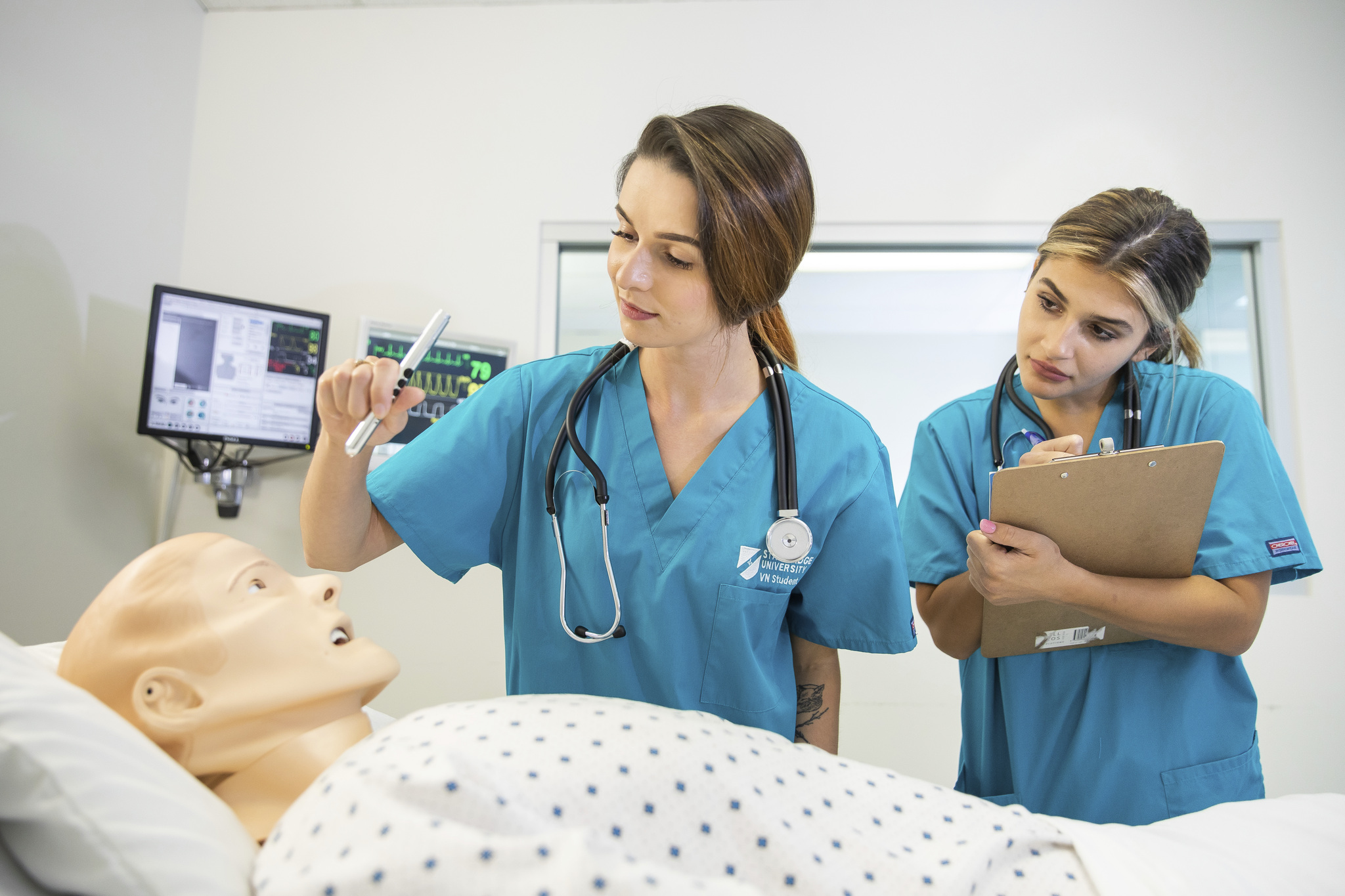
LVNs often spend significant time interacting with patients, assisting with care needs, monitoring health status, and communicating observations to healthcare teams.¹
As a result, if you value patient-centered work, vocational nursing provides opportunities to contribute to the healthcare experience through direct care and support.
Building Foundational Nursing Skills
Vocational nursing education is designed to help you develop foundational nursing knowledge and practical skills.²
Examples may include:
- Patient care techniques
- Communication skills
- Clinical documentation
- Healthcare ethics
- Basic nursing procedures
These skills can be applied across a variety of healthcare environments and patient populations.
Potential for Future Educational Pathways
Additionally, you can begin your nursing journey as an LVN and later pursue additional education based on your career goals.
Depending on your objectives, you may choose to continue your education through pathways that lead to Registered Nursing or other healthcare professions. Educational requirements and progression opportunities vary by program and state regulations.¹
Students interested in Registered Nursing education can explore the Bachelor of Science in Nursing program.
What Does the California Job Market Look Like for LVNs?
California continues to employ Licensed Vocational Nurses across a variety of healthcare settings.¹
According to the Employment Development Department of California, the job market for Licensed Vocational Nurses is expected to grow 17.8% from 2022 to 2032.¹ Additionally, Licensed Vocational Nurses reported a statewide mean hourly wage of $40.70 in California.¹
Vocational Nursing Education at Stanbridge University
The Vocational Nursing program at Stanbridge University is designed to prepare students for vocational nursing education through classroom instruction, hands-on learning experiences, and clinical education opportunities.² This program was ranked #1 Best LVN Program in California in 2026 for our Orange County and Los Angeles campuses.3
The Stanbridge University Vocational Nursing program is offered at the Orange County, Los Angeles, Riverside, and San Diego campuses. The LVN program is 106.5 quarter credit hours and takes approximately 17–19 months to complete for full-time and approximately 26–28 months to complete for part-time students depending on cohort scheduling and individual progression.4
Recent NCLEX-PN licensure pass rates for the Orange County campus was reported as 92% for 2025.5 These figures reflect reported first-time licensure pass rate data within one year of graduation.
To learn more, you can contact Stanbridge University for additional information about vocational nursing education.
Is Becoming an LVN Right for You?
The benefits of becoming an LVN in California depend on your individual goals, interests, and preferred career path.
Vocational nursing appeal to individuals who:
- Enjoy working directly with patients
- Are interested in healthcare careers
- Value hands-on learning experiences
- Want to develop nursing knowledge and skills
- Are exploring long-term nursing education pathways
Researching nursing roles, educational requirements, and healthcare settings can help you make informed decisions about your future.
Footnotes
¹ California Employment Development Department (EDD) Occupational Information and Nursing Workforce Resources, https://labormarketinfo.edd.ca.gov/cgi/databrowsing/occExplorerQSDetails.asp?searchCriteria=Nursing&careerID=&menuChoice=occexplorer&geogArea=0601000000&soccode=292061&search=Explore+Occupation
² Stanbridge University Vocational Nursing Program Information, https://www.stanbridge.edu/program/vn
3 Source: Nursingprocess.org, 20 Best LVN Programs in California – (Online & Campus-Based). Associate program. Orange County and Los Angeles campus only. https://www.nursingprocess.org/lvn-programs/california/. As viewed on March 10, 2026.
4 Program duration is subject to change, and completion times may vary based on cohort start and end dates and individual circumstances that may impact progression. Program schedules are also subject to change.
5Source: California Board of Vocational Nursing and Psychiatric Technicians (BVNPT) and the National Council of State Boards of Nursing (NCSBN) Examinations Report 4 Rolling Quarter – Jurisdiction Program Summary of all First-Time Candidates Licensed in All Jurisdictions 01 Jan 2019 to 31 Dec 2023, Orange County campus only, NCLEX-PN. First-Time Candidates Licensed in All Jurisdictions 01 Jan 2019 to 31 Dec 2023, Los Angeles campus only, NCLEX-PN. https://www.bvnpt.ca.gov/pdf/vn_pass_rates.pdf. As viewed on September 25, 2025. The Associate of Occupational Science in Vocational Nursing program at Riverside and San Diego campuses does not have current graduates yet and therefore, no annual licensure pass rates.