What Is the Difference Between Classroom Learning and Clinical Training in Nursing School?
Classroom learning and clinical training serve different but connected purposes in nursing school. In the classroom, students develop the scientific and theoretical knowledge needed to understand patient conditions, medications, nursing interventions, safety, and professional practice. Clinical training then gives students supervised opportunities to apply their knowledge and skills in patient-care environments. Skills laboratories and simulation help students practice nursing techniques and work through patient-care scenarios before and alongside clinical experiences.
What Do Nursing Students Learn in the Classroom?
Classroom learning provides the theoretical foundation for nursing practice. Depending on the nursing program, students may study subjects such as:
- Anatomy and physiology
- Nursing fundamentals
- Pharmacology
- Medical-surgical nursing
- Maternal-newborn nursing
- Pediatric nursing
- Mental health nursing
- Communication
- Leadership
- Evidence-based practice
Beyond memorizing key facts, students learn to understand why a patient’s condition may be changing, how medications and interventions affect the body, what information is clinically relevant, and how nursing responsibilities fit within safe patient care.
For example, before administering a medication in an appropriate clinical setting, a student first needs to understand concepts such as the medication’s purpose, dosage, potential effects, precautions, and relevant patient information. Classroom learning helps establish that knowledge before students are expected to apply it.
What Is Clinical Education in Nursing School?
Clinical training gives nursing students supervised opportunities to apply their education in real patient-care settings. Depending on the program, course, and placement, students may participate in:
- Patient assessment
- Measuring vital signs
- Medication administration
- Infection prevention
- Documentation
- Patient communication
- Assistance with daily patient activities
- Prioritization
- Care planning
- Collaboration with healthcare teams
Students are not expected to function independently as experienced nurses when they enter clinical training. Instead, clinical education provides structured opportunities to develop appropriate nursing competencies under supervision while receiving feedback from qualified instructors.
The state of California requires clinical education as part of both registered nursing and vocational nursing preparation. Prelicensure RN programs must meet California Board of Registered Nursing (BRN) requirements, while vocational nursing programs must meet requirements established by the California Board of Vocational Nursing and Psychiatric Technicians (BVNPT).¹ ²
How Do Classroom Learning and Clinical Training Work Together?
The easiest way to understand the difference between classroom and clinical learning is to think of them as parts of the same process.
Classroom: Learn the concept.
Skills Lab: Practice the technique.
Simulation: Apply several concepts and skills in a controlled scenario.
Clinical Training: Apply appropriate learning during supervised patient care.
For example, students may first learn about patient assessment and abnormal findings during classroom instruction. Next, they may practice assessment techniques in a nursing skills lab. During simulation, they may work through a scenario in which a patient’s condition changes and they need to recognize relevant findings. Finally, during clinical education, students can begin applying appropriate assessment skills with patients under supervision. Each stage builds on the others that come before it.
What Is the Difference Between a Skills Lab and Clinical Training?
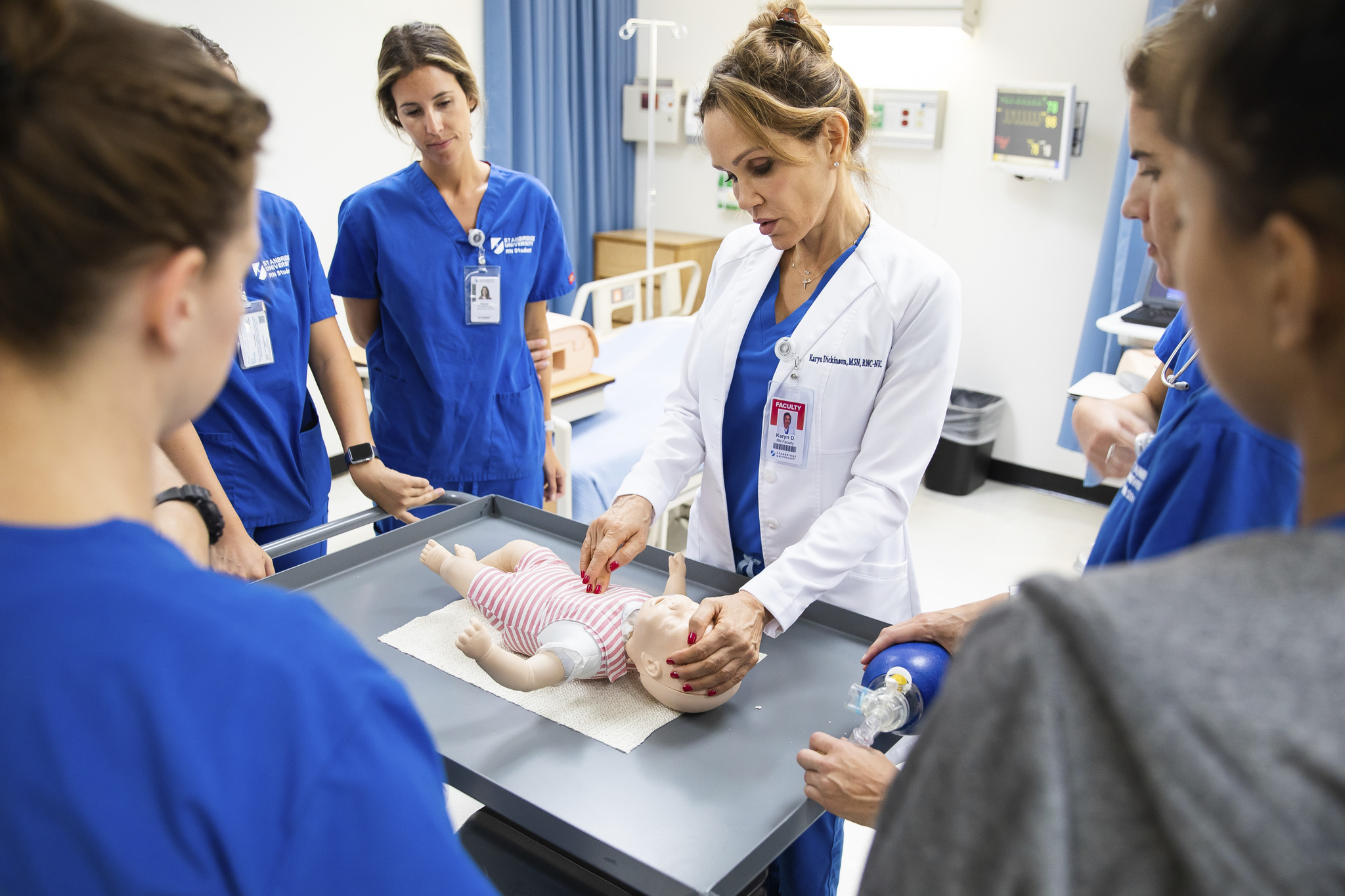
A nursing skills lab is a controlled educational environment where students can practice nursing procedures before applying them in patient-care settings. Depending on the program and course, students may practice skills related to vital signs, assessment, infection prevention, medication administration, mobility, documentation, and other nursing responsibilities.
Because skills labs are designed for learning, students can repeat techniques, receive faculty feedback, and develop greater familiarity before working with patients.
Clinical training is different because it takes place within healthcare environments and involves the realities of patient care. Patients may have several diagnoses, medications, concerns, and care needs at once. Therefore, students must begin integrating individual skills rather than practicing them in isolation.
Where Does Simulation Fit Into Nursing Education?
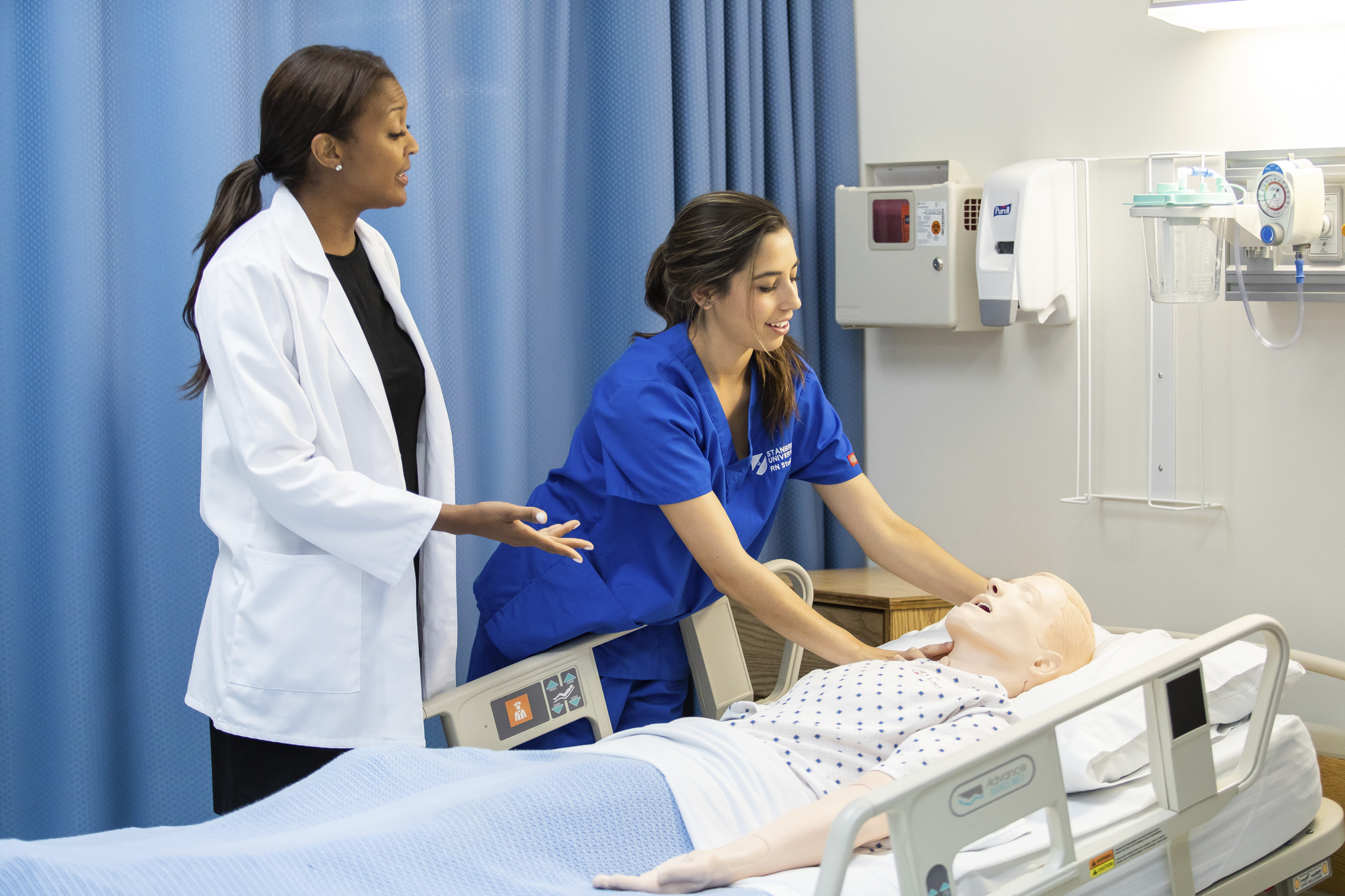
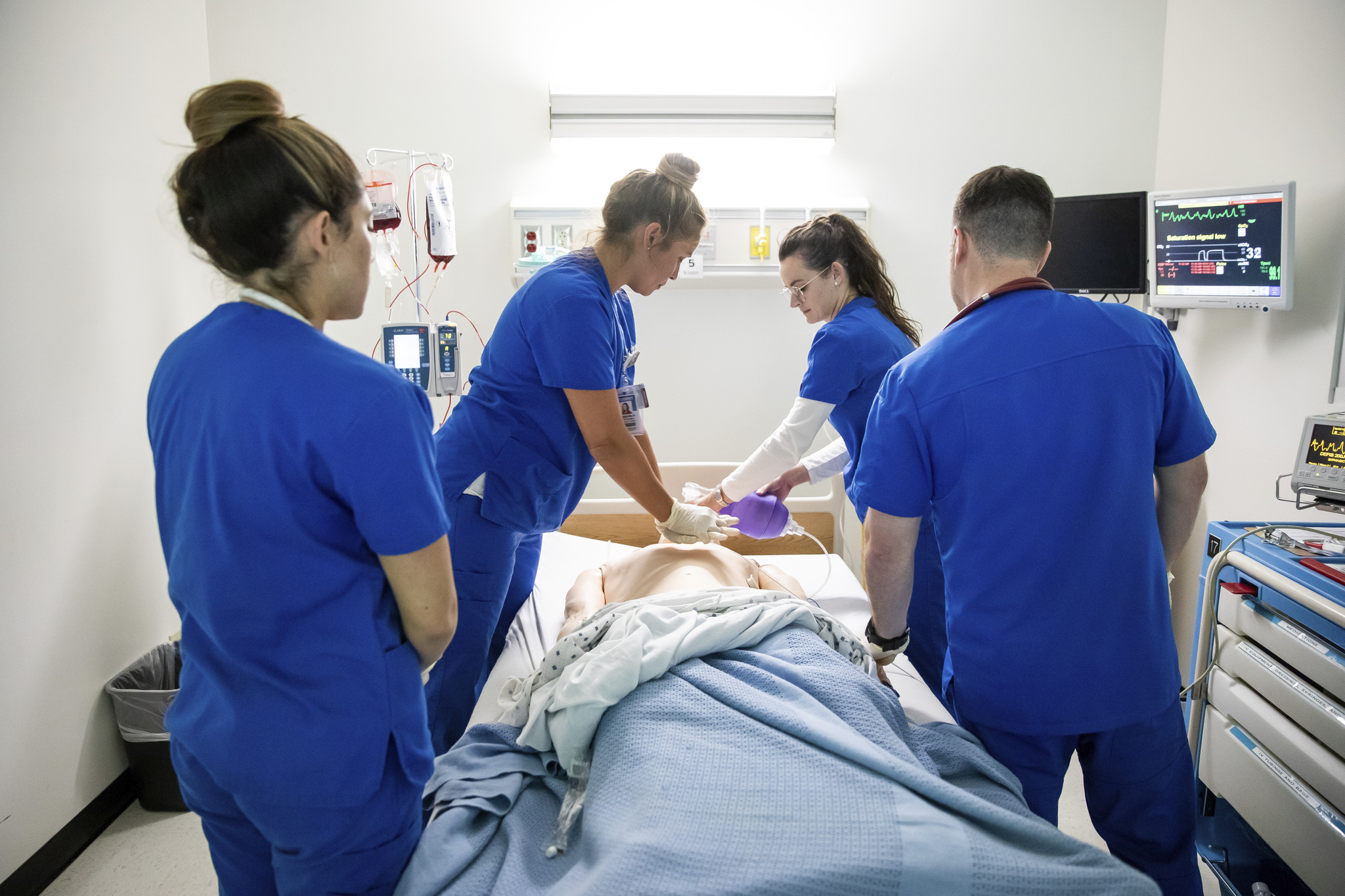
Simulation provides another bridge between classroom learning and clinical training. Instead of practicing isolated skills (like in a skills lab), in simulation, students encounter realistic patient-care scenarios that require them to bring several concepts together.
For example, when a simulated patient experiences a change in condition, students may need to assess the situation, identify relevant findings, communicate with the healthcare team, determine priorities, and respond appropriately within their student role.
Because the scenario is controlled, faculty can pause, observe, provide feedback, and help students reflect on their decisions.
Because it does not deal with real patients, simulation is not interchangeable with clinical education. Rather, it can help students prepare to apply nursing knowledge and skills during supervised patient care by building their skills and confidence.
How Does Clinical Training Develop Nursing Judgment?
Classroom instruction can teach students what findings, conditions, and interventions mean. Clinical education adds the complexity of applying that information to an individual patient.
For example, knowing the normal range for a vital sign is classroom knowledge. During clinical education, students may need to consider whether a patient’s current measurement has changed, what symptoms are present, what medications the patient is receiving, and which findings should be reported.
Similarly, students may understand several nursing interventions individually but need clinical experience to learn how responsibilities are prioritized within a shift.
Over time, supervised clinical experiences can help students strengthen clinical judgment, organization, communication, and decision-making.
How Are Classroom and Clinical Courses Graded?
Classroom and clinical courses are often graded differently. Theory courses often evaluate students through examinations, assignments, presentations, or other academic assessments. Clinical education, on the other hand, focuses more heavily on whether students can demonstrate required competencies safely and appropriately.
This distinction reflects the different purposes of the learning environments. Knowing nursing concepts academically and demonstrating nursing competencies in practice are related, but they are not the same.
What Does This Look Like in Stanbridge University’s Vocational Nursing Program?
Stanbridge University’s Associate of Occupational Science in Vocational Nursing program intentionally connects theory, skills laboratory learning, simulation, clinical practice, reflection, and professional development.⁴
For example, students complete nursing courses in areas such as fundamentals, medical-surgical nursing, mental health, maternal-newborn nursing, pediatrics, and leadership. Many of these subjects include corresponding laboratory or clinical components.⁵
The program includes 1,721 total program hours, with individual courses divided among didactic, laboratory, and clinical instruction.⁶ For example, Advanced Nursing Fundamentals includes theory and laboratory instruction followed by a 128-hour clinical component. This structure allows students to encounter concepts in more than one learning environment as they progress through the program.
What Does This Look Like in Stanbridge University’s BSN Program?
Stanbridge University’s Bachelor of Science in Nursing program also combines theory, laboratory learning, simulation, and clinical education.³
The program is designed to develop evidence-based nursing knowledge alongside clinical reasoning, nursing skills, decision-making, leadership, and professional values.³
Coursework progresses through areas including nursing fundamentals, pharmacology, medical-surgical nursing, mental health, maternal-newborn care, pediatrics, community health, and leadership.⁵
Students must complete all required clinical hours, which can include clinical rotations and required community rotations.⁷ Concepts introduced academically are reinforced and applied through laboratory, simulation, and supervised clinical experiences.
What Should You Look for When Comparing Nursing Programs?
If you’re comparing nursing schools, consider how each program connects classroom and clinical education.
Ask:
- When does clinical education begin?
- How are skills labs incorporated into nursing courses?
- How does the program use simulation?
- What types of clinical experiences are included?
- When can clinical rotations occur?
- How does the curriculum progress from foundational to more complex nursing concepts?
- How are students evaluated in theory and clinical courses?
You should also verify the program’s state approval. California prelicensure RN programs (such as a BSN program) must be approved by the BRN, while California vocational nursing programs are approved by the BVNPT.¹ ²
Looking at both the academic and clinical sides of a program can give you a better picture of what nursing school will actually involve.
Why Do Nursing Programs Need Both Classroom and Clinical Learning?
Nursing requires both knowledge and the ability to apply that knowledge safely. Classroom education alone cannot recreate all the variables involved in patient care. At the same time, clinical experience without a strong theoretical foundation would not provide students with the knowledge needed to understand why nursing decisions matter.
Skills labs and simulation help connect those two environments. Together, these experiences help nursing students progress from understanding concepts to applying them appropriately within increasingly complex situations.
A student may begin by learning what an intervention is. Then they practice how to perform it. Finally, clinical education helps them understand when, why, and how that intervention fits into an individual patient’s care.
Together, these experiences help students develop the knowledge, skills, clinical judgment, communication, and professional behaviors required for their nursing pathway.
If you’re exploring nursing education at Stanbridge University, review the current Vocational Nursing and Bachelor of Science in Nursing programs or contact Stanbridge University. Financial aid is available for those who qualify.
Frequently Asked Questions
Classroom learning develops nursing knowledge and theoretical understanding, while clinical training gives students supervised opportunities to apply appropriate knowledge and skills in patient-care environments. Skills labs and simulation help connect the two.
Nursing coursework may include anatomy and physiology, pharmacology, nursing fundamentals, medical-surgical nursing, mental health, maternal-newborn care, pediatrics, communication, leadership, and other subjects, depending on the program.
Yes. Clinical education gives students supervised opportunities to participate in patient care. Responsibilities depend on the nursing program, course, clinical placement, and student’s level of progression.
No. Simulation uses controlled patient-care scenarios that allow students to practice assessment, communication, clinical judgment, and other skills. Clinical training involves supervised learning in healthcare environments with patients.
Yes. California requires vocational nursing education to include both theory and clinical instruction. The BVNPT requires a minimum of 576 theory hours and 954 clinical hours within the state’s 1,530-hour required vocational nursing curriculum.²
Yes. BSN education combines nursing theory with laboratory, simulation, and supervised clinical learning. Students apply concepts from their academic coursework as they progress through patient-care experiences.
Footnotes
¹ California Board of Registered Nursing, Nursing Programs https://www.rn.ca.gov/education/programs
² California Board of Vocational Nursing and Psychiatric Technicians, Licensed Vocational Nurses: Curriculum Requirements https://www.bvnpt.ca.gov/licensees/licensed_vocational_nurses.shtml
³ Stanbridge University Catalog, Bachelor of Science in Nursing – General Information https://catalog.stanbridge.edu/programs/bachelor-of-science-in-nursing-bsn/bsn-general-information/
⁴ Stanbridge University Catalog, Associate of Occupational Science in Vocational Nursing – General Information https://catalog.stanbridge.edu/programs/aosvn-program/aosvn-general-information/
⁵ Stanbridge University Catalog, All Course Descriptions https://catalog.stanbridge.edu/all-course-descriptions/
⁶ Stanbridge University Catalog, Associate of Occupational Science in Vocational Nursing – Program Overview https://catalog.stanbridge.edu/programs/aosvn-program/aosvn-program-overview/
⁷ Stanbridge University Catalog, Bachelor of Science in Nursing – Attendance Policies https://catalog.stanbridge.edu/programs/bachelor-of-science-in-nursing-bsn/bsn-attendance-policies/