Occupational Therapy Student Leslie Bergado’s Makes an Impact Through Fellowship with Triumph Foundation
Stanbridge University Master of Science in Occupational Therapy student Leslie Bergado recently turned 58 hours of community service into a hands-on leadership experience through LEAD California’s Community Engagement Student Fellowship (CESF), working alongside Triumph Foundation to support adaptive recreation and community programming for individuals with disabilities. During the four-month fellowship, Leslie helped plan and lead three large-scale adaptive recreation events for patients with spinal cord injuries and other disabilities. The experience connected community service with leadership development, disability advocacy, and Leslie’s long-term goal of becoming an occupational therapist.
What Is the LEAD California Community Engagement Student Fellowship?
The Community Engagement Student Fellowship (CESF) is an initiative from LEAD California, an organization dedicated to connecting colleges and universities with opportunities for civic and community engagement. The fellowship is designed to support student leaders involved in service, service-learning, and community engagement across California.¹
During the four-month fellowship, students directly serve their communities, support service-learning initiatives, or contribute to both. Through the program, students address social needs while developing civic and professional leadership skills.¹
Leslie was selected as a Spring 2026 CESF Student Fellow representing Stanbridge University. LEAD California identifies her as a Master of Science in Occupational Therapy student with an interest in patient advocacy, client-centered care, and service to people with different needs and abilities.¹ For her fellowship, she partnered with Triumph Foundation.
How Does Triumph Foundation Support People With Disabilities?
Triumph Foundation is a nonprofit organization that primarily serves children, adults, and veterans living with a spinal cord injury or disorder, as well as other disabilities.²
The foundation’s programs support people at several stages of life after injury. Triumph Foundation works with hospitals and rehabilitation centers to provide resources for people with newly acquired spinal cord injuries, offers grants and equipment, supports employment and community reintegration, and organizes adaptive recreation programs.²
The organization’s adaptive recreation program includes sports, fitness, wellness, and outdoor recreation designed to increase participation and inclusion for people with disabilities.³
Triumph also operates its Keep Moving Forward Grant program, which can help individuals with spinal cord injuries obtain adaptive equipment, home modifications, return-to-work resources, and therapeutic or recreational supports.⁴
For Leslie, working with Triumph provided an opportunity to engage directly with a community closely connected to occupational therapy practice.
What Did Leslie Bergado Do During Her Community Engagement Fellowship?
A major part of Leslie’s fellowship involved creating and revising event manuals for Triumph Foundation. These resources provide step-by-step guidance for organizing and facilitating community events. The manuals can also be shared with Triumph Foundation ambassadors who want to develop and lead adaptive recreation programs within their own communities.
To design and create these resources, Leslie had to think through how an event moves from planning to implementation, including how best to support participants as well as how instructions should be organized so that other leaders can understand and apply them. Most importantly, she later had the opportunity to see how those materials functioned in practice.
Putting Community Engagement into Practice Through Adaptive Recreation
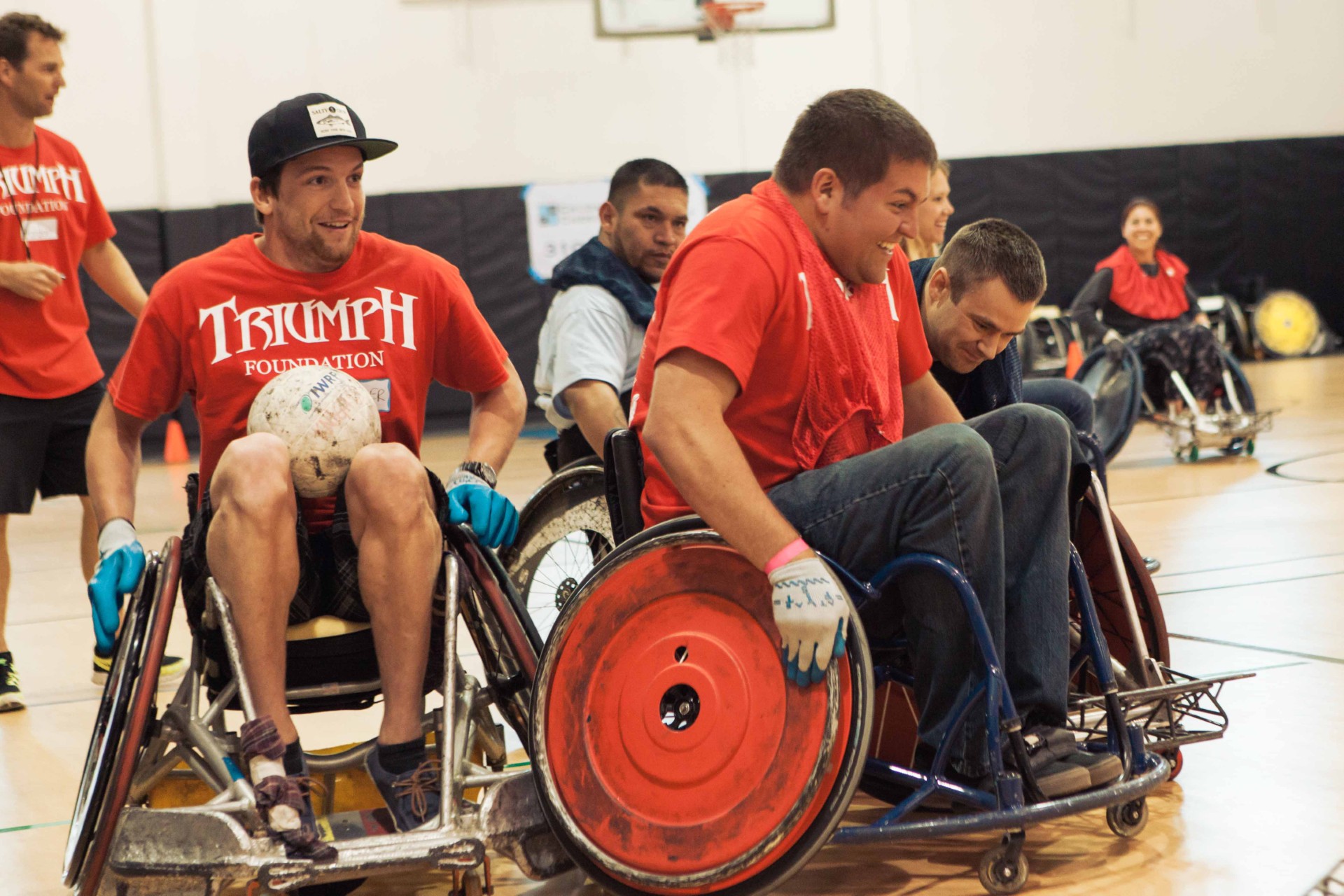
Leslie helped pilot and implement the event resources she worked on at three large-scale community events:
- Burbank Sports Expo
- Roll & Rally
- Wheelchair Sports Festival
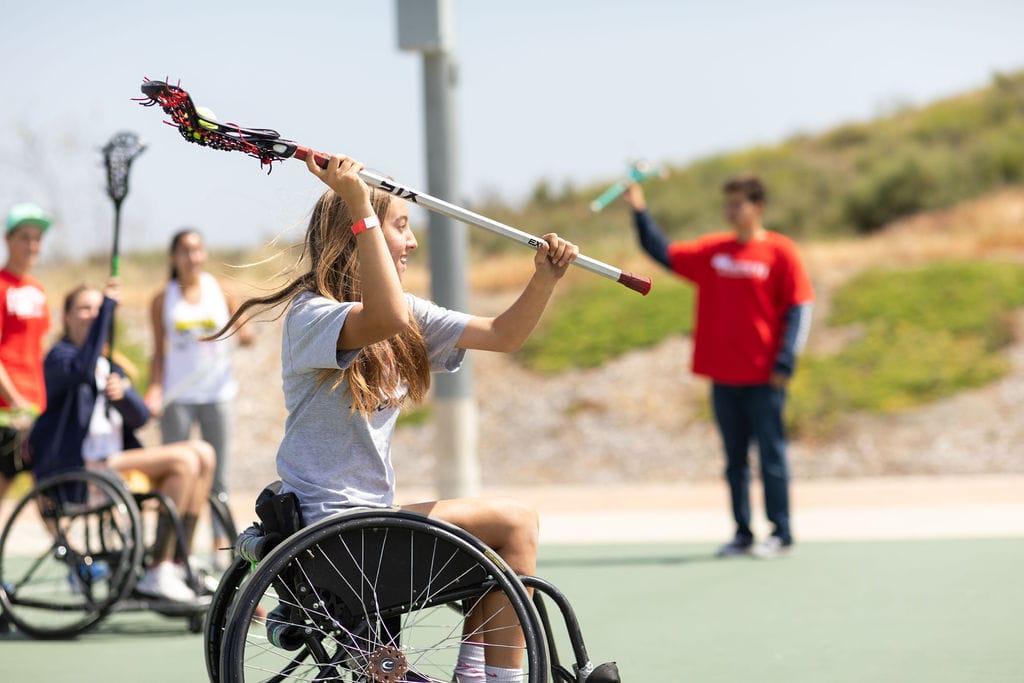
Triumph Foundation’s Wheelchair Sports Festival is one of its major adaptive recreation events and brings together participants with and without disabilities for activities including wheelchair basketball, hockey, rugby, hand cycling, adapted scuba, and other sports.³
For Leslie, participating in these events added another dimension to the fellowship. She moved from developing organizational resources to applying them in environments where schedules, teams, participants, and unexpected challenges had to be managed in real time.
Building Leadership Skills Through Community Service
Across her 58 hours of service, Leslie identified growth in several areas:
- Taking initiative
- Delegating responsibilities
- Collaborating with a team
- Adapting under pressure
- Responding to unexpected challenges
- Building confidence as a leader
These skills developed over time through practical responsibility for her project. Helping coordinate community events required Leslie to recognize what needed to be done, communicate with others, distribute responsibilities, and adjust when circumstances changed.
This progression was one of the strongest parts of her fellowship experience. In responding to these challenges, she gained experience moving between planning, communication, leadership, and real-time problem-solving.
A Deepened Interest in Occupational Therapy
In addition to building her leadership skills, Leslie’s fellowship gave her opportunities to see people with different abilities explore sports and recreation, which aligns closely with the goals of occupational therapy. Occupational therapy considers how health conditions, disability, environments, and other factors influence a person’s ability to participate in meaningful activities. Occupational therapists may help people develop or adapt the skills needed for self-care, work, education, recreation, community mobility, and other areas of daily life.
Through her work with Triumph Foundation, Leslie gained greater exposure to how participation and independence can look different for every individual. The experience strengthened her interest in working with people with disabilities and gave her another perspective on how occupational therapy can support participation, independence, and quality of life.
How Does Adaptive Recreation Connect with Occupational Therapy?
Recreation is a meaningful part of daily life that provides social connection, identity, confidence, routine, competition, enjoyment, and a sense of belonging. For someone adjusting to a spinal cord injury or mobility impairment, returning to meaningful recreation may require changes in equipment, technique, environment, or accessibility. That is one reason adaptive recreation connects naturally with occupational therapy principles.
An occupational therapist may consider questions such as:
- What activity does the individual want to participate in?
- What physical, cognitive, environmental, or social barriers are affecting participation?
- Could adaptive equipment increase access?
- Can the activity or environment be modified?
- What skills does the individual need to participate more independently?
- How does the activity connect with the person’s broader goals and quality of life?
Asking these questions helps an occupational therapist to support each individual’s specific needs, and knowing what questions to ask is an important part of providing that support. In that regard, Leslie’s fellowship gave her a community-based perspective on many of the participation and accessibility issues that occupational therapists may encounter throughout professional practice.
How Did the Fellowship Support Leslie’s Professional Development?
Community engagement also expanded Leslie’s professional network. During the fellowship, she connected with organizations including Casa Colina Hospital and Centers for Healthcare and learned more about adaptive recreation and transitional living programs.
Exposure to organizations working across rehabilitation and disability services helped Leslie see how community organizations, healthcare providers, rehabilitation professionals, volunteers, and advocates can contribute to a broader network of support. The experience also encouraged her interest in continuing to volunteer with Outdoor Adventure and Wheelchair Sports programs.
Why Is Community Engagement Important in Occupational Therapy Education?
Graduate healthcare education develops professional knowledge, clinical reasoning, evidence-based practice, and discipline-specific competencies. In addition to these important skills, community engagement can add a different kind of learning. Community service often places students in situations where they need to communicate with people outside an academic environment, collaborate with community organizations, respond to practical constraints, and understand needs from the perspective of the people being served.
At Stanbridge University, community service is part of the broader student experience. Students complete community service hours as part of their graduation requirements, often through Stanbridge Outreach initiatives.⁶ These projects include community partnerships focused on areas such as disability advocacy, food security, environmental rehabilitation, childhood literacy, and other community needs.⁷ Experiences such as Leslie’s fellowship extend that engagement by giving a student sustained responsibility within one specific part of the community.
From 58 Hours of Community Service to a Broader View of Occupational Therapy
Leslie’s fellowship began with a community service commitment and developed into a project that combined resource creation, event implementation, adaptive recreation, leadership, and professional networking.
Across 58 hours of direct service, she helped create resources that could continue supporting Triumph Foundation events, applied those resources during three large community programs, and gained practical experience leading and collaborating under changing conditions. Just as importantly, working alongside people with disabilities gave her another perspective on participation and independence.
For Leslie, that experience reinforced her interest in occupational therapy and in serving communities where accessibility, inclusion, and meaningful participation remain central concerns.
As she takes her next steps through her occupational therapy career, she will carry forward a deeper understanding of leadership, community partnership, and the role meaningful activity can play in people’s lives.
To learn more about graduate occupational therapy education at Stanbridge University, explore the Master of Science in Occupational Therapy program. To learn more about community engagement opportunities, visit Stanbridge Outreach.
Frequently Asked Questions
The Community Engagement Student Fellowship is a four-month LEAD California initiative that supports students participating in direct service, service-learning, and community engagement at member colleges and universities throughout California.¹
Leslie Bergado is a Stanbridge University Master of Science in Occupational Therapy student and Spring 2026 LEAD California Community Engagement Student Fellow. Her fellowship partnered her with Triumph Foundation.¹
Leslie completed 58 hours of direct service through her fellowship with Triumph Foundation.
Leslie helped create and revise event manuals for Triumph Foundation and helped pilot their implementation at the Burbank Sports Expo, Roll & Rally, and Wheelchair Sports Festival. She also gained experience with leadership, teamwork, delegation, and adapting to unexpected challenges.
Triumph Foundation supports people living with spinal cord injury, paralysis, and other disabilities through newly injured support, grants and equipment, adaptive recreation, employment assistance, and community programs.² ³
The fellowship gave Leslie opportunities to engage with people with different abilities participating in adaptive recreation. The experience strengthened her interest in how occupational therapy can support participation, independence, accessibility, and quality of life.
Footnotes
¹ LEAD California, Community Engagement Student Fellowship Overview and Spring 2026 Student Fellows https://leadcalifornia.org/cesf-overview/
² Triumph Foundation, About Us https://triumph-foundation.org/about-us/
³ Triumph Foundation, Adaptive Recreation https://triumph-foundation.org/adaptive-recreation/
⁴ Triumph Foundation, Grants & Equipment https://triumph-foundation.org/outreach/grants-and-equipment/
⁵ Triumph Foundation, Outpatient Activity-Based Therapy and Rehabilitation Resources https://triumph-foundation.org/resource/outpatient-rehabilitation-centers/
⁶ Stanbridge University, Master of Science in Occupational Therapy https://www.stanbridge.edu/program/msot
⁷ Stanbridge University, Outreach Program https://www.stanbridge.edu/outreach