What Should You Know Before Starting a Healthcare Career?
Basic Overview
Before starting a healthcare career, it is important to understand educational requirements, licensure pathways, workplace environments, and long-term career goals. Healthcare includes a wide range of professions, from nursing and rehabilitation to occupational therapy and physical therapy, each with different responsibilities and educational pathways. Exploring your interests and career objectives can help you identify the healthcare profession that best aligns with your goals.

Understanding Healthcare Career Options
Healthcare is one of the largest and most diverse career fields in the United States. From nursing and rehabilitation to therapy and patient support services, healthcare professionals play important roles in helping individuals improve their health and quality of life.
For those considering it, choosing a healthcare career often involves more than selecting a profession. It also means understanding educational pathways, workplace expectations, and long-term career goals.
Before starting a healthcare career, there are several important factors to consider.
Why Do People Choose Healthcare Careers?
Healthcare careers attract individuals for many different reasons.
Some people are drawn to the opportunity to help others, while others enjoy science, rehabilitation, education, or working directly with patients.
Healthcare careers often offer:
- Opportunities to make a difference in people’s lives
- Direct patient interaction
- Diverse work environments
- Specialized areas of practice
- Multiple educational pathways
Because healthcare includes many professions, students have the opportunity to explore roles that align with their personal interests and career goals.
What Types of Healthcare Careers Are Available?
Healthcare includes a wide range of professions.
Examples include:
Nursing Careers
Nurses provide patient care, education, and support in a variety of healthcare settings.
Examples include but not limited to:
- Licensed Vocational Nurse (LVN)
- Registered Nurse (RN)
- Nurse Practitioner (NP)
Allied Health Careers
Allied health professionals support patient care, rehabilitation, diagnosis, and wellness.
Examples include but not limited to:
- Occupational Therapy Assistant (OTA)
- Occupational Therapist (OT)
- Physical Therapist Assistant (PTA)
- Respiratory Therapist
- Diagnostic Medical Sonographer
Each profession has different responsibilities, educational requirements, and licensure pathways.
What Education Is Required for Healthcare Careers?
Educational requirements vary depending on the profession, level of responsibility, and licensure requirements.
Vocational Nursing (LVN)
If you are interested in vocational nursing, you must typically complete an approved vocational nursing program that includes classroom instruction, skills training, and clinical education experiences. After graduation, you can pursue Licensed Vocational Nurse (LVN) licensure requirements, including the NCLEX-PN examination and any state regulations.
Registered Nursing (RN)
If you want to become a Registered Nurse, you will typically complete either an Associate Degree in Nursing (ADN) or a Bachelor of Science in Nursing (BSN). After completing an approved nursing program, you can pursue Registered Nurse licensure requirements, including the NCLEX-RN examination and any applicable state requirements.
Occupational Therapy Assistant (OTA)
If you are interested in becoming an Occupational Therapy Assistant, you will typically complete an associate degree program that includes classroom instruction and supervised fieldwork experiences. After graduation, you must pursue certification through the National Board for Certification in Occupational Therapy (NBCOT) and meet applicable state licensure requirements before entering practice.
Occupational Therapist (OT)
If you are interested in becoming an Occupational Therapist, you will typically complete a master’s degree program that includes graduate coursework and supervised fieldwork experiences. After graduation, you generally pursue certification and state licensure requirements, including the NBCOT exam, before entering practice.
Physical Therapist Assistant (PTA)
If you want to become a Physical Therapist Assistant, you will typically complete an associate degree program that includes classroom instruction, laboratory training, and clinical education experiences. After graduation, you generally pursue licensure requirements established by your state, including the NPTE exam, before entering practice.
Understanding educational requirements can help you identify healthcare pathways that align with your interests, preferred educational timeline, and long-term career goals.
What Skills Are Helpful in Healthcare Careers?
While each profession requires different technical skills, many healthcare careers share common professional competencies.
Examples include:
- Communication skills
- Critical thinking
- Problem-solving abilities
- Adaptability
- Teamwork
- Professionalism
- Compassion and empathy
Healthcare professionals frequently work with patients, families, and interdisciplinary healthcare teams, making strong interpersonal skills important across many professions.
What Are Healthcare Work Environments Like?
Healthcare professionals work in a variety of settings depending on their profession and specialty.
Common healthcare environments include:
- Hospitals
- Outpatient clinics
- Rehabilitation centers
- Skilled nursing facilities
- Schools
- Community health organizations
- Home healthcare settings
The work environment often influences the patient population, daily responsibilities, and pace of work.
How Important Are Long-Term Career Goals?
Long-term goals can play an important role when selecting a healthcare profession.
Questions you may consider include:
- Do you want to work directly with patients?
- Are you interested in rehabilitation, nursing, or healthcare education?
- Do you plan to pursue advanced degrees in the future?
- Are leadership or teaching roles important to your goals?
- How much time do you want to invest in your education before entering the workforce?
Considering these questions early can help you choose educational pathways that align with their long-term objectives.
What Should You Know About Clinical and Fieldwork Experiences?
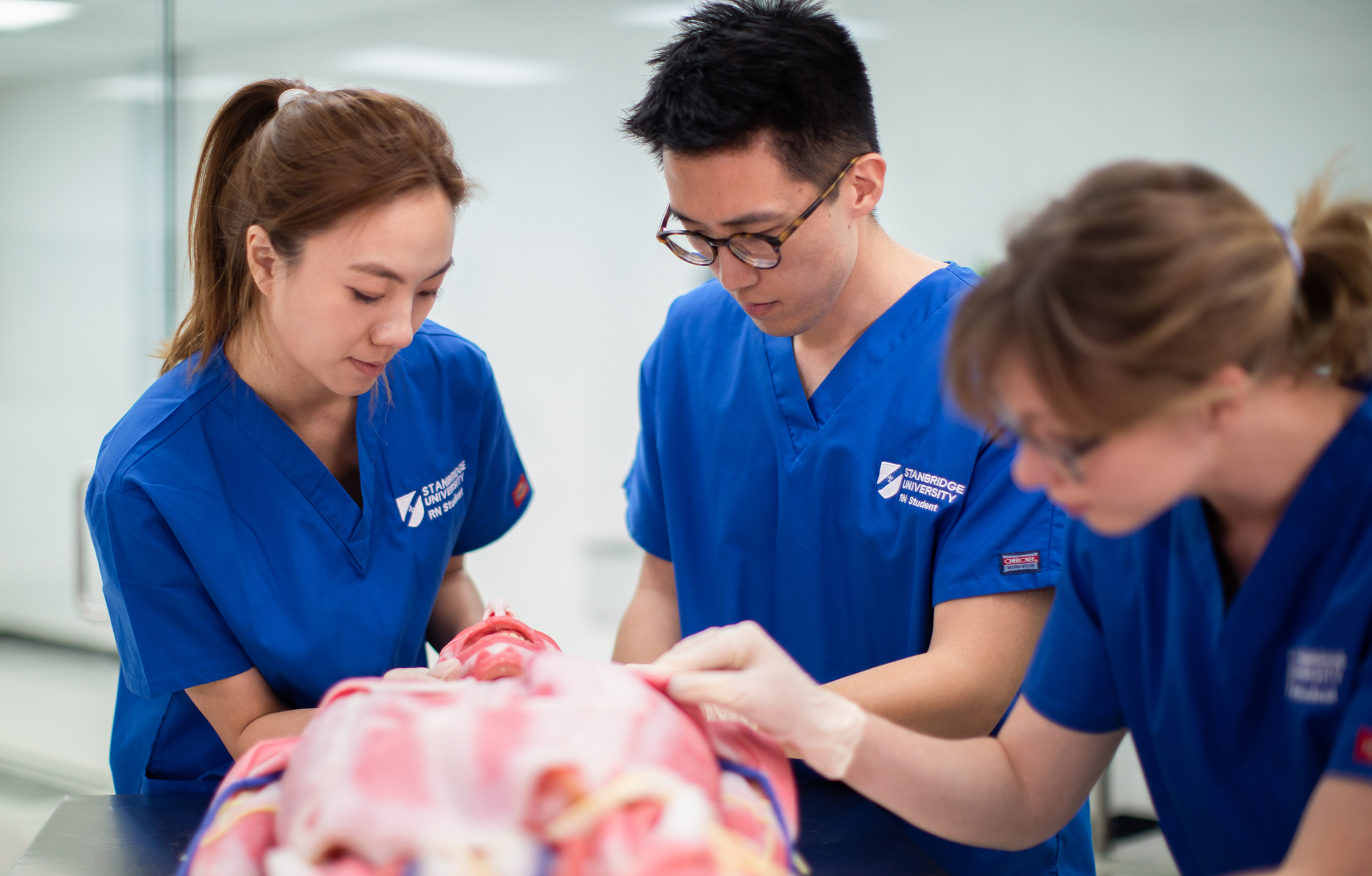
Many healthcare programs include hands-on learning experiences that allow you to apply classroom concepts in real-world settings.
Depending on the profession, these experiences may include:
- Clinical education
- Fieldwork experiences
- Laboratory instruction
- Simulation-based learning
These educational experiences are designed to help you develop practical knowledge and professional skills within supervised learning environments.
Exploring Healthcare Education Pathways at Stanbridge University
Students interested in healthcare careers can explore several educational pathways at Stanbridge University.
Vocational Nursing (VN)
The Stanbridge University Vocational Nursing program prepares students for Licensed Vocational Nurse career pathways through classroom instruction, hands-on learning, and clinical education experiences.
Bachelor of Science in Nursing (BSN)
Stanbridge University’s Bachelor of Science in Nursing program prepares students for Registered Nurse career pathways through nursing coursework, simulation-based learning, and clinical experiences.
Occupational Therapy Assistant (OTA)
Stanbridge University’s Occupational Therapy Assistant program prepares students to support Occupational Therapists in helping patients develop or regain skills needed for daily living and participation.
Master of Science in Occupational Therapy (MSOT)
The Stanbridge University Master of Science in Occupational Therapy program prepares students to evaluate patients, develop treatment plans, and support participation in meaningful activities.
Physical Therapist Assistant (PTA)
The Stanbridge University Physical Therapist Assistant program prepares students to work with patients recovering from injury, illness, and surgery while supporting mobility and rehabilitation goals.
Is a Healthcare Career Right for You?
Healthcare careers offer opportunities to work with patients, support recovery and wellness, and contribute to healthcare teams.
Understanding educational requirements, workplace expectations, and long-term career goals can help you identify professions that align with their interests and aspirations.
Taking time to research healthcare pathways before enrolling in a program can help you make more informed educational and career decisions.

Frequently Asked Questions
Before starting a healthcare career, you should understand educational requirements, workplace environments, licensure pathways, patient populations, and long-term career goals.
Many healthcare careers do not require medical school, including Licensed Vocational Nurse, Registered Nurse, Occupational Therapy Assistant, Physical Therapist Assistant, and Occupational Therapist pathways.
Communication, critical thinking, adaptability, teamwork, professionalism, and compassion are important skills across many healthcare professions.
Choosing the right healthcare career involves evaluating your interests, preferred work environment, educational goals, patient populations, and long-term professional objectives.
Many healthcare education programs include clinical education, fieldwork, laboratory instruction, or simulation-based learning experiences as part of the curriculum.
Footnotes
¹ Stanbridge University Program Information
https://www.stanbridge.edu/program/vn
https://www.stanbridge.edu/program/bsn
https://www.stanbridge.edu/program/ota
https://www.stanbridge.edu/program/pta
https://www.stanbridge.edu/program/msot