What Degree Do You Need to Become a Registered Nurse?
To become a registered nurse, you need to complete an approved nursing education program that prepares you for the National Council Licensure Examination for Registered Nurses (NCLEX-RN). Two common degree pathways are an Associate Degree in Nursing (ADN) and a Bachelor of Science in Nursing (BSN). Both can lead toward RN licensure, but they differ in program length, curriculum, and educational scope. After completing your program, you must satisfy the licensing requirements of the state where you plan to practice.¹

What is an Associate Degree in Nursing?
An Associate Degree in Nursing is an undergraduate degree designed to prepare you for entry-level registered nursing practice. Depending on the program and institution, ADN programs are often designed to be completed in about two years, although your prerequisites and your individual enrollment plan may affect your overall timeline.
ADN programs commonly cover patient assessment, nursing fundamentals, pharmacology, medical-surgical nursing, mental health, maternal-newborn care, pediatric nursing, and supervised clinical practice. After completing a qualifying ADN program, you can apply to take the NCLEX-RN and complete any other requirements for state licensure.
What Is a Bachelor of Science in Nursing?
A Bachelor of Science in Nursing is an undergraduate degree that prepares you to pursue registered nurse licensure while providing a broader nursing curriculum. Depending on the program and institution, BSN programs are often designed to be completed in about four years, with some variability around transfer credits, accelerated pathways, and individual enrollment plans.
Like an ADN program, a BSN program includes core nursing instruction, laboratory learning, and supervised clinical experiences. In addition, BSN education commonly includes further study in areas such as community and public health, leadership, nursing research, evidence-based practice, healthcare systems, and professional nursing.
As a result, a BSN can support both entry into registered nursing and future educational goals. For example, if you later decide to pursue graduate nursing education, a BSN can provide the undergraduate foundation required by many master’s and doctoral nursing programs.
How Do ADN and BSN Programs Compare?
Both ADN and BSN programs are designed to prepare you to pursue registered nurse licensure. In either pathway, you’ll study similar subjects, and you’ll complete supervised clinical experiences that help you apply classroom knowledge while developing communication, patient care, documentation, and clinical decision-making skills.
The primary differences revolve around the type of degree earned, program length, program scope, and curriculum. While an ADN typically focuses on core nursing knowledge and clinical preparation, a BSN usually includes more general education courses and additional upper-division nursing coursework in areas such as leadership, nursing research, evidence-based practice, community and public health, and healthcare systems. As a result, BSN programs are generally designed to be completed in four years, while ADN programs usually last two.
Both pathways require graduates to pass the NCLEX-RN and meet applicable state licensing requirements before practicing as registered nurses.¹ However, some healthcare employers may prefer or require a Bachelor of Science in Nursing for certain positions, leadership opportunities, or advancement pathways.
Ultimately, the right pathway depends on your educational background, career goals, preferred timeline, and plans for future education. If you’d like a more detailed comparison of the two pathways, explore our guide to ADN vs. BSN: Which Nursing Pathway Is Right for You?
What Are the RN Licensure Requirements in California?
California’s Board of Registered Nursing (BRN) oversees RN licensure in the state.
To earn an RN license in California, you must:
- Complete a nursing education program that meets California requirements
- Submit an application for licensure by examination
- Provide the required transcripts and supporting documents
- Complete fingerprinting and the required background review
- Register for and pass the NCLEX-RN
- Meet any additional requirements identified by the California BRN¹
California also requires specific coursework in communication, anatomy, physiology, microbiology, behavioral science, and social science as part of the educational requirements for RN examination applicants.² You can learn more about nursing program approvals and accreditations here.
Requirements and application procedures may change over time. Therefore, you should review the California BRN website directly before making educational or licensing decisions.
What Should You Consider When Choosing an RN Degree Program?
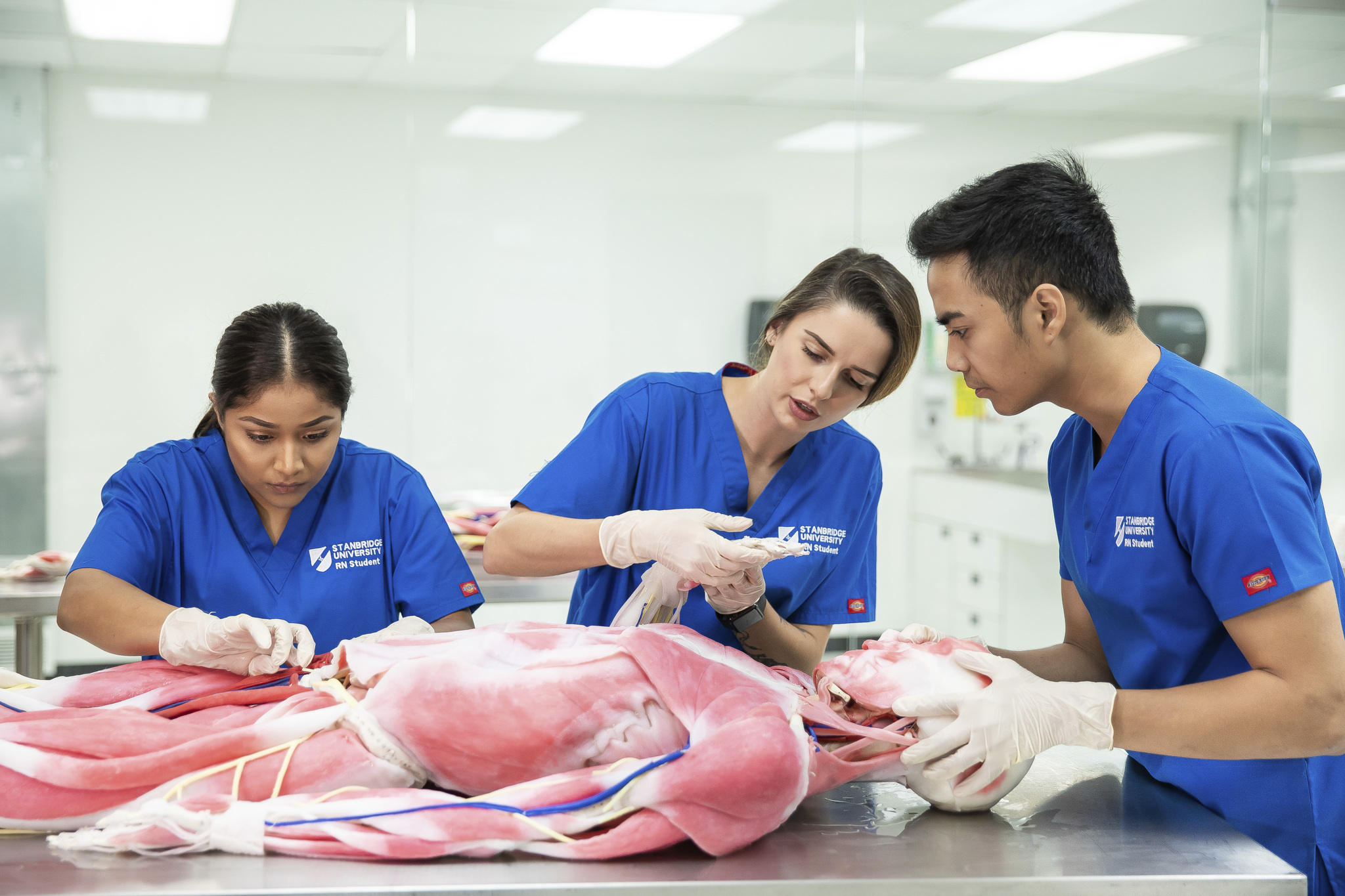
Before selecting a nursing program, it’s important to review more than the degree title. You should confirm that the program has the approvals and accreditation needed for graduates to pursue licensure in the state where you plan to practice. Additionally, you can compare the curriculum, schedule, program duration, clinical education, admission requirements, student support services, and published licensure outcomes between schools.
Useful questions to ask as you compare nursing programs include:
- Does the program meet state nursing education requirements?
- What nursing and general education courses are included?
- Where and when are classes, laboratories, and clinical rotations scheduled?
- What is the approximate program duration?
- What are the program’s published NCLEX-RN pass rates?
- What academic and licensure preparation resources are available?
Asking these questions can help you make a more informed decision about your education.
How Does Stanbridge University’s BSN Program Prepare You for RN Licensure?
If you’re exploring BSN programs in California, it’s helpful to understand how classroom learning, hands-on training, and clinical education work together to prepare you for registered nursing practice.
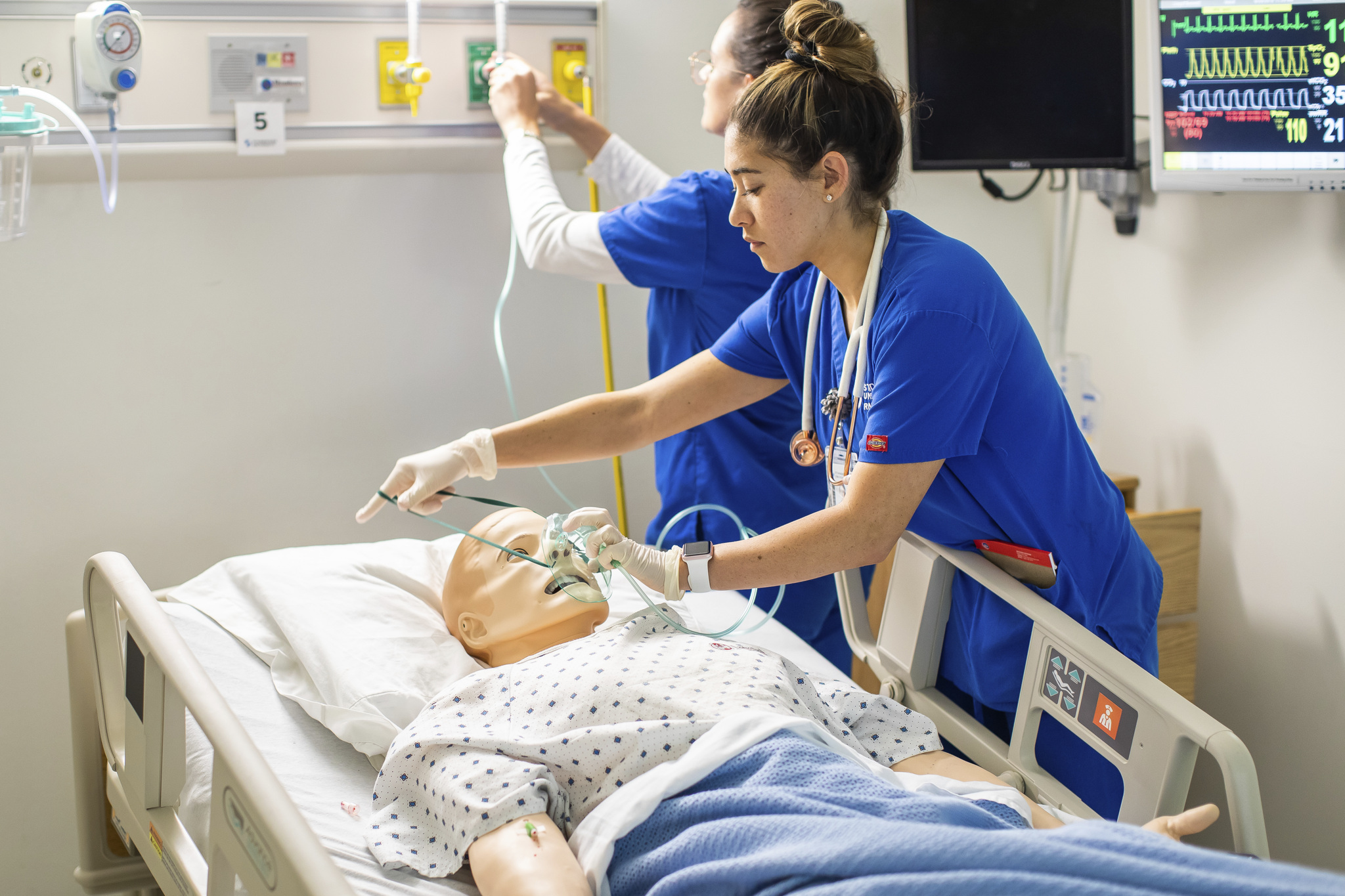
Stanbridge University’s Bachelor of Science in Nursing program combines nursing coursework, laboratory instruction, simulation-based learning, and supervised clinical experiences designed to help you build the knowledge, technical skills, and clinical judgment needed for entry-level nursing practice. Throughout the program, you’ll learn how to assess patients, communicate with healthcare teams, apply evidence-based practice, and make informed clinical decisions in a variety of healthcare settings.³
The Bachelor of Science in Nursing program is approved by the California Board of Registered Nursing at the Orange County, Los Angeles, and Riverside campuses. The San Diego, San Marcos campus is pending BRN approval. In addition, the program is accredited by the Commission on Collegiate Nursing Education (CCNE).³
The curriculum consists of 180 quarter credit hours and is designed to be completed in approximately 36-37 months, although completion time may vary depending on cohort scheduling and individual progression.³ Stanbridge University reports a 98% NCLEX-RN licensure pass rate for 2023–2025 across its Orange County, Los Angeles, and Riverside campuses.³
You can learn more about the curriculum, admissions requirements, accreditation, approvals, and published outcomes by visiting the Stanbridge University Bachelor of Science in Nursing program page.
Which Nursing Education Pathway Is Right for You?
The right degree for you depends on your circumstances and long-term educational goals.
If you are looking to complete your education and begin nursing practice in a shorter amount of time, an ADN may appeal to you. On the other hand, if you want a broader undergraduate curriculum that includes leadership, research, evidence-based practice, and community health, a BSN may be a better fit for your goals.
As you decide between programs, you should also consider accreditation, state approval, curriculum, clinical experiences, scheduling, cost, student support, and your plans after graduation.
Ultimately, both ADN and BSN programs can provide a pathway toward registered nurse licensure. Once you’ve confirmed that the program meets applicable requirements, the best fit is the one that aligns with your educational needs.
Frequently Asked Questions
You need an Associate Degree in Nursing or a Bachelor of Science in Nursing from a program that meets applicable state requirements. After graduating, you must pass the NCLEX-RN and complete your state’s remaining licensing requirements.¹
Yes. After completing a qualifying Associate Degree in Nursing program, you may apply to take the NCLEX-RN and pursue state licensure. Requirements vary by state, so you should review the nursing board’s current rules where you plan to practice.
No. Graduates of qualifying ADN and BSN programs may take the NCLEX-RN after meeting the applicable educational and application requirements. Both groups take the same national licensing examination.¹
An ADN is an associate-level nursing degree focused on core nursing knowledge and clinical preparation. A BSN is a bachelor’s degree that also commonly includes leadership, research, evidence-based practice, public health, and healthcare systems. Some healthcare employers may prefer or require a BSN for certain positions or advancement opportunities.
BSN programs are often designed to be completed in about four years; program length varies by institution, curriculum, schedule, and prior education. Stanbridge University’s BSN program is designed to be completed in approximately 36–37 months, although individual completion times may vary.³
Yes. Stanbridge University’s Bachelor of Science in Nursing program is accredited by the Commission on Collegiate Nursing Education (CCNE). It is also approved by the California Board of Registered Nursing (BRN) at the Orange County, Los Angeles, and Riverside campuses. The San Diego, San Marcos campus is pending BRN approval.³
Stanbridge University reports a 98% NCLEX-RN licensure pass rate for 2023–2025 across its Orange County, Los Angeles, and Riverside BSN campuses. The figure is a two-year average based on the 2023–2024 and 2024–2025 reporting years. Individual outcomes vary.³
Footnotes
¹ California Board of Registered Nursing, Licensure by Examination, https://www.rn.ca.gov/applicants/lic-exam.shtml
² California Board of Registered Nursing, Important Information for Applicants https://www.rn.ca.gov/status.shtml
³ Stanbridge University, Bachelor of Science in Nursing Program, https://www.stanbridge.edu/program/bsn