What To Consider When Comparing BSN Programs in Riverside County
If you’re comparing Bachelor of Science in Nursing (BSN) programs in Riverside County, consider California Board of Registered Nursing (BRN) approval, accreditation, NCLEX-RN pass rates, curriculum, clinical education, program length, admissions requirements, costs, student support, and location. Comparing these factors can help you find a program that aligns with your educational goals, schedule, and plans for becoming a registered nurse.
What Should You Look for in a BSN Program?
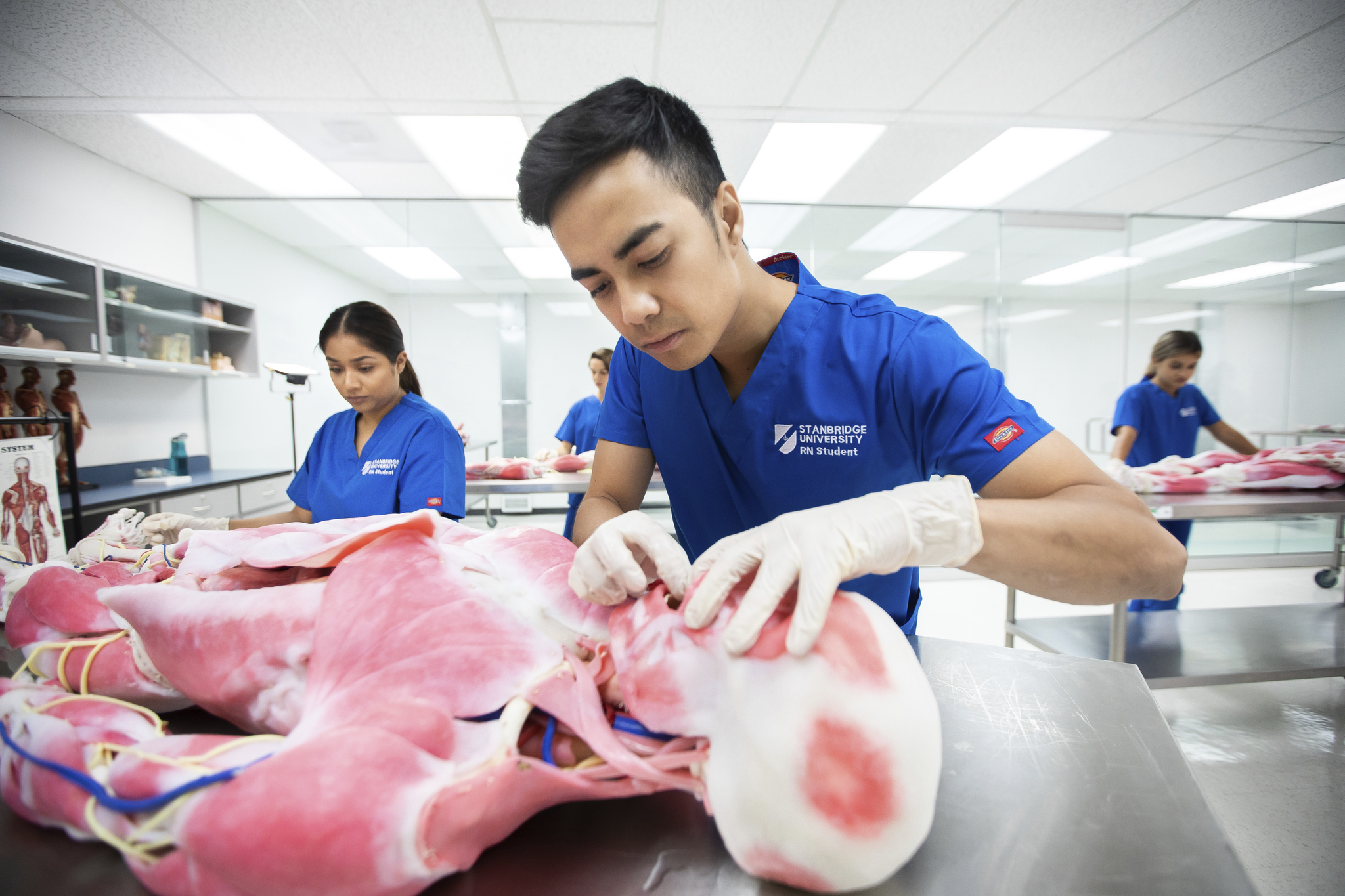
BSN programs combine general education, nursing coursework, laboratory learning, simulation, and supervised clinical education. However, program structures can vary considerably.
As you compare programs, focus on three broader areas:
Accreditation, Approval, and Outcomes
- California BRN approval
- Institutional and nursing program accreditation
- NCLEX-RN pass rates
Curriculum and Educational Experience
- Clinical education
- Simulation and laboratory learning
- Curriculum
Other Factors
- Program length and schedule
- Admissions requirements
- Student support
- Tuition and financial aid
- Location
Together, these factors can give you a clearer picture of what each program offers.
Accreditation, Approval, and Outcomes
Before comparing schedules, facilities, or other program features, start by reviewing approval, accreditation, and licensure outcomes.
California Board of Registered Nursing Approval
BRN approval should be one of the first things you verify when comparing BSN programs in California. To pursue RN licensure in California, you must complete a nursing program that meets applicable BRN requirements. The approval process helps ensure programs comply with California’s requirements for nursing education.¹
The BRN maintains an official list of approved prelicensure nursing programs. Before enrolling, verify the approval status of the specific program and campus you’re considering.¹
Institutional and Nursing Program Accreditation
Accreditation may apply at both the institutional and programmatic levels. Institutional accreditation applies to the college or university as a whole. Programmatic accreditation evaluates a specific program according to standards for that field. For BSN programs, one recognized programmatic accreditor is the Commission on Collegiate Nursing Education (CCNE).
When comparing schools, verify the institution’s accreditation as well as the nursing program’s accreditation, where applicable.
NCLEX-RN Pass Rates
NCLEX-RN pass rates show how graduates have performed on the national licensing examination. The California BRN publishes first-time NCLEX-RN pass rates for graduates and completers of approved California nursing programs.²
When comparing results, consider:
- The reporting period
- Whether the rate is for first-time test-takers
- The number of test-takers
- Whether the result represents one or multiple campuses
For example, a pass rate based on a small number of test-takers provides different context from one based on hundreds. Therefore, consider NCLEX-RN results alongside accreditation, curriculum, clinical education, and other program information.

Curriculum and Educational Experience
Once you’ve reviewed approval, accreditation, and outcomes, look more closely at what your nursing education may involve.
Clinical Education
Supervised clinical experiences allow you to apply classroom and laboratory learning in healthcare settings. Depending on the program and available placements, clinical education may include medical-surgical nursing, maternal-newborn care, pediatrics, mental health, and other areas of patient care.
When comparing programs, ask where clinical rotations may occur, how shifts are scheduled, and whether rotations can include evenings or weekends. These details can affect transportation, work, family responsibilities, and other commitments.
Simulation and Laboratory Learning
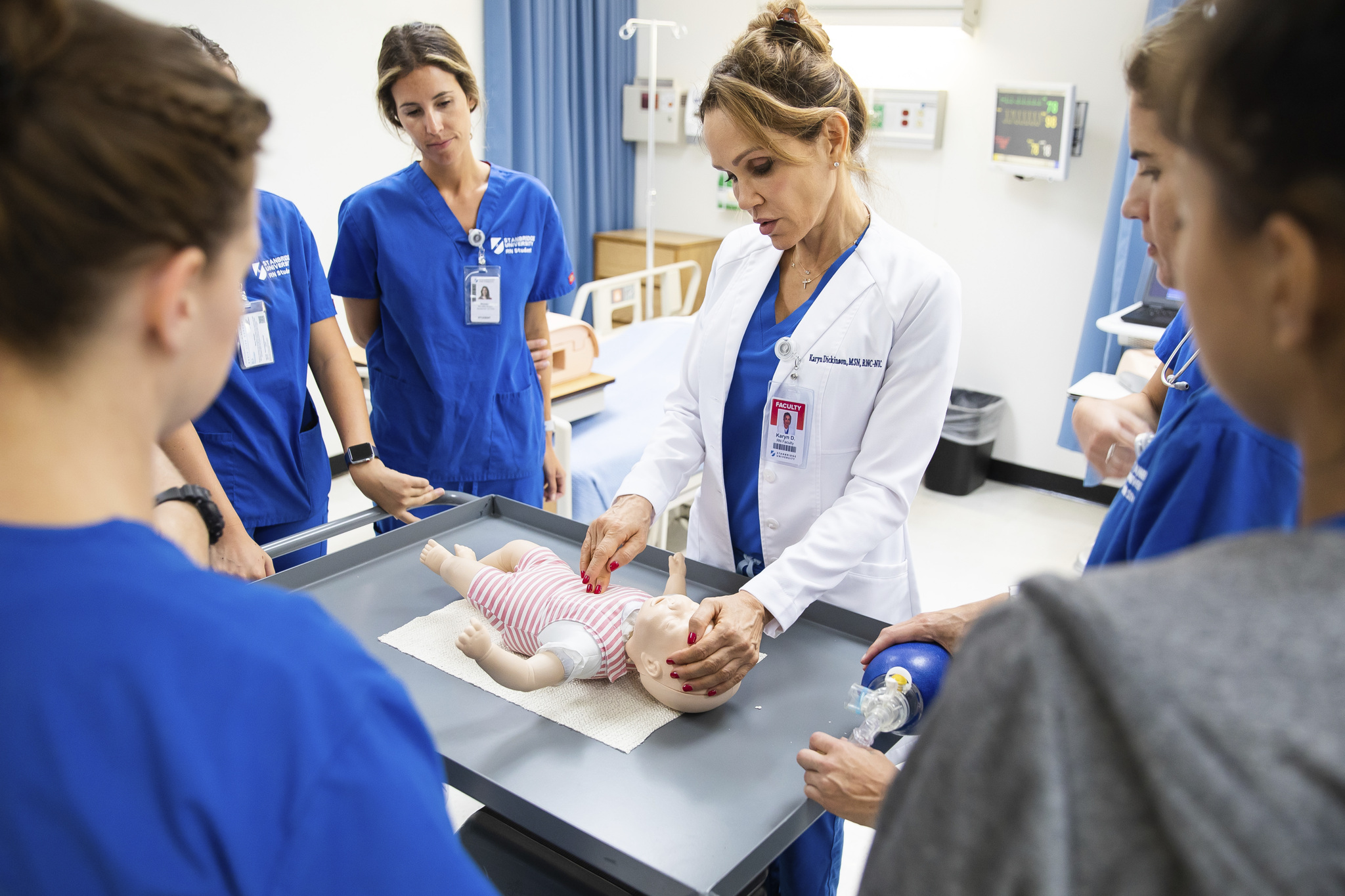
Laboratory and simulation experiences give you structured opportunities to practice nursing procedures, patient assessment, communication, clinical judgment, and decision-making before applying related skills during clinical education.
When researching programs, consider both the resources available and how they are used. Rather than focusing only on the technology itself, ask how simulation and laboratory learning connect with the curriculum and prepare you for clinical experiences.
Curriculum
BSN curricula generally combine science, general education, nursing theory, clinical education, and professional nursing topics. Your coursework may include patient assessment, pharmacology, medical-surgical nursing, maternal-newborn care, pediatrics, mental health, community health, leadership, research, and evidence-based practice.
Because course sequences vary, compare when nursing and clinical courses begin, total credit requirements, and whether coursework is delivered on campus, online, or in a blended format.
Other Factors to Consider
A strong academic fit still needs to work with your schedule, budget, location, and admissions timeline.
Program Length and Schedule
BSN program length and schedules vary. Ask how long the program is designed to take, whether it is full-time or part-time, how often you’ll attend class and labs, and whether clinical rotations can occur during early mornings, evenings, nights, or weekends.
Also check whether the published duration includes holidays and academic breaks. Completion times are estimates and may vary based on cohort scheduling and individual progression.
Admissions Requirements
Review admissions requirements early so you understand what you’ll need before applying. Requirements may include prior coursework, GPA standards, entrance examinations, transcripts, background checks, health requirements, or other materials.
Also determine whether prerequisite courses must be completed before admission or are incorporated into the curriculum. Application deadlines and start dates can also affect your overall educational timeline.
Because requirements can change, use each school’s official admissions information when planning your application.
Student Support Services
Nursing school requires you to balance coursework, laboratories, clinical education, and NCLEX-RN preparation.
When comparing programs, consider resources such as academic advising, tutoring, faculty support, skills laboratory access, NCLEX-RN preparation, career services, and student wellness resources.
Also find out when and how support is available. A resource is most useful when you can realistically access it around your academic and clinical schedule.
Tuition and Financial Aid
The cost of nursing school may include more than tuition. Additional expenses can include fees, books, uniforms, equipment, transportation, background checks, health requirements, and licensing-related costs.
Ask each school for its complete cost information so you can make an equivalent comparison.
You can also review scholarships, payment options, and financial aid. Financial aid is available for those who qualify.
Location and Local Healthcare Market
Location can affect your commute to classes, laboratories, and clinical rotations. If staying close to home is important, consider travel time during peak traffic, transportation needs, and how far you may need to travel for clinical education.
The local healthcare market may also provide useful career context. According to the California Employment Development Department (EDD), registered nurse employment in the Riverside-San Bernardino-Ontario metropolitan area is projected to grow from approximately 30,380 positions in 2022 to 34,340 in 2032, an increase of 13.0%.⁴
Statewide, EDD projects registered nurse employment to grow 12.9% during the same period, from approximately 333,700 to 376,900 positions.⁵
Employment projections do not guarantee employment for individual graduates, but they can provide context as you consider nursing education in Riverside County.
How Does Stanbridge University’s Riverside BSN Program Fit These Criteria?
If you’re comparing BSN programs in Riverside County, Stanbridge University’s Bachelor of Science in Nursing program is one option you can evaluate using the same criteria discussed throughout this guide. The BSN program at Stanbridge University’s Riverside campus is approved by the California Board of Registered Nursing, and the Bachelor of Science in Nursing program is accredited by the Commission on Collegiate Nursing Education.³
Across the Orange County, Los Angeles, and Riverside campuses, Stanbridge University reports a 98% NCLEX-RN licensure pass rate for 2023–2025.³
The curriculum combines general education, nursing coursework, laboratory instruction, simulation-based learning, and supervised clinical education. Students develop knowledge and skills in areas such as patient assessment, pharmacology, medical-surgical nursing, maternal-newborn care, pediatrics, mental health nursing, community health, leadership, and evidence-based practice.³ Stanbridge also provides academic and student support resources throughout the program, including academic advising, tutoring, faculty support, and resources designed to support NCLEX-RN preparation.³
The program consists of 180 quarter credit hours and is designed to be completed in approximately 36–37 months, including holidays and university breaks. Completion time may vary depending on cohort scheduling and individual progression.³
If you’re considering the Riverside program, review the current admissions requirements, tuition and fees, schedule, curriculum, accreditation information, clinical expectations, and published outcomes directly on the Stanbridge University BSN program page.
How Can You Make a Final BSN Program Comparison?
Once you’ve narrowed down your options, compare the same information for every program.
You can organize your final comparison into three categories:
Accreditation, Approval, and Outcomes
- BRN Approval: Is the specific program and campus approved?
- Institutional Accreditation: Is the college or university institutionally accredited?
- Nursing Program Accreditation: Does the BSN program hold programmatic accreditation?
- NCLEX-RN Results: What are the recent pass rates, reporting years, and number of testers?
Curriculum and Educational Experience
- Curriculum: What will you study and when do clinical courses begin?
- Clinical Education: Where and when can clinical rotations occur?
- Simulation and Laboratory Learning: What hands-on resources are available, and how are they used?
Practical Considerations
- Admissions Requirements: What do you need to complete before applying or enrolling?
- Schedule: How many days per week and what hours should you expect?
- Program Length: What is the estimated completion time?
- Student Support: What academic, career, and NCLEX-RN preparation resources are available?
- Cost: What is the total estimated cost, not just tuition?
- Location: How will campus and clinical travel affect your schedule?
Most importantly, be sure to compare equivalent information for every program.
For example, don’t compare one school’s annual NCLEX-RN pass rate with another school’s multi-year average without noting the difference. Likewise, don’t compare one school’s tuition with another school’s total cost of attendance. A consistent approach can help you make a more informed decision.
Ready to Compare Your BSN Options?
Choosing among BSN programs in Riverside County involves more than finding a convenient campus. Start by confirming BRN approval and accreditation. Then compare NCLEX-RN results, curriculum, clinical and simulation experiences, admissions requirements, program length, schedule, support, costs, and location.
Using the same criteria for each program can help you determine which option best aligns with your educational goals and circumstances.
If you would like to learn more about Stanbridge University’s Bachelor of Science in Nursing program in Riverside, review the current BSN program information or contact Stanbridge University.
Frequently Asked Questions
Start by reviewing BRN approval, institutional and nursing accreditation, NCLEX-RN pass rates, curriculum, clinical education, program length, admissions requirements, schedule, costs, student support, and location. Comparing the same factors across each program can help you make a more informed decision.
Yes. California prelicensure registered nursing programs must be approved by the California Board of Registered Nursing. You can verify a program’s current approval status through the BRN’s official list of prelicensure RN programs.¹
Institutional accreditation applies to the college or university as a whole, while programmatic nursing accreditation evaluates the BSN program specifically according to nursing education standards. When comparing programs, it can be helpful to review both.
Review the reporting period, whether the rate covers first-time test-takers, how many graduates took the exam, and whether the result represents one campus or multiple locations. You should consider NCLEX-RN results alongside other program factors rather than using the percentage alone.²
Clinical rotations are an important part of prelicensure nursing education because they allow you to apply classroom and laboratory learning in supervised healthcare settings. Before enrolling, ask where rotations may occur and whether they can include early morning, evening, night, or weekend schedules.
Stanbridge University’s 180-quarter-credit Bachelor of Science in Nursing program is designed to be completed in approximately 36–37 months, including holidays and university breaks. Your completion time may vary based on cohort scheduling and individual progression.³
Yes. Stanbridge University’s Bachelor of Science in Nursing program at the Riverside campus is approved by the California Board of Registered Nursing, and the Bachelor of Science in Nursing program is accredited by the Commission on Collegiate Nursing Education.³
Stanbridge University reports a 98% NCLEX-RN licensure pass rate for 2023–2025 across its Orange County, Los Angeles, and Riverside BSN campuses. The figure is a two-year average based on the 2023–2024 and 2024–2025 reporting years. Individual results vary.³
Footnotes
¹ California Board of Registered Nursing Pre-Licensure RN Programs https://www.rn.ca.gov/education/rnprograms.shtml
² California Board of Registered Nursing NCLEX-RN Pass Rates, First-Time California-Educated Exam Testers https://www.rn.ca.gov/education/passrates.shtml
³ Stanbridge University Bachelor of Science in Nursing Program https://www.stanbridge.edu/program/bsn
⁴ California Employment Development Department Registered Nurse Employment Projections, Riverside-San Bernardino-Ontario Metropolitan Area, 2022–2032 https://labormarketinfo.edd.ca.gov/cgi/databrowsing/occExplorerQSDetails.asp?searchCriteria=Registered+nurse&careerID=&menuChoice=&geogArea=0604000065&soccode=291141&search=Explore+Occupation
⁵ California Employment Development Department Registered Nurses Occupational Profile, California https://labormarketinfo.edd.ca.gov/cgi/databrowsing/occExplorerQSDetails.asp?searchCriteria=registered+nurse&careerID=&menuChoice=&geogArea=0601000000&soccode=291141&search=Explore+Occupation