What Skills Will You Learn in an LVN Program?
If you’re considering becoming a Licensed Vocational Nurse (LVN), you may be wondering what you’ll actually learn during nursing school. An LVN program is designed to help you develop the foundational knowledge, clinical judgment, and hands-on nursing skills needed to care for patients in a variety of healthcare settings. Throughout your education, you’ll build your ability to assess patients, administer medications, prevent infections, communicate with healthcare teams, document treatment, and care for patients directly while gaining practical experience through supervised clinical training.
What Does an LVN Program Teach?
Licensed Vocational Nurses (LVNs) provide hands-on care to patients under the direction of physicians and registered nurses (RNs). Their responsibilities may include monitoring vital signs, administering medications, assisting with daily activities, providing basic wound care, documenting patient information, and communicating changes in a patient’s condition to the care team.
An LVN program prepares students for these responsibilities by teaching the foundational nursing knowledge and practical clinical skills needed to provide safe, effective patient care.
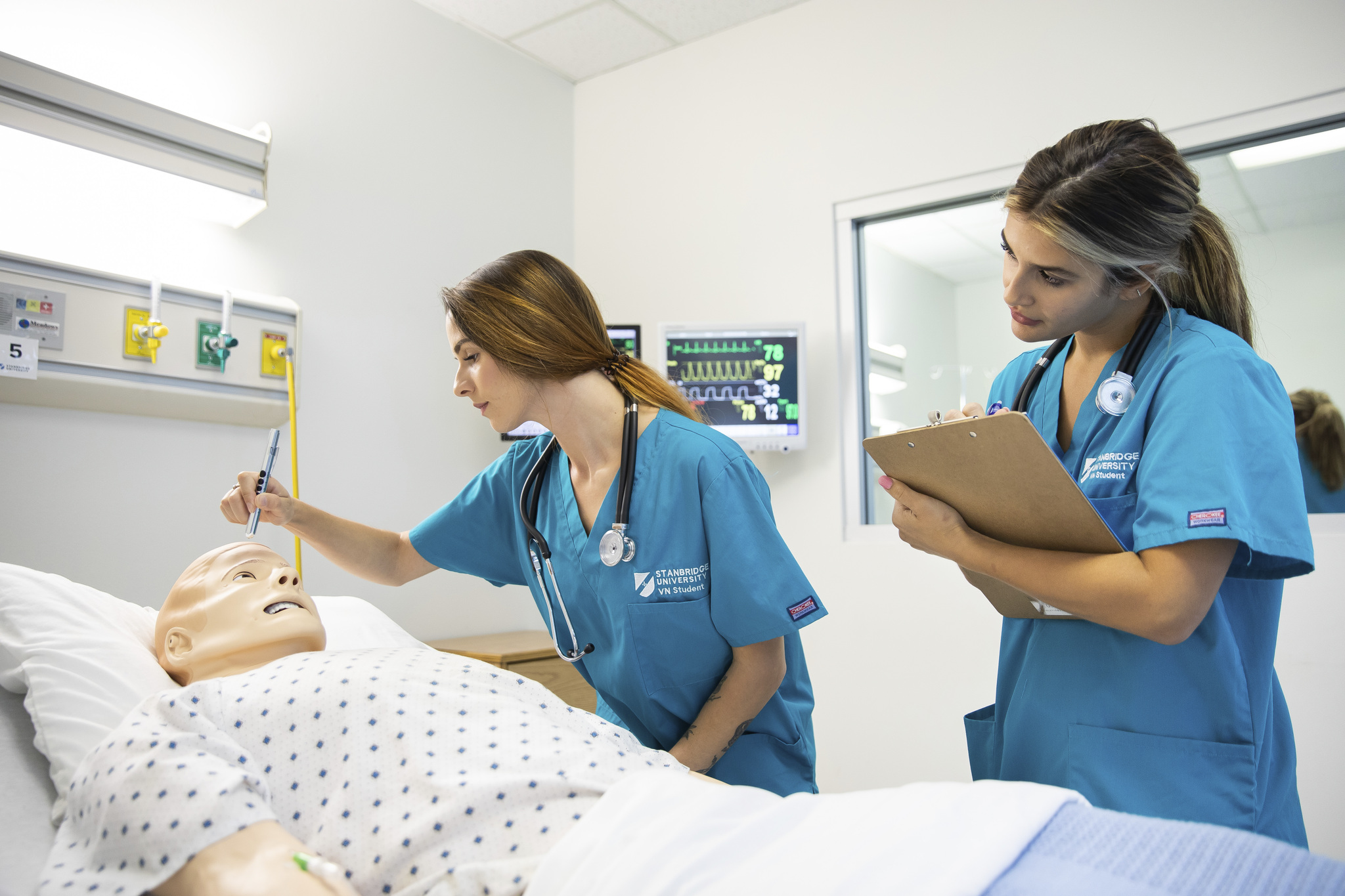
In addition to textbooks and lectures, vocational nursing education combines several types of learning experiences, including skills laboratories, simulation activities, and supervised clinical experiences. Each component helps reinforce both the scientific knowledge and the practical techniques used in everyday nursing practice.
As your education progresses, you’ll learn not only how to perform nursing procedures but also why they’re important for patient safety and quality care.
What Clinical Skills Will You Learn in an LVN Program?
One of the primary goals of vocational nursing education is to help you develop hands-on clinical skills.
During your program, you’ll practice nursing procedures repeatedly in controlled learning environments before applying them with real patients in supervised clinical experiences.
While every curriculum is different, LVN programs commonly train students in:
- Patient assessment
- Measuring vital signs
- Medication administration
- Infection prevention
- Wound care
- Assisting with activities of daily living
- Therapeutic communication
- Documentation
- Patient safety
These foundational skills prepare students to provide nursing care while working collaboratively with healthcare teams.
Patient Assessment
Patient assessment is one of the first foundational skills introduced during vocational nursing education. Assessment involves gathering information about a patient’s health status so the healthcare team can monitor changes and make informed care decisions.
As an LVN student, you will learn how to:
- Measure vital signs including temperature, pulse, respiration, and blood pressure
- Observe physical and behavioral changes
- Recognize signs that require additional attention
- Report findings to supervising nurses and providers
- Document assessment information accurately
Learning these skills helps prepare you to recognize changes in patient conditions and communicate important observations to the healthcare team.
Medication Administration
Medication administration is another important component of licensed vocational nurse training. As an LVN student, you will study the principles of safe medication administration, including:
- Medication classifications
- Dosage calculations
- Routes of administration
- Patient identification procedures
- Medication safety practices
- Documentation requirements
Because medication administration directly affects patient safety, nursing programs emphasize accuracy, attention to detail, and following established procedures. Students typically practice these skills in laboratory environments before performing them in supervised clinical experiences.
Infection Prevention
Preventing the spread of infection is a responsibility shared by every healthcare professional. Throughout an LVN program, you’ll learn strategies that help protect both patients and healthcare providers.
Topics commonly include:
- Personal protective equipment (PPE)
- Standard and transmission-based precautions
- Sterile technique
- Cleaning and disinfecting equipment
- Safe handling of potentially infectious materials
Understanding infection prevention principles helps create safer healthcare environments while supporting quality patient care.
Communication Skills
Technical skills are only one part of becoming an effective Licensed Vocational Nurse. Because LVNs work as part of interdisciplinary healthcare teams, communication plays an important role in patient care.
Every day, LVNs communicate with:
- Patients
- Family members
- Registered Nurses
- Physicians
- Therapists
- Other healthcare professionals
Effective communication improves teamwork, supports patient education, and contributes to continuity of care.
Throughout vocational nursing education, you’ll continue developing therapeutic communication techniques that promote professionalism, collaboration, empathy, active listening, and respectful interactions with patients and colleagues.
Nursing Documentation
Accurate documentation is an essential part of patient care. Every observation, treatment, and intervention recorded in a patient’s medical record helps support communication among the healthcare team and contributes to unified care plans.
During an LVN program, you’ll learn the fundamentals of professional nursing documentation, including how to:
- Record patient observations accurately
- Document nursing interventions
- Report changes in a patient’s condition
- Use appropriate medical terminology
- Maintain patient privacy and confidentiality
- Follow legal and ethical documentation standards
As healthcare continues to rely on electronic health records (EHRs), understanding clear, accurate documentation is an important skill for entry-level nurses.
Clinical Judgment
Nursing is a dynamic profession that often requires nurses to evaluate the full picture of a situation, beyond a checklist or routine.
Often, the final patient care decision rests with a physician, registered nurse, or other healthcare professional, but Licensed Vocational Nurses play an important role in the process. LVNs continually observe patients, recognize changes in condition, and communicate important information to the healthcare team. Developing sound clinical judgment helps nurses determine what requires immediate attention while providing safe, patient-centered care.
Throughout your education, you’ll strengthen clinical judgment by participating in:
- Patient case studies
- Skills laboratories
- Simulation activities
- Clinical experiences
- Faculty-guided discussions
These learning experiences encourage you to think critically, apply nursing knowledge, and make informed decisions within the LVN scope of practice.
What Courses Help You Build These Nursing Skills?
Every Vocational Nursing program has its own curriculum, but across institutions, vocational nursing coursework is designed to progressively develop the knowledge and skills you will need for entry-level nursing practice.
As you advance through an LVN program, you’ll study topics that support patient care across the lifespan while building both technical and professional skills.
Many programs include:
- Fundamentals of nursing
- Anatomy and physiology
- Pharmacology
- Medical-surgical nursing
- Maternal and newborn nursing
- Pediatric nursing
- Mental health nursing
- Nutrition
- Gerontology
- Leadership and professional development
These courses work together to help you understand how nursing concepts apply in a variety of healthcare settings and with diverse patient populations.
How Does Hands-On Learning Support Skill Development?
Reading about nursing procedures is only one part of learning. Vocational nursing programs also incorporate hands-on learning opportunities that allow students to practice nursing skills in structured environments before performing them during clinical experiences.
Depending on the curriculum, hands-on learning may include:
- Skills laboratory practice
- Simulation-based learning
- Instructor demonstrations
- Peer practice activities
- Clinical simulations
These experiences help reinforce classroom instruction and allow students to develop confidence performing common nursing procedures. Repeated practice also supports the development of clinical judgment, communication, and professionalism, essential skills for patient-centered care.
How Do Clinical Experiences Prepare You for Nursing Practice?
Clinical experiences are one of the most valuable parts of vocational nursing education. After developing foundational knowledge in the classroom and practicing procedures in laboratory settings, you’ll apply those skills while caring for real patients in supervised clinical environments.
Clinical experiences allow you to:
- Apply classroom knowledge to real situations
- Practice patient care skills
- Communicate with patients and families
- Collaborate with healthcare professionals
- Build confidence in clinical settings
- Receive feedback from experienced instructors and clinical supervisors
These supervised experiences help reinforce classroom learning while preparing you for the pace and responsibilities of nursing practice.
Stanbridge University’s Vocational Nursing Program
If you’re exploring vocational nursing education, understanding how a program combines classroom learning with practical experience to teach you essential skills can help you prepare for nursing school.
Stanbridge University’s Associate of Occupational Science in Vocational Nursing (AVN) program is designed to help students develop foundational nursing knowledge alongside hands-on clinical skills. The curriculum includes classroom instruction, laboratory experiences, simulation-based learning, and supervised clinical education that allow students to apply nursing concepts in real healthcare environments.¹
Throughout the program, students build skills in areas including:
- Patient assessment
- Medication administration
- Infection prevention and control
- Therapeutic communication
- Nursing documentation
- Medical-surgical nursing
- Maternal and pediatric nursing
- Mental health nursing
- Professionalism and ethical nursing practice
As students progress through the curriculum, they have opportunities to apply these skills during supervised clinical experiences while working with diverse patient populations.
The Stanbridge University Vocational Nursing program is 106.5 quarter credit hours and is designed to be completed in approximately 17–19 months for full-time students and 26–28 months for part-time students, depending on cohort schedules and individual progression. ¹
Recent NCLEX-PN licensure pass rates were reported as:
- Orange County: 95% in 2023, 96% in 2024, and 92% in 2025
- Los Angeles: 93% in 2023, 92% in 2024, and 90% in 2025
- Riverside: 96% in 2025
- San Diego: no graduates yet; therefore, no annual licensure pass rates available¹
To learn more about LVN programs and careers, see “LVN Programs in California: Requirements, Timeline, and Career Guide,” “Benefits of Becoming an LVN in California” and more articles here.
Is an LVN Program the Right Fit for You?
Understanding what you’ll learn before starting nursing school can help you make a more informed decision about your educational pathway and whether vocational nursing aligns with your personal and professional goals.
If you’re looking for a healthcare career that combines hands-on patient care, communication, critical thinking, and collaboration, vocational nursing may be worth exploring.
An LVN program is designed to help you build the foundational knowledge, practical nursing skills, and professional behaviors needed to care for patients in a variety of settings including skilled nursing facilities, hospitals, physician offices, and rehabilitation centers. Through classroom instruction, laboratory practice, simulation learning, and supervised clinical experiences, you’ll develop the skills and confidence you need for entry-level nursing practice.
Frequently Asked Questions
An LVN program helps you develop the foundational knowledge and practical nursing skills needed for entry-level vocational nursing practice. Coursework and clinical experiences typically include patient assessment, medication administration, infection prevention, nursing documentation, therapeutic communication, and direct patient care.¹
Licensed vocational nurse training helps you develop practical skills such as patient assessment, measuring vital signs, medication administration, infection prevention, wound care, medical documentation, therapeutic communication, and clinical judgment. You’ll build these skills through classroom instruction, laboratory practice, simulation-based learning, and supervised clinical experiences.¹
Yes. In addition to classroom instruction, approved vocational nursing programs include supervised clinical experiences where students apply nursing knowledge while caring for patients in real healthcare settings. Clinical education helps reinforce classroom learning and develop confidence in providing patient care.¹
Licensed Vocational Nurses communicate with patients, families, physicians, Registered Nurses, and other healthcare professionals every day. Strong communication skills support patient education, teamwork, accurate reporting, and continuity of care.
While every curriculum is different, LVN programs typically include courses in Fundamentals of Nursing, Anatomy and Physiology, Pharmacology, Medical-Surgical Nursing, Maternal and Newborn Nursing, Pediatric Nursing, Mental Health Nursing, Nutrition, and Leadership. ¹
Licensed Vocational Nurses may work in a variety of healthcare environments, including skilled nursing facilities, hospitals, physician offices, rehabilitation centers, home health agencies, and community healthcare settings. Responsibilities vary depending on the employer, patient population, and the LVN’s scope of practice.
If you’re interested in vocational nursing education, you can explore the Associate of Occupational Science in Vocational Nursing (AVN) program at Stanbridge University to learn more about the curriculum, admissions requirements, accreditation, and clinical education opportunities.¹
Footnotes
¹ Stanbridge University Associate of Occupational Science in Vocational Nursing (AVN) Program https://www.stanbridge.edu/program/vn
² Stanbridge University Course Catalog: All Course Descriptions https://catalog.stanbridge.edu/all-course-descriptions/