Why Hands-On Training Matters in Healthcare Education
In a healthcare education program, hands-on training helps you connect classroom knowledge with practical skills. Through laboratory instruction, simulation-based learning, supervised clinical education, and fieldwork, you can practice communication, teamwork, technical skills, and clinical decision-making in structured learning environments. These experiences complement academic study and help you become more familiar with the expectations of patient care and professional practice.
Why Is Hands-On Training Important in Healthcare Education?
Healthcare programs teach essential concepts through lectures, reading, discussion, and independent study. However, healthcare work also requires you to communicate clearly, use equipment correctly, follow procedures, respond to changing situations, and work with other professionals.
Hands-on learning helps connect those two parts of your education. Instead of only studying the theory of a concept, you have opportunities to apply it through guided practice. As a result, you can begin learning how knowledge, judgment, communication, and technical skills work together.
These hands-on experiences do not replace classroom instruction; rather, they reinforce it by giving you a clearer view of how academic concepts are applied in patient-care and rehabilitation settings.
What Types of Hands-On Healthcare Training Are There?
Hands-on healthcare training can take several forms. The format depends on the profession, course objectives, and stage of the program.
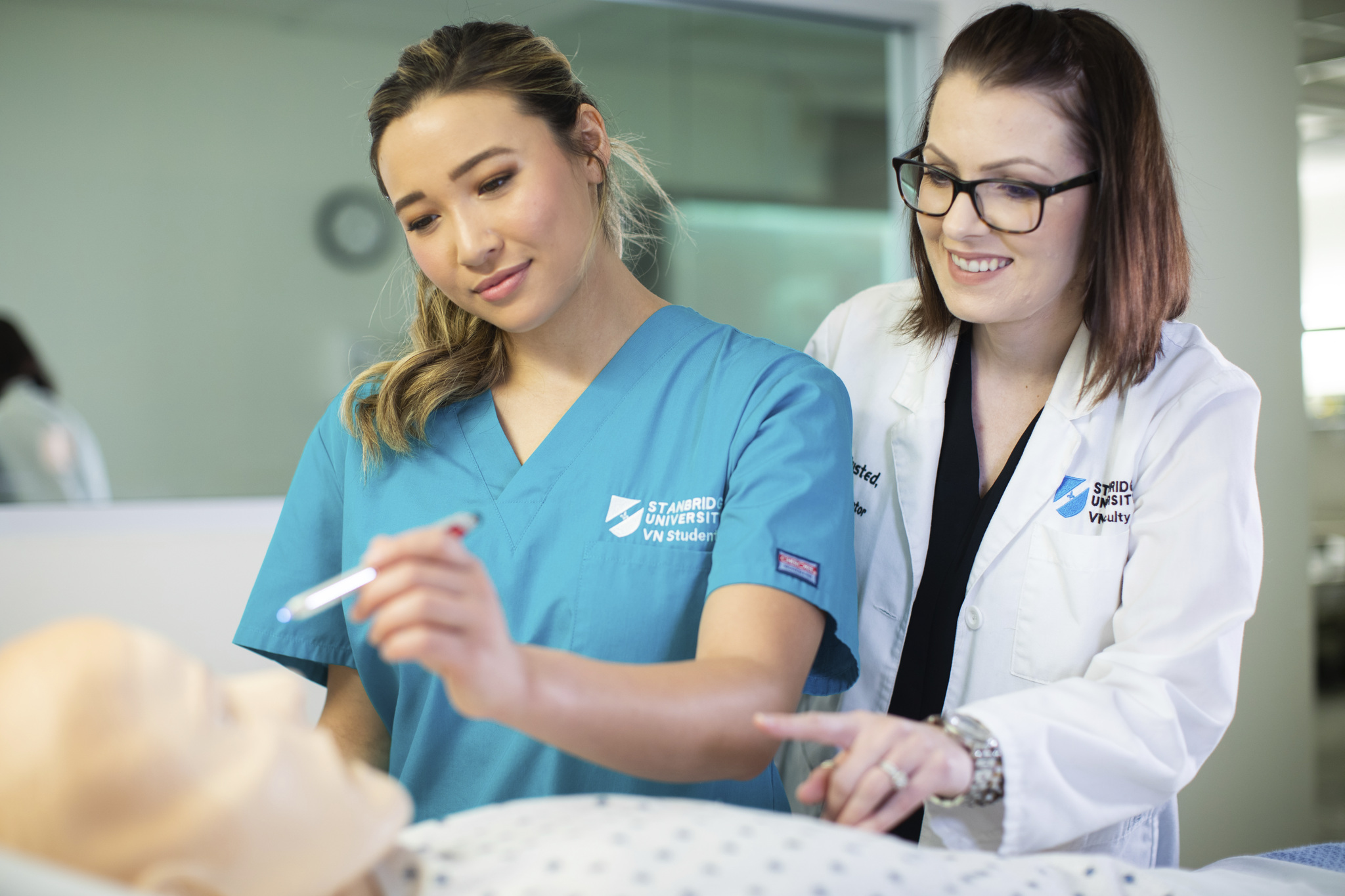
Laboratory instruction gives you opportunities to practice specific techniques, use equipment, and receive feedback from faculty. Simulation-based learning places you in realistic healthcare scenarios where you may need to assess information, communicate, make decisions, or work as part of a team. Both of these types of hands-on healthcare training take place in structured educational environments.
Clinical education and fieldwork take place in supervised professional or community settings. During these experiences, you apply what you have learned with real patients under the direction of licensed professionals.
Skills Laboratories
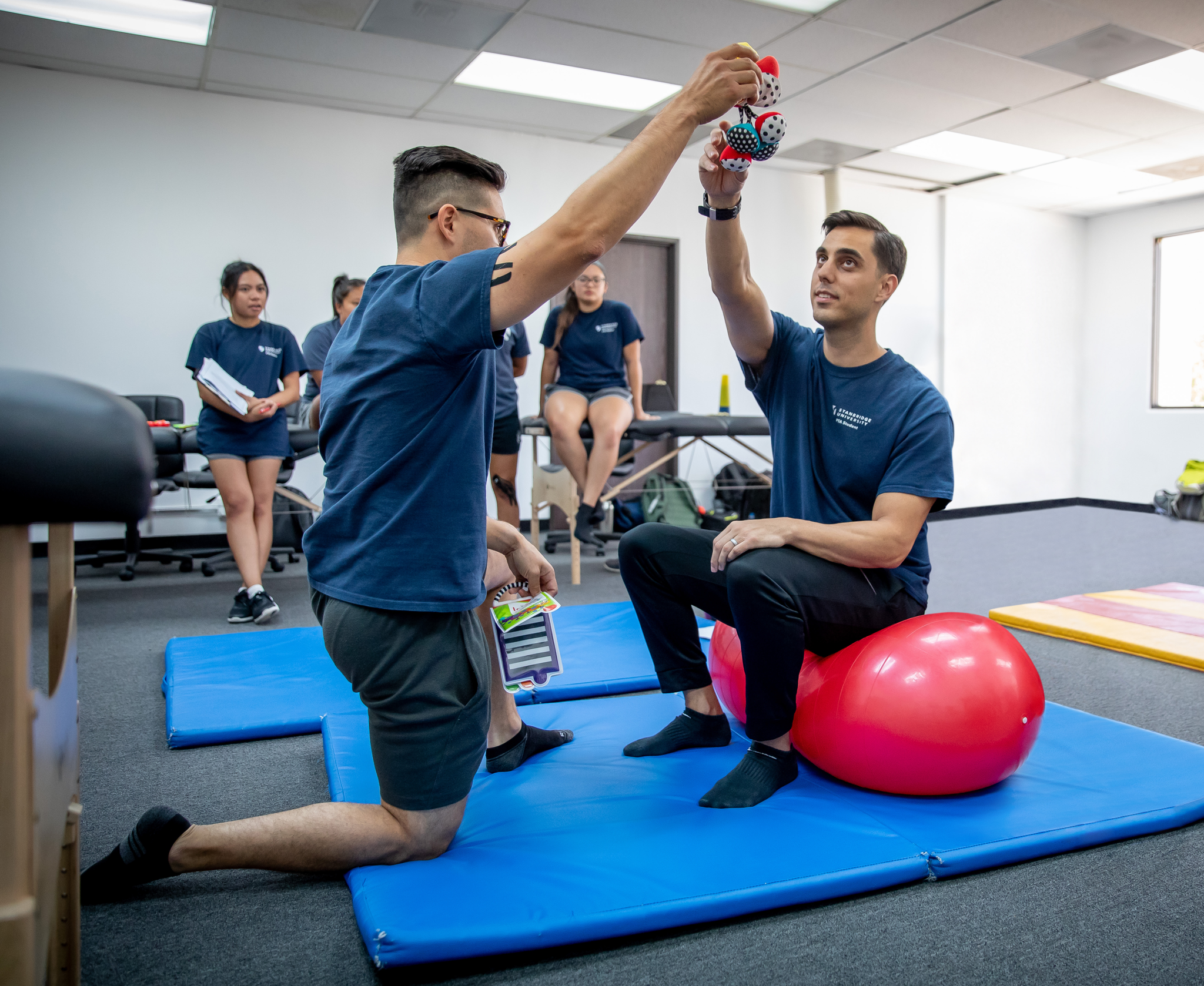
Skills laboratories provide a structured environment to practice specific healthcare skills before entering clinical education or fieldwork. Depending on your program, you may practice patient assessment, mobility techniques, therapeutic activities, communication, documentation, or equipment use.
In a skills laboratory, faculty can demonstrate a skill, observe your technique, and provide feedback. You can then repeat the activity and make adjustments. Over time, this cycle of practice and feedback can help you develop greater familiarity with the steps, safety considerations, and professional habits involved.
Laboratories can also help you connect material across courses. For example, anatomy knowledge may guide positioning, movement, or rehabilitation activities, while communication coursework may shape how you explain a procedure to a patient.
Simulation-Based Learning
Once you have trained in specific skills, simulation-based learning uses realistic scenarios, equipment, and educational technology to help you apply healthcare concepts to an example situation. A simulation may involve a patient-care room, a high-fidelity manikin, a task trainer, a standardized patient, or a virtual environment.
During a scenario, you may need to gather information, recognize a concern, communicate with a patient, organize care, or collaborate with classmates. Afterward, faculty-led discussion can help you review what happened, explain your decisions, and identify areas for improvement.
Because simulation takes place in a structured setting, it allows you to focus on learning objectives and practice responding to situations that may be difficult to reproduce consistently during clinical education.
Clinical Education and Fieldwork
Clinical education and fieldwork allow you to apply classroom and laboratory learning with real patients in supervised healthcare or community settings. These experiences introduce the pace, communication standards, documentation practices, and teamwork expected in professional environments.
In your clinical education or fieldwork, you may work with patients or clients under the direction of qualified instructors and site professionals. In addition, you may observe how different disciplines contribute to care and how professionals adjust their approach based on each person’s needs.
Clinical and fieldwork assignments vary by program and site availability. Different students in the same field of study or healthcare program may work with different locations, schedules, patient populations, or specialties.
How Does Hands-On Learning Build Communication and Teamwork?
Healthcare professionals rarely work alone. Nurses, therapists, assistants, physicians, case managers, educators, and other team members often share information and coordinate services.
Hands-on learning gives you opportunities to practice clear communication in context. For example, you may explain an activity, report an observation, document a response, listen to a patient’s concerns, or contribute to a team discussion.
Likewise, group simulations and laboratory activities can help you learn how to divide responsibilities, ask for clarification, respond to feedback, and support a shared plan. These habits are important across nursing and allied health careers.
How Does Experiential Learning Support Clinical Judgment?
Clinical judgment refers to the practice of gathering information, recognizing care priorities, considering possible actions, and making an informed decision within your role.
Case discussions, simulation, laboratories, clinical education, and fieldwork all give you opportunities to practice that process. For instance, you may need to identify which finding requires attention, decide how to organize an activity, or adapt your communication when a patient’s needs change.
Feedback and reflection are also important. By reviewing your choices and considering what you might do differently in the future, you can become more thoughtful and consistent in how you approach new situations.
How Do Different Healthcare Programs Use Hands-On Learning?
Hands-on education looks different across healthcare disciplines because each profession has its own responsibilities and educational standards.
In nursing programs, you may practice assessment, medication concepts, communication, documentation, and clinical decision-making through laboratories, simulations, and supervised clinical rotations. Occupational therapy and occupational therapy assistant programs may use laboratories, simulations, and fieldwork to explore daily activities, therapeutic approaches, adaptive equipment, and patient-centered planning. Hands-on training in physical therapist assistant education may include movement analysis, therapeutic exercise, mobility techniques, and equipment use.
Although the specific activities differ between disciplines, each healthcare pathway uses experiential learning to connect academic concepts with professional expectations.
Hands-On Healthcare Training at Stanbridge University
Stanbridge University incorporates classroom instruction, laboratory practice, simulation-based learning, clinical education, and fieldwork across its nursing and allied health programs. The exact format depends on the program and course requirements.¹ You can review each program page for current curricula, schedules, accreditation information, clinical or fieldwork requirements, and program-specific learning resources.
Instructional facilities at Stanbridge include nursing skills laboratories, simulation laboratories, therapy laboratories, Virtual Reality Laboratories, synthetic cadaver resources, and rehabilitation technology. These resources are designed to complement coursework and provide interactive ways to explore healthcare concepts.² You can learn more about innovation and technology at Stanbridge here.
What Should You Look for in a Healthcare Program?
When comparing healthcare programs, it’s often best to consider many factors. Reviewing how the program integrates classroom learning with laboratories, simulation, clinical education, or fieldwork can help you to make a more informed educational decision.
You should also confirm the program’s accreditation or approval status, where applicable, and review current admissions requirements, schedules, completion timelines, clinical expectations, and published graduation and licensure outcomes. In addition, you may find it helpful to explore how faculty provide feedback and how students prepare for clinical or fieldwork experiences.
Ultimately, the right program for you should meet applicable educational standards and align with your goals, schedule, and preferred healthcare pathway, and more than likely, you’ll encounter multiple types of hands-on training along the way.
Frequently Asked Questions
Hands-on healthcare training includes laboratory practice, simulation-based learning, supervised clinical education, and fieldwork. These experiences help you apply classroom concepts while developing practical skills, communication, teamwork, and clinical judgment.
Simulation-based learning uses realistic scenarios, equipment, and educational technology to help you practice healthcare concepts in a structured environment. After a simulation, faculty feedback and reflection can help you understand your decisions and identify ways to improve.
Clinical experiences allow you to apply classroom and laboratory learning with real patients in supervised healthcare settings. You can become more familiar with patient communication, teamwork, documentation, professional expectations, and the day-to-day pace of care.
Both provide supervised, hands-on experience in real-world settings. Clinical education typically focuses on developing patient-care skills and clinical competencies, while fieldwork may cover a broader range of professional responsibilities and practice settings. The terminology and requirements vary by healthcare profession and program.
No. Hands-on learning varies by profession, curriculum, accrediting standards, and course objectives. Nursing programs may emphasize simulation and clinical rotations, while occupational therapy programs use fieldwork and physical therapist assistant programs include clinical education.
Stanbridge University uses laboratories, simulation-based learning, clinical education, and fieldwork across its healthcare programs. Available resources include nursing and therapy laboratories, Virtual Reality Laboratories, synthetic cadaver resources, and rehabilitation technology.¹²
Footnotes
¹ Stanbridge University, What Is Clinical Education in Healthcare Programs, https://blog.stanbridge.edu/what-is-clinical-education-in-healthcare-programs/
² Stanbridge University Instructional Facilities, https://catalog.stanbridge.edu/home/instructional-facility/
³ Stanbridge University Bachelor of Science in Nursing Program, https://www.stanbridge.edu/program/bsn
⁴ Stanbridge University Occupational Therapy Assistant Program, https://www.stanbridge.edu/program/ota
⁵ Stanbridge University Physical Therapist Assistant Program, https://www.stanbridge.edu/program/pta