What Can You Expect from an Occupational Therapy Graduate Program?
A graduate program in occupational therapy combines classroom instruction, laboratory practice, collaborative learning, patient cases, research, and supervised fieldwork. As you progress through a Master of Science in Occupational Therapy (MSOT) graduate program, you will learn how to evaluate patients’ needs, develop individualized intervention plans, use evidence to guide care, and support participation in meaningful daily activities. You will also prepare for the professional responsibilities that follow graduation, including the NBCOT certification examination and state licensure requirements.
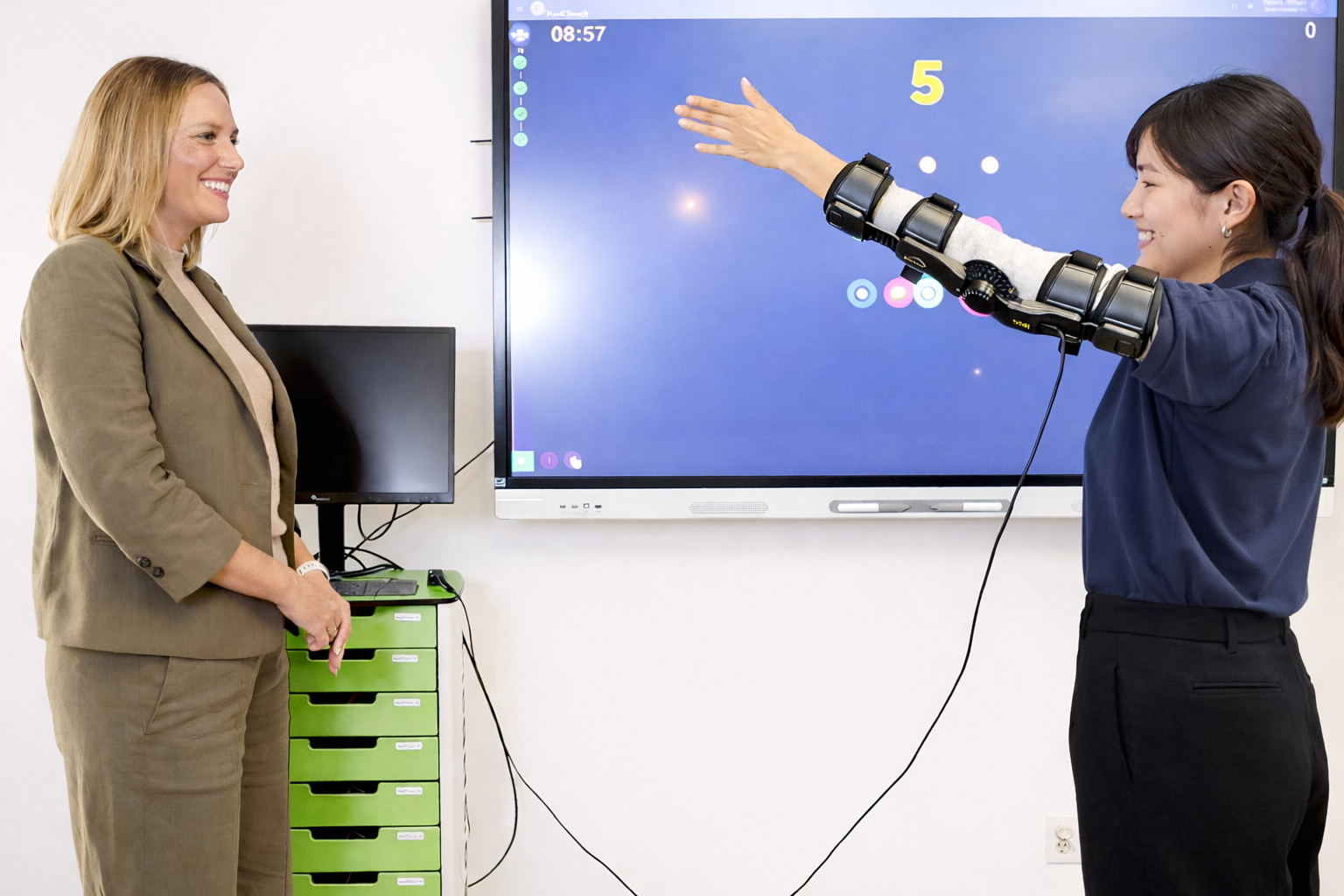
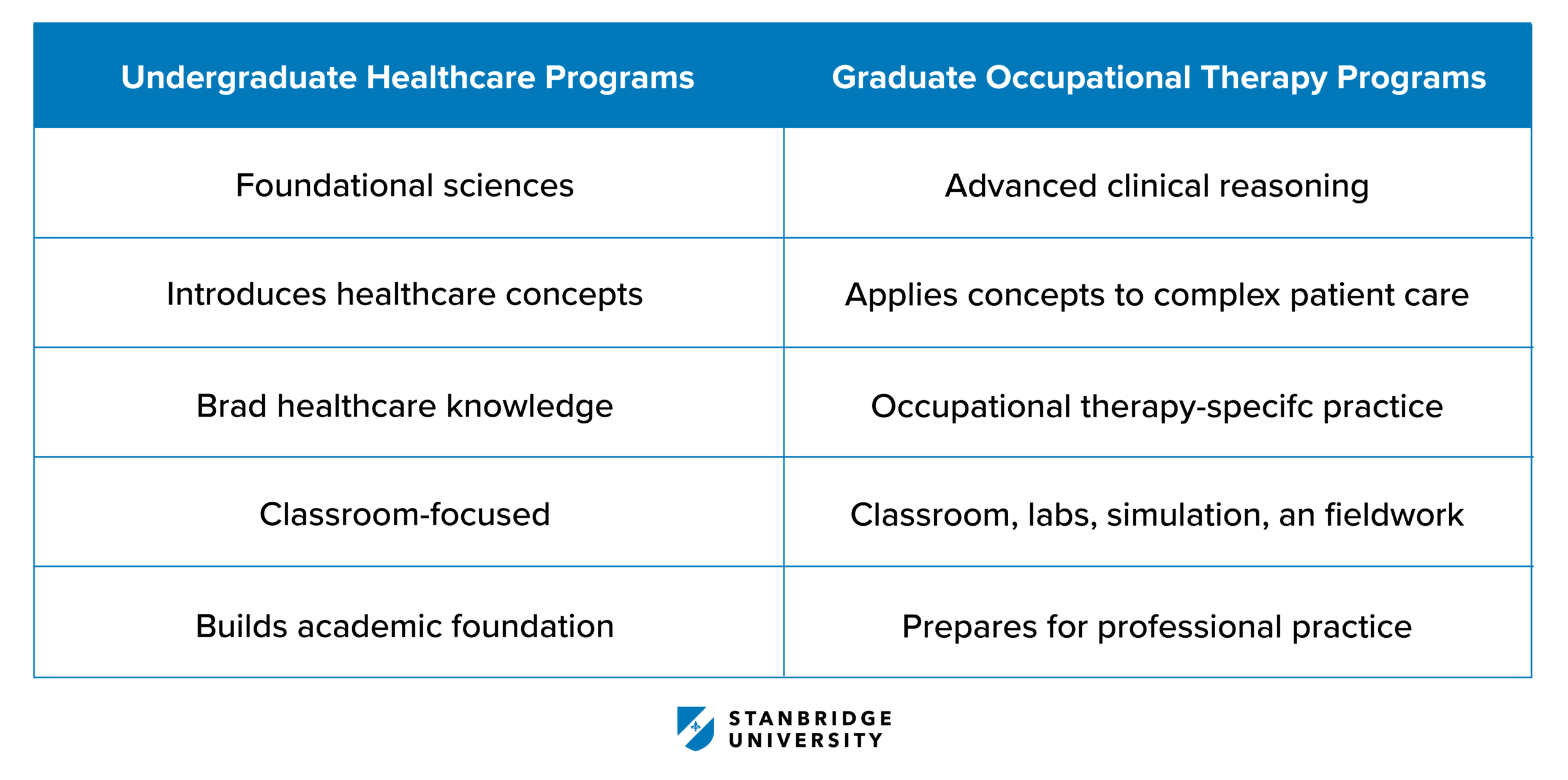
What Does Graduate School in Occupational Therapy Look Like?
Graduate education in occupational therapy is an immersive educational experience that connects academic knowledge with practical applications.
Your schedule may include lectures, laboratory sessions, case discussions, group projects, simulations, research assignments, and fieldwork preparation.
As you study different subjects, you will connect concepts across courses and consider how they apply to occupational therapy practice. For example, a discussion about neurological conditions may connect anatomy and neuroscience with patient assessment, adaptive equipment, family education, and intervention planning. The goal is to help you understand not only a health condition, but also how that condition may affect a person’s ability to work, learn, care for themselves, or participate in their community.
Graduate school also requires consistent preparation. You may need to review readings before class, contribute to online discussions, practice skills outside scheduled laboratory time, collaborate with classmates, and reflect on faculty feedback.
What Will You Study in a MSOT Program?
Although each Master of Science in Occupational Therapy (MSOT) curriculum is structured differently, graduate education in occupational therapy commonly explores how health conditions, personal goals, environments, and daily routines influence participation in meaningful activities.
Your coursework may cover subjects such as human anatomy, neuroscience, movement, how aging affects the body, mental and behavioral health, physical rehabilitation, pediatrics, assistive technology, research, leadership, and occupational therapy theory. These courses will be the foundation you draw upon as you consider a patient’s needs.
At the same time, you will learn how occupational therapists approach evaluation and intervention. That may include studying how to gather information, identify barriers to participation, establish measurable goals, select therapeutic activities, document care, and evaluate patient progress.
A successful occupational therapist combines their academic knowledge with their patient evaluation skills to achieve the best outcomes for their patients.
What Are Occupational Therapy Labs Like?
Laboratory courses give you structured opportunities to practice the techniques you’ve learned about in class.
Depending on the course, you may practice conducting portions of an evaluation, observing movement, selecting adaptive equipment, positioning a patient, planning therapeutic activities, or modifying an environment. You may also explore tools used to support mobility, sensory processing, daily living skills, cognition, or upper-extremity function.
Labs often involve demonstrations followed by guided practice. Faculty can observe your technique, answer questions, and provide feedback before you apply your skills with real patients in your fieldwork.
Simulation-based lab experiences may also place you in realistic patient-care situations that require more than technical ability. You may need to communicate with a patient, identify relevant information, organize your approach, respond to a change, or explain your recommendations.
These experiences create a structured setting in which you can practice, reflect, and improve, so you can step into your fieldwork with confidence.
What Kinds of Patient Cases Will You Work Through?
Patient cases help you connect academic knowledge with the decisions occupational therapists make in practice. You may work through situations involving children with developmental needs, adults recovering from injury or illness, people living with neurological conditions, individuals experiencing mental health challenges, or older adults who want to remain independent.
A case may ask you to consider:
- Which daily activities matter most to the person
- How the person’s condition affects participation
- Which personal or environmental factors create barriers
- What additional information an occupational therapist may need
- Which interventions may support the person’s goals
- How progress could be measured
The case may not have one universal solution. Two people with the same diagnosis can have different routines, responsibilities, environments, and priorities. Occupational therapy education therefore emphasizes individualized, patient-centered thinking.

How Will You Develop Clinical Reasoning?
Clinical reasoning is the process occupational therapists use to gather information, understand a person’s needs, consider possible approaches, and make informed decisions.
You will develop this skill gradually, throughout your occupational therapy education. Case studies, laboratories, simulations, research assignments, faculty discussions, and fieldwork all give you opportunities to explain why a particular approach may be appropriate.
Your professors may ask you to identify the most relevant assessment findings, connect those findings to daily activities, justify an intervention, or reconsider a plan when a patient’s needs change.
Reflection also plays an important role in developing your clinical reasoning. Reviewing what went well, what could improve, and what information influenced your decisions helps you become more intentional in your therapeutic approach.
Evidence-Based Practice and Occupational Therapy Graduate School
Evidence-based practice is a decision-making process that helps occupational therapists connect medical research with clinical expertise in order to best treat each patient’s circumstances. Through this process, occupational therapists continue to use the most up-to-date research findings to inform their practice.
During graduate school, you may learn how to search scholarly databases, assess the quality of research, interpret findings, and consider whether the evidence applies to a particular patient or setting. Research assignments often introduce study design, data interpretation, professional writing, and the ethical use of evidence.
The purpose of learning these skills is not simply to complete a research course, but to help you evaluate new information throughout your career and make thoughtful decisions as occupational therapy practice continues to evolve.
How Much Collaboration Is Involved?
Collaboration is a regular part of both graduate education and occupational therapy practice. With your classmates, you may complete group case studies, practice treatment planning, participate in simulations, present patient cases, and even learn alongside students from other healthcare disciplines. These activities are designed to help you communicate your observations, listen to different perspectives, and contribute to shared decisions.
Beyond school, occupational therapists often collaborate with occupational therapy assistants, nurses, physicians, physical therapists, speech-language pathologists, social workers, educators, psychologists, caregivers, and other professionals.
It’s also important to learn how to communicate directly with patients and families. Explaining an intervention clearly, listening to a patient’s priorities, and adjusting recommendations to fit a person’s routines are essential parts of patient-centered care.
What Is Fieldwork in an MSOT Program?
Fieldwork is supervised education that allows you to apply what you have learned in your classes and labs with real patients.
Level I fieldwork introduces aspects of occupational therapy practice and may involve observation, guided participation, or experiences connected to your coursework. Level II fieldwork provides more sustained opportunities to develop your entry-level skills in real healthcare settings under the supervision of qualified professionals.
Depending on placement availability and program requirements, fieldwork may take place in hospitals, outpatient clinics, rehabilitation facilities, schools, skilled nursing facilities, mental health programs, or community-based settings.
During your fieldwork, you will strengthen your ability to communicate professionally, manage your time, document patient services, respond to feedback, and connect evaluation findings with intervention planning.
For a closer look at this part of occupational therapy education, you can explore our guide: “What Is Fieldwork in Occupational Therapy Education?”.
How Do You Prepare for the NBCOT Exam?
In order to become an occupational therapist, you must pass a licensure exam administered by the National Board for Certification in Occupational Therapy (NBCOT). NBCOT exam preparation begins with building the knowledge and professional reasoning expected of an entry-level occupational therapist.
Throughout an MSOT program, coursework, cases, laboratories, assessments, and fieldwork help you connect information across major areas of occupational therapy practice. Many programs also offer review activities, practice questions, faculty guidance, and other resources as students approach graduation.
To qualify for the Occupational Therapist Registered exam, NBCOT requires candidates educated in the United States to graduate from an entry-level occupational therapy program that has been accredited by the Accreditation Council for Occupational Therapy Education (ACOTE). The exam is designed to assess your entry-level competence in occupational therapy. After you pass your NBCOT exam, you must also meet the licensing requirements of the state in which you intend to practice.
Stanbridge University’s MSOT Program
Stanbridge University’s Master of Science in Occupational Therapy program combines graduate coursework with laboratory learning, simulation, collaborative activities, and supervised fieldwork.
The program is 117 quarter credit hours and takes approximately 26-27 months to complete, depending on enrollment status and individual progression.
The Stanbridge MSOT curriculum is designed to develop skills in areas including clinical reasoning, evidence-based practice, evaluation, therapeutic intervention, communication, leadership, and professional behavior. Stanbridge also assigns MSOT students a faculty advisor who helps assess academic progress, fieldwork performance, and professional engagement.
The Stanbridge University MSOT program is accredited by ACOTE, meaning that graduates who complete program requirements are eligible to apply to NBCOT to take the national certification examination. After passing the examination, graduates can apply for state licensure.
For help understanding the admissions process or determining your next steps, please contact us.
Is Graduate Occupational Therapy School Right for You?
An occupational therapy graduate program may align with your goals if you enjoy combining science, communication, creativity, research, and patient-centered problem-solving to help people participate meaningfully in their communities and daily activities.
A program like this requires organization, steady preparation, collaboration, and a willingness to use feedback. You will be asked to connect ideas across courses, practice unfamiliar skills, participate in fieldwork, and consider how each person’s priorities affect occupational therapy services.
Before choosing a program, be sure to review its accreditation status, admissions requirements, curriculum, fieldwork structure, completion timeline, student support resources, and published outcomes. These details can help you decide whether the educational experience fits your educational and professional goals.
To learn more about occupational therapy, you can explore our other articles here.
Frequently Asked Questions
You can expect a combination of graduate coursework, laboratory practice, patient cases, research, collaboration, simulation, and supervised fieldwork. These experiences help you develop the knowledge and professional skills used in occupational therapy practice.
An MSOT curriculum usually covers anatomy, neuroscience, human development, mental and behavioral health, pediatrics, physical rehabilitation, assistive technology, research, leadership, evaluation, intervention planning, and occupational therapy theory. Course structures vary by institution.
Occupational therapy labs provide guided opportunities to practice evaluation techniques, therapeutic activities, adaptive equipment use, patient communication, and other skills introduced in class. Faculty demonstrations and feedback help you improve these skills before applying them to real patient cases in your fieldwork.
Cases may involve children, adults, and older adults with physical, neurological, developmental, cognitive, or mental health needs. You will analyze how a condition affects daily activities and consider environments, goals, interventions, and patient priorities.
Fieldwork is supervised education that connects classroom learning with occupational therapy practice in real healthcare settings. Level I fieldwork introduces practice concepts, while Level II fieldwork provides more sustained opportunities to develop entry-level skills under professional supervision.
An MSOT program builds the knowledge and entry-level skills assessed by NBCOT through coursework, cases, laboratories, examinations, and fieldwork. Graduating from an ACOTE-accredited entry-level occupational therapy program is required for U.S.-educated candidates to qualify for the NBCOT OTR certification examination.
Stanbridge University’s program is 117 quarter credit hours and takes approximately 26 to 27 months to complete, depending on enrollment status and individual progression.
Footnotes
¹ Stanbridge University Master of Science in Occupational Therapy Program Overview, https://catalog.stanbridge.edu/programs/msot-program/msot-program-overview/
² Stanbridge University MSOT Licensure Requirements, https://catalog.stanbridge.edu/programs/msot-program/msot-licensure-requirements/
³ National Board for Certification in Occupational Therapy (NBCOT) Eligibility, https://www.nbcot.org/get-certified/eligibility
⁴ National Board for Certification in Occupational Therapy (NBCOT) Certification Examination Handbook, https://www.nbcot.org/-/media/PDFs/Cert_Exam_Handbook.pdf
⁵ Stanbridge University MSOT Professional Behavior and Code of Conduct, https://catalog.stanbridge.edu/programs/msot-program/msot-program-policies/