What Is Gait Training and What Role Does a PTA Play?
Gait training is a form of physical therapy that helps patients improve walking, balance, coordination, and functional mobility. Under the direction and supervision of a physical therapist, a Physical Therapist Assistant (PTA) may guide walking and balance activities, help patients use assistive devices, monitor their response to treatment, and communicate relevant findings to the supervising physical therapist.¹
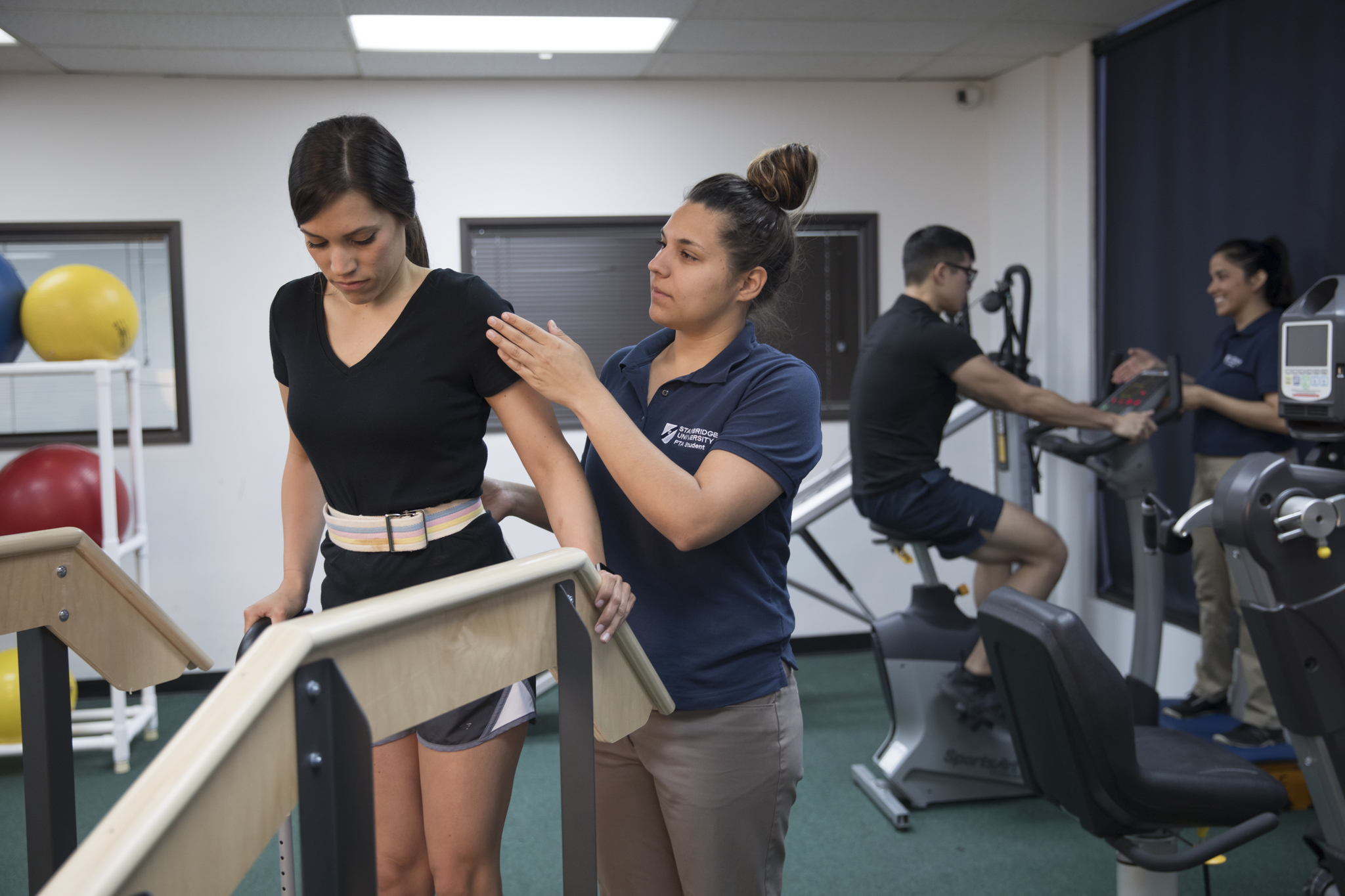
What Is Gait Training in Physical Therapy?
Gait training is a form of physical therapy treatment that helps patients practice safer or more effective walking based on their mobility needs and the physical therapist’s plan of care.
Treatment may address:
- Walking pattern
- Balance
- Strength
- Coordination
- Endurance
- Weight shifting
- Assistive-device use
- Navigating different surfaces
The goal depends on the patient. Someone recovering from joint replacement may practice walking with a walker, while a person recovering from a stroke may work on balance, weight shifting, and coordinated stepping.
Who May Need Gait Training?
Gait training is typically used when illness, injury, surgery, or another health condition affects a person’s ability to walk safely or independently.
Examples include patients living with or recovering from:
- Stroke
- Joint replacement or orthopedic surgery
- Spinal cord injury
- Traumatic brain injury
- Neurological conditions
- Prolonged hospitalization
Older adults experiencing changes in balance, strength, or mobility may also participate in gait training. Some patients need gait training while learning to use a walker, cane, crutches, prosthesis, or another mobility device.
What Does Gait Training Look Like?
A gait-training session varies according to the patient’s condition, abilities, goals, and treatment plan.
A patient may practice:
- Standing and weight shifting
- Balance
- Transfers
- Taking steps
- Walking with an assistive device
- Turning or changing direction
- Navigating obstacles
- Walking on different surfaces
- Increasing walking distance
Strengthening and balance activities may be incorporated into a patient’s treatment plan alongside gait training, because walking requires coordinated movement, stability, and muscle control.
Gait training can also look different depending on why the patient is having difficulty walking.
| Patient Situation | Gait Training May Address |
| Stroke | Balance, weight shifting, stepping, coordination |
| Joint replacement | Assistive-device use, precautions, strength |
| Neurological condition | Motor control, balance, coordination |
| Prolonged hospitalization | Strength, endurance, walking tolerance |
| Age-related mobility changes | Stability, balance, functional mobility |
As the patient progresses, the level of assistance and difficulty of the activities may change within the established plan of care.
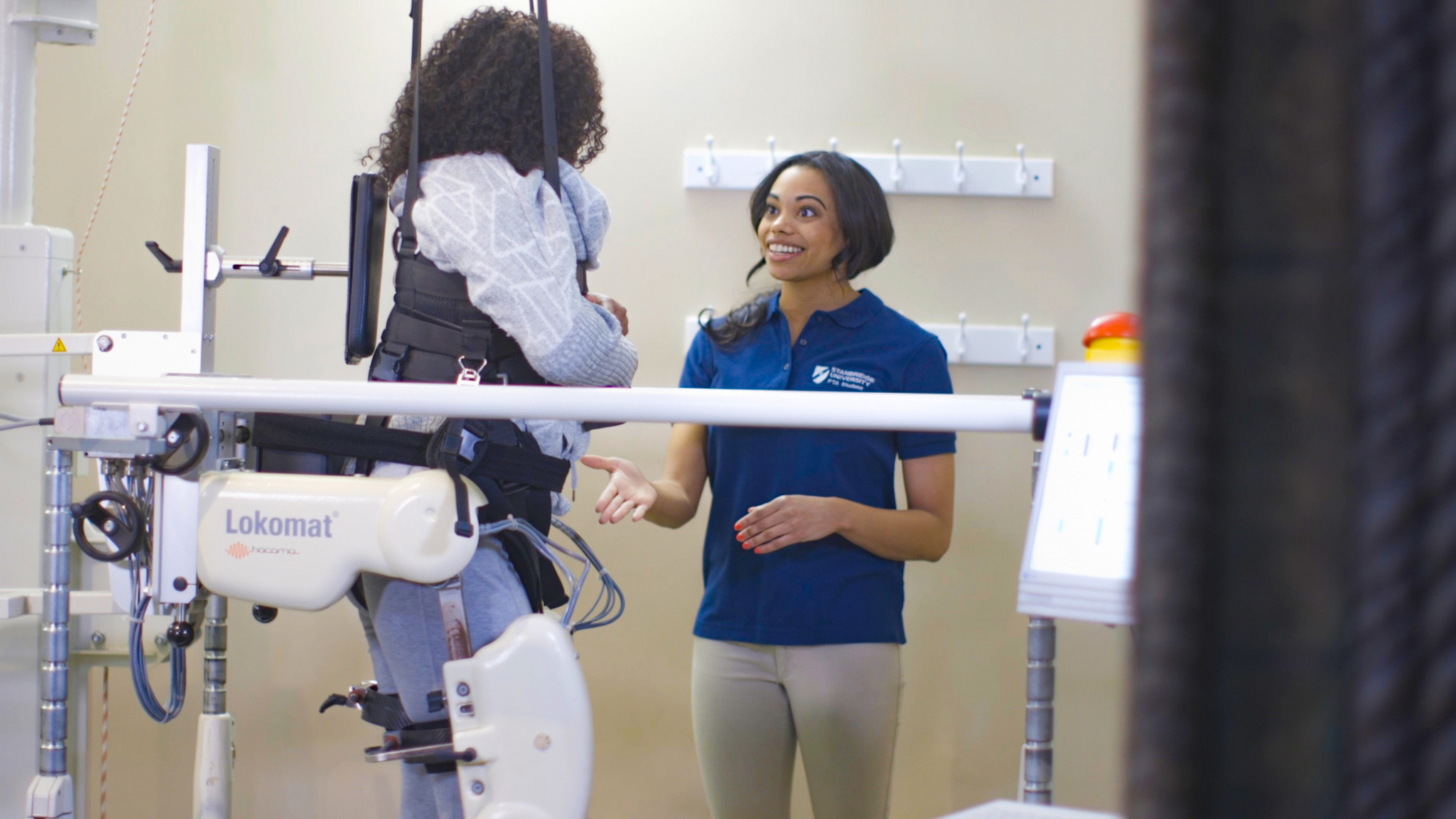
What Does a PTA Do During Gait Training?
A PTA helps implement gait-related interventions within the physical therapist’s established plan of care.
Depending on the patient, a PTA may:
- Guide walking practice
- Assist with balance and weight shifting
- Practice transfers with patients
- Reinforce safe movement techniques
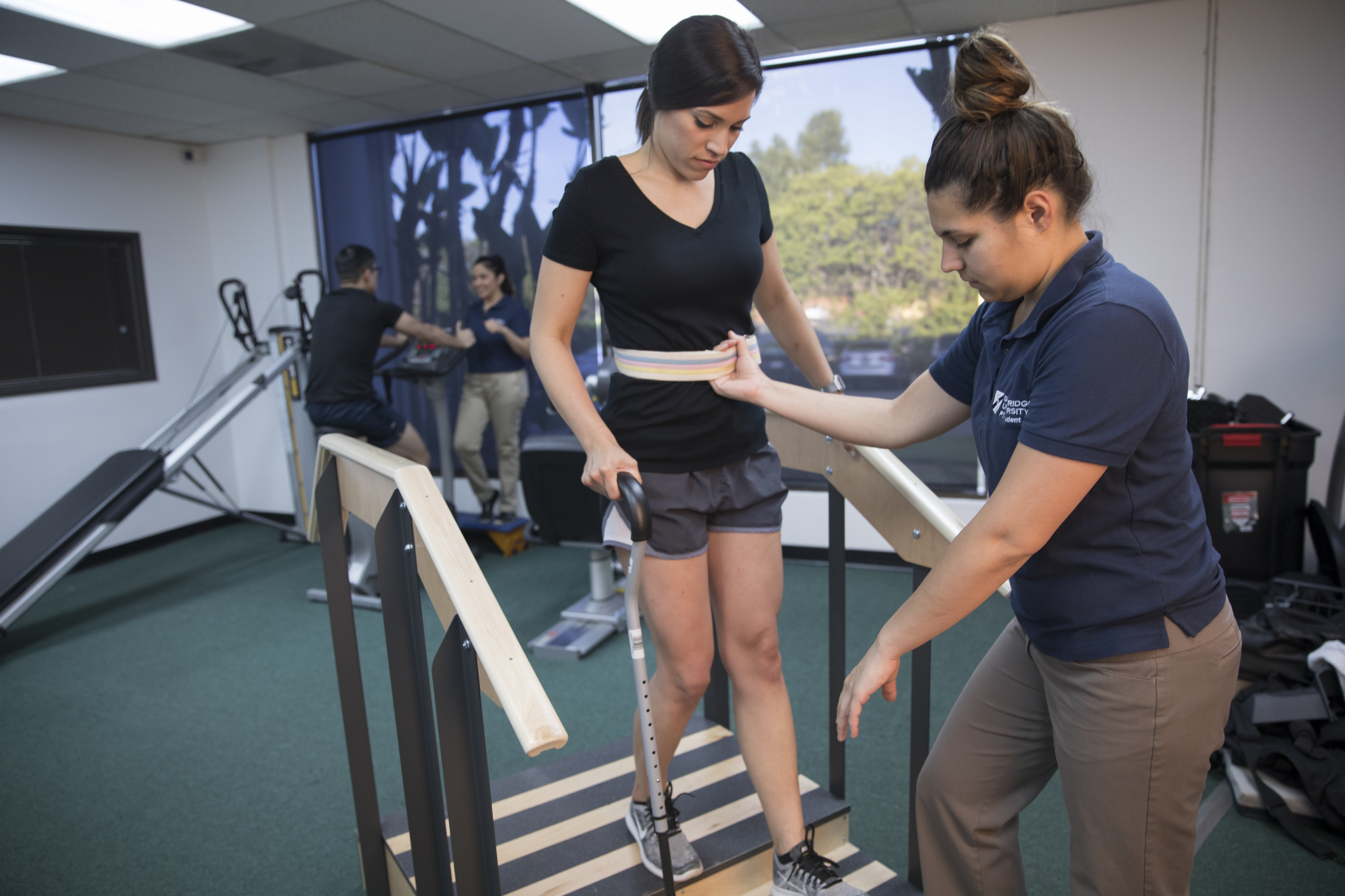
- Help patients use walkers, canes, or crutches
- Monitor gait and patient response
- Document treatment
- Communicate relevant findings to the physical therapist
A PTA does not independently perform the physical therapist’s initial evaluation or establish the overall plan of care. Instead, the PTA carries out appropriate interventions and communicates with the supervising physical therapist about the patient’s progress and response to treatment.
Assistive Devices
Walkers, canes, and crutches can help some patients improve stability, mobility, or safety. Under the physical therapist’s plan of care, a PTA may help a patient practice using an appropriate device, reinforcing safe movement techniques.
For example, someone recovering from lower-extremity surgery may practice walking with a walker or crutches while following applicable weight-bearing precautions.
Proper use of assistive devices is important because device adjustment, positioning, and technique can affect balance, posture, movement, and safety. PTAs study the appropriate application and adjustment of assistive devices in their education and licensure preparation.¹
How Do PTA Students Learn Gait Training?
PTA students learn about human anatomy and movement in their education, then build treatment skills using that foundational knowledge. Often, students begin developing gait and mobility skills in laboratory settings, then apply these skills during supervised clinical education.
At Stanbridge University, introductory PTA laboratory instruction includes assistive devices and gait in clinical settings.² Students build on those concepts through coursework in kinesiology, therapeutic exercise, measurement and testing, neurological interventions, and orthopedic interventions.² Stanbridge’s PTA program also includes supervised clinical education, allowing students to apply appropriate classroom and laboratory knowledge in physical therapy environments.³
The Associate of Science in Physical Therapist Assistant program is accredited by the Commission on Accreditation in Physical Therapy Education (CAPTE) at Stanbridge University’s Orange County and Los Angeles campuses.³ The program is structured for completion in approximately 20–21 months, including holidays and scheduled term breaks.³
Why Is Gait Training Important?
Walking affects a person’s ability to move through their home, participate in their community, work, and complete everyday activities. When mobility changes after illness, injury, surgery, or another condition, gait training can support rehabilitation goals related to safer and more functional movement.
PTAs contribute by helping patients practice mobility activities, use assistive devices, develop strength and balance, and work toward goals established by the physical therapist to help bring them closer to moving freely.
To learn more about PTA education, explore Stanbridge University’s Physical Therapist Assistant program.
Frequently Asked Questions
The timeline varies based on the patient’s condition, mobility limitations, rehabilitation goals, response to treatment, and plan of care. There is no single gait-training timeline for every patient, but it often takes place over several months.
No. Gait training may also help people who can already walk but need to improve balance, endurance, walking technique, safety, or use of an assistive device.
Gait training focuses primarily on walking and functional mobility, while balance training focuses on stability and body control. The two often overlap because safe walking requires balance, coordination, and weight shifting.
Some patients may progress toward using less assistance, but this depends on their condition, mobility, safety, and plan of care. Starting or continuing to use an assistive device can also be part of helping some patients find more independence in their movement.
Yes. PTA education includes mobility, patient-care, and assistive-device skills relevant to gait training. At Stanbridge, introductory PTA laboratory instruction specifically includes assistive devices and gait in clinical settings.²
Footnotes
¹ Federation of State Boards of Physical Therapy, NPTE Content and PTA Examination Content Areas https://www.fsbpt.org/Free-Resources/NPTE-Development/NPTE-Content
² Stanbridge University Catalog, All Course Descriptions https://catalog.stanbridge.edu/all-course-descriptions/
³ Stanbridge University, Associate of Science in Physical Therapist Assistant https://www.stanbridge.edu/program/pta