Occupational Therapy Assistant Associate Degree: Requirements, Salary & Career Guide
Learn what an associate degree occupational therapy assistant does, program requirements, career outlook, and how to start your path in this rewarding field.

An associate degree occupational therapy assistant program prepares students to work as certified, licensed Occupational Therapy Assistants (OTAs). OTAs help patients regain the skills needed for daily living and working, operating under the supervision of a registered Occupational Therapist (OT). This article covers the OTA role, program curriculum, certification requirements, career outlook, and how to choose the right program.
Quick Overview
- OTAs work under the supervision of an Occupational Therapist to implement treatment plans and provide direct patient care.
- Most accredited associate degree OTA programs take approximately two years to complete.⁵
- Graduates must pass the NBCOT certification exam and obtain a state license to practice.³
- The hourly mean wage for OTAs is approximately $39.43, with 33.3% projected job growth over the next decade.¹
- ACOTE accreditation is required for any OTA program to qualify graduates for certification and licensure.²
What Is an Occupational Therapy Assistant?
An Occupational Therapy Assistant (OTA) is a healthcare professional who helps people of all ages regain skills needed for daily living and working. OTAs work directly with patients, guiding them through therapeutic activities and exercises that address physical, cognitive, and emotional challenges. The role combines clinical skills with direct patient interaction across a variety of healthcare settings.
The OTA’s Role in Healthcare
The primary role of an OTA is to help individuals participate in daily activities through the therapeutic use of everyday tasks. OTAs implement treatment plans that may involve helping a patient recover the ability to cook, dress independently, or return to activities after an injury or illness.6
Working with Occupational Therapists
OTAs work directly under the supervision of a registered Occupational Therapist. While the OT evaluates patients and develops treatment plans, the OTA carries out those plans. OTAs design intervention plans that include activities in order to enhance engagement in meaningful occupations.6 This collaborative relationship allows treatments to be adapted as patient needs change.
What You Learn in an OTA Program
Core Curriculum
Most Occupational Therapy Assistant programs take about two years to complete. At Stanbridge University, the program is designed for completion in approximately 22-23 months.⁵ The core curriculum covers kinesiology, patient care principles, professional ethics, anatomy and physiology, psychology, and human development. These courses build the foundational knowledge needed for clinical practice.
Hands-On Therapeutic Techniques
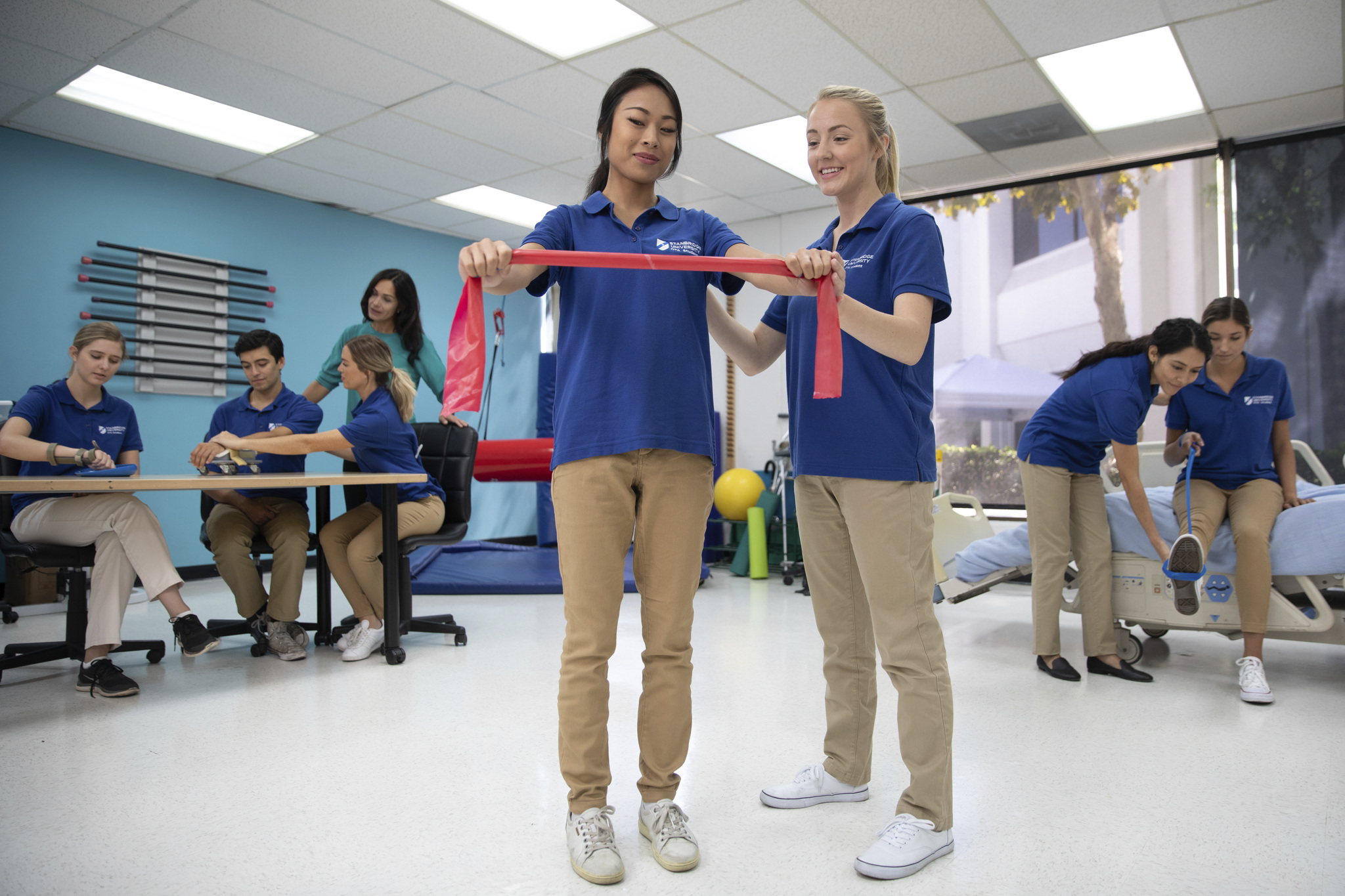
OTA students spend significant time in lab settings learning practical skills. This includes implementing therapeutic activities, using adaptive equipment, and applying treatment methods to help patients with Activities of Daily Living (ADLs). Programs that use simulation technology allow students to practice techniques in controlled environments before entering clinical placements.
Fieldwork and Clinical Practicum
Fieldwork is a required component of every accredited OTA program. Students work directly with patients in settings such as hospitals, rehabilitation centers, schools, and skilled nursing facilities under the supervision of a licensed occupational therapy practitioner. The clinical practicum typically involves over 500 hours of supervised practice. This experience builds clinical reasoning, professional skills, and confidence in patient care.
How to Get OTA Certification and Licensure
Passing the NBCOT Exam
To become a Certified Occupational Therapy Assistant (COTA), graduates must pass the certification exam administered by the National Board for Certification in Occupational Therapy (NBCOT). Eligibility requires graduation from an ACOTE-accredited program.
State Licensing Requirements
After passing the NBCOT exam, the next step is applying for a state license. In California, the California Board of Occupational Therapy manages this process. The application typically involves submitting NBCOT scores, completing a background check, and paying an application fee. Requirements vary by state.
Continuing Education
Both the NBCOT and state licensing boards require OTAs to complete continuing education units during each renewal period. NBCOT certification renewal typically occurs every three years, while state licensure renewal timelines vary by state and are often required every one to two years. These continuing education requirements help practitioners stay current with therapeutic techniques, research, and ethical standards.

OTA Career Outlook and Salary
Where OTAs Work
Certified OTAs work in hospitals, rehabilitation centers, nursing homes, schools, private clinics, and home health agencies. This range of settings allows practitioners to work with diverse patient populations across the lifespan.¹
Salary Data
The hourly mean wage for Occupational Therapy Assistants is approximately $39.43.¹ Compensation varies by experience, industry, and geographic location. OTAs working in skilled nursing facilities or home health settings may earn different compensation than those in schools or outpatient clinics.
Job Growth
Employment for OTAs is projected to increase by 33.3% over the next decade, significantly faster than average for all occupations.¹ This growth is driven by an aging population and expanded recognition of occupational therapy’s role in rehabilitation. Approximately 5,160 new job openings are expected each year, providing strong job security for graduates entering the field.¹
How to Choose the Right OTA Program
ACOTE Accreditation
The most important factor is accreditation by the Accreditation Council for Occupational Therapy Education (ACOTE). Graduating from an ACOTE-accredited program is required to sit for the NBCOT exam and obtain state licensure. Without accreditation, graduates cannot practice.
What to Look For in OTA Program Features and Support
Evaluate the program’s structure, including the balance of classroom instruction, lab work, and clinical placements. Consider student support services such as academic advising and career services. Review program length and scheduling options to find a program that fits your circumstances. Programs that offer academic tutoring, mentoring, and career placement assistance can improve student outcomes.
Clinical Training Quality
Programs with strong clinical partnerships in diverse healthcare settings provide better fieldwork experiences. Look for programs that include significant clinical hours and use simulation technology in their training.
Stanbridge University Program Details
Stanbridge University offers an Associate of Occupational Science in Occupational Therapy Assistant program at its Orange County and Los Angeles campuses. Key program features include:
- Accreditation: ACOTE-accredited
- Duration: Approximately 22-23 months (full-time)⁵
- Training: Classroom instruction, simulation labs, and over 500 hours of clinical fieldwork
- Technology: Simulation technology integrated into hands-on training
- Student support: Financial aid resources, academic advising, and tutoring available
- Exam preparation: Curriculum structured to prepare graduates for the NBCOT exam
Frequently Asked Questions
An Occupational Therapist (OT) evaluates patients and creates treatment plans. An OTA works under the OT’s supervision to carry out those plans, guiding patients through therapeutic activities and tracking progress.6
Most accredited associate degree programs take about two years of full-time study, including coursework, lab work, and clinical fieldwork.⁵
Employment is projected to grow 33.3% over the next decade, much faster than average. This strong demand provides good job security across multiple healthcare settings.¹
Fieldwork places students in real healthcare settings where they work directly with patients under the supervision of a licensed occupational therapy practitioner. Students complete over 500 hours of supervised clinical practice.
Graduates must pass the NBCOT certification exam and then apply for a state license. Both steps are required before practicing as an OTA.³
Footnotes
¹ Source: California Employment Development Department (EDD), Labor Market Information Division, Occupational Employment Projections and Wages for Occupational Therapy Assistants (SOC 31-2011), https://labormarketinfo.edd.ca.gov/cgi/databrowsing/occExplorerQSDetails.asp?searchCriteria=occupational+therapy+assistant&careerID=&menuChoice=occexplorer&geogArea=0601000000&soccode=312011&search=Explore+Occupation. As viewed on May 26, 2026.
² Source: Accreditation Council for Occupational Therapy Education (ACOTE®) of the American Occupational Therapy Association (AOTA), Accreditation Status, https://acoteonline.org/schools/?_schools=ota-associate&_paged=4. As viewed on May 14, 2026.
³ Source: NBCOT-COTA Pass Rates, 2022–2024, Orange County and Los Angeles campuses; National Board for Certification in Occupational Therapy, https://www.nbcot.org/Educators-Folder/SchoolPerformance. As viewed on April 14, 2025.
⁴ Source: Stanbridge University, Orange County campus, Accrediting Commission of Career Schools and Colleges (ACCSC) School of Excellence 2025 Award. Email communication from Michelle Ragland, Member Services and Events Manager, ACCSC, to Director of Marketing, Victoria Sauer. As viewed on July 17, 2025.
⁵ Program duration subject to change. Completion times vary depending upon the start and end dates of a cohort and any individual circumstances that may impact progression.
6 Source: American Occupational Therapy Association, Occupations and everyday activities, https://www.aota.org/practice/domain-and-process/occupations-everyday-activities. As viewed on December 28, 2023.