Is Becoming a Physical Therapist Assistant Worth It? Salary, Job Outlook, and Career Opportunities in California
Becoming a Physical Therapist Assistant (PTA) requires completing an accredited education program, meeting state licensure requirements, and preparing to help patients improve movement and mobility. In California, the Employment Development Department (EDD) reports a median hourly wage of $40.97 (about $85,200 annually) and projects 41.1% employment growth from 2024 to 2034.¹ These figures provide useful context for evaluating the profession alongside education costs, program length, licensing requirements, and individual career goals.
What Is the Salary for Physical Therapist Assistants in California?
According to the California EDD, the median hourly wage for Physical Therapist Assistants was $40.97 in the first quarter of 2026.¹
| California PTA wage measure | Amount |
| 25th percentile hourly wage | $37.41 |
| Median hourly wage | $40.97 |
| 75th percentile hourly wage | $46.80 |
| Annual equivalent of median hourly wage | Approximately $85,200 |
Actual earnings vary according to experience, employer, geographic location, hours worked, and other factors, so while these figures are a useful guide, they may not match an individual PTA’s experience.
What Is the Job Outlook for PTAs in California?
The California EDD projects 41.1% employment growth for Physical Therapist Assistants between 2024 and 2034, with approximately 18,930 total job openings during that period.¹
| California PTA employment projection | EDD estimate |
| Employment in 2024 | 9,000 |
| Projected employment in 2034 | 12,700 |
| Projected increase | 3,700 |
| Projected growth | 41.1% |
| Total projected job openings | 18,930 |
Projected job openings include opportunities associated with employment growth and replacement needs. They do not represent the number of positions currently available.
While these projections indicate anticipated growth in California’s PTA workforce, actual hiring conditions depend on employers, geographic location, economic conditions, and other factors.
How Long Does It Take to Become a PTA in California?
PTA education generally involves completing an associate-level program that includes classroom instruction, laboratory practice, and supervised clinical education. Program duration varies by institution, academic calendar, and schedule.
At Stanbridge University, the Associate of Science in Physical Therapist Assistant program is structured for completion in approximately 20–21 months on a full-time schedule, including holidays and scheduled term breaks.²
The program is offered at the Orange County and Los Angeles campuses and combines coursework in areas such as:
- Anatomy and kinesiology
- Therapeutic exercise
- Therapeutic measurement and testing
- Orthopedic and neurological interventions
- Patient care and safety
- Clinical education²
Completing a PTA degree does not automatically provide a professional license. Graduates must satisfy the applicable licensing requirements before practicing as licensed PTAs.
How Do You Become a Licensed Physical Therapist Assistant in California?
California regulates PTA licensure through the Physical Therapy Board of California (PTBC).
The general pathway includes:
- Complete a qualifying PTA education program.
- Graduates of CAPTE-accredited PTA programs meet the standard educational pathway for California licensure.
- Apply for licensure.
- Applicants complete the PTBC application process and submit required documentation, fees, and fingerprints.
- Pass the National Physical Therapy Examination for PTAs.
- The Federation of State Boards of Physical Therapy (FSBPT) administers the NPTE, which assesses entry-level physical therapy knowledge and competency.³
- Complete California’s law examination requirement.
- Applicants must also satisfy the California Jurisprudence Assessment Module (CAL-JAM) requirement.
- Meet remaining requirements and obtain licensure.
- The PTBC determines whether an applicant meets the requirements for a California PTA license.⁴
The PTA NPTE currently contains 180 questions and allows four hours for completion.⁴
Applicants should verify current licensing procedures, examination requirements, and fees directly with the PTBC and FSBPT because requirements may change.
What Should Students Compare When Choosing a PTA Program?
The educational program a student chooses affects the time, cost, and learning experiences involved in preparing for PTA practice.
You can compare several measurable factors:
| Factor | What to review |
| CAPTE Accreditation | Whether the specific PTA program and campus are accredited |
| NPTE Pass Rates | Recent first-time and ultimate pass rates, reporting years, and number of candidates |
| Program Length | Total expected months or terms to completion |
| Clinical Education | Required clinical experiences, scheduling, and placement expectations |
| Curriculum | Coursework in movement science, interventions, patient care, and rehabilitation |
| Tuition and Fees | Total program costs, supplies, and licensing-related expenses |
| Student Support | Tutoring, academic resources, and licensure examination preparation |
| Graduate Outcomes | Published graduation and employment outcomes, including how they are calculated |
Reviewing these factors provides a broader understanding of a program than comparing tuition, duration, or examination outcomes alone.
What Are Stanbridge University’s PTA Licensure Pass Rates?
Recent Stanbridge graduates achieved the following NPTE for PTA ultimate licensure pass rates over a three-year reporting period.⁵
| Stanbridge PTA campus | NPTE ultimate pass rate |
| Orange County | 98% |
| Los Angeles | 100% |
Stanbridge University’s Physical Therapist Assistant program is accredited by the Commission on Accreditation in Physical Therapy Education (CAPTE) at its Orange County and Los Angeles campuses.²
The program combines classroom learning, laboratory practice, supervised clinical education, and NPTE preparation.
Licensure pass rates provide one measure of graduate examination performance. However, they should be reviewed alongside program completion, employment outcomes, costs, clinical education, and student support. Individual examination results and employment outcomes vary.
What Factors Determine Whether a PTA Career Is Worth Pursuing?
The value of pursuing a PTA career depends on several individual and measurable considerations.
California’s published wage data and employment projections provide information about potential earnings and anticipated workforce demand. However, you should also consider the educational commitment, tuition and related expenses, licensing requirements, and the nature of PTA work.
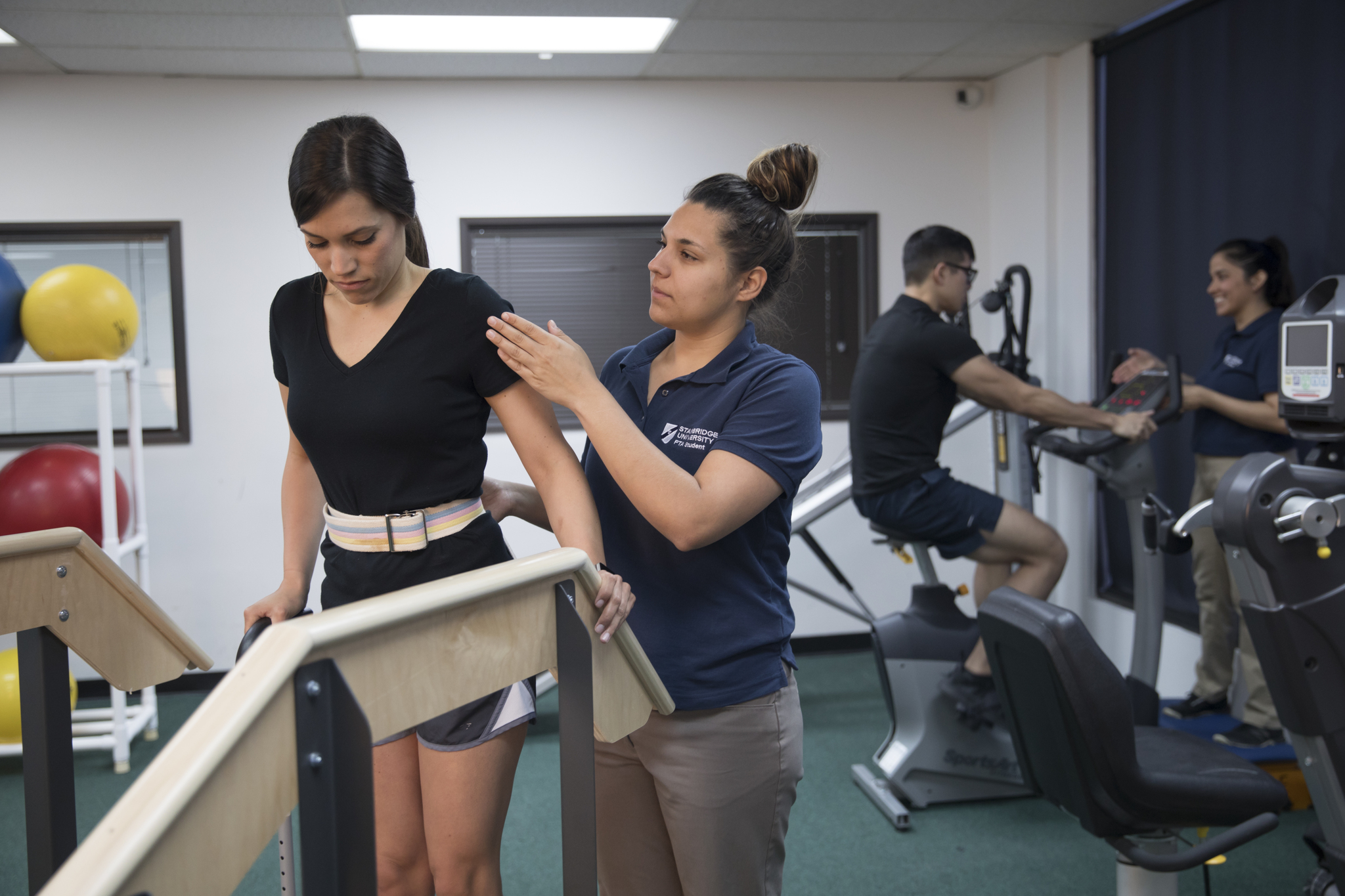
Physical therapist assistants perform hands-on rehabilitation activities and work directly with patients, often in physically active environments. They also practice within the physical therapist’s plan of care rather than independently evaluating patients or establishing treatment plans.
Together, these factors provide a more complete picture of the profession than salary or employment growth alone.
If you are researching PTA education, you can explore Stanbridge University’s Physical Therapist Assistant program, review its published examination outcomes, or contact Stanbridge University for current program information.
Frequently Asked Questions
The California EDD reports a median hourly wage of $40.97 for physical therapist assistants in the first quarter of 2026. That equals approximately $85,200 annually when calculated using 2,080 paid hours. Actual earnings vary.¹
California EDD projections estimate 41.1% PTA employment growth from 2024 to 2034, with approximately 18,930 total projected job openings. These projections do not guarantee employment.¹
Some PTA programs are structured for completion in less than two years. Stanbridge University’s full-time Associate of Science in Physical Therapist Assistant program takes approximately 20–21 months, although individual completion times may vary.²
No. A physical therapist evaluates patients and establishes treatment plans. A physical therapist assistant implements appropriate interventions under the direction and supervision of the physical therapist. Their educational and licensure requirements differ.
No. Passing the NPTE is an important examination requirement, but candidates must also meet applicable state licensure requirements. Licensure does not guarantee employment, and hiring decisions depend on individual employer requirements and labor market conditions.
Footnotes
¹ California Employment Development Department Occupation Profile: Physical Therapist Assistants (SOC 31-2021), California https://labormarketinfo.edd.ca.gov/cgi/databrowsing/occExplorerQSDetails.asp?searchCriteria=physical+therapist+assistant&careerID=&menuChoice=&geogArea=0601000000&soccode=312021&search=Explore+Occupation
² Stanbridge University Associate of Science in Physical Therapist Assistant https://www.stanbridge.edu/program/pta
³ Federation of State Boards of Physical Therapy National Physical Therapy Examination (NPTE) https://www.fsbpt.org/secondary-pages/exam-candidates/national-exam-npte
⁴ Physical Therapy Board of California New Graduate Applicant — Examination Information https://www.ptbc.ca.gov/applicants/new_grad/exam.shtml
⁵ Stanbridge University NPTE for PTA Licensure Pass Rates https://www.stanbridge.edu/pass-rates