Pediatric vs. Adult Occupational Therapy: How Does Practice Differ?
Pediatric and adult occupational therapy share the same goal: helping people participate more fully in meaningful daily activities. However, practice changes across the lifespan. Pediatric OT often emphasizes development, play, school participation, and self-care, while adult OT may focus more on rehabilitation, activities of daily living, work, community participation, and maintaining or regaining independence.¹

Pediatric vs. Adult Occupational Therapy at a Glance
The biggest difference between pediatric and adult occupational therapy is the occupations, developmental needs, environments, and life roles that shape treatment.
| Pediatric Occupational Therapy | Adult Occupational Therapy |
| Often helps children develop skills | Often helps adults restore, adapt, or maintain skills |
| Play and school are major occupations | Work, home, and community activities may be major occupations |
| Parents, caregivers, and teachers may be closely involved | Family involvement varies according to the client’s needs |
| May address fine motor skills, sensory processing, development, and self-care | May address rehabilitation, cognition, upper-extremity function, and daily living |
| Common settings include schools, pediatric clinics, and early intervention | Common settings include hospitals, rehabilitation facilities, outpatient clinics, and home health |
These are broad differences, not strict boundaries. Across patient demographics, occupational therapy is individualized according to the client’s goals, abilities, environment, and occupational needs.²
What Does a Pediatric Occupational Therapist Do?
Pediatric occupational therapists help children participate in meaningful childhood activities such as play, learning, self-care, and social participation.
Depending on the child, OT may address:
- Fine motor skills
- Sensory processing
- Feeding
- Dressing
- Handwriting
- School participation
- Play
- Attention and regulation
For example, a child having difficulty with handwriting might work on fine motor coordination, positioning, hand strength, or visual-motor skills.
Because children are still developing, pediatric OTs also consider developmental expectations and how physical, cognitive, sensory, psychosocial, and environmental factors affect participation.
What Does an Adult Occupational Therapist Do?
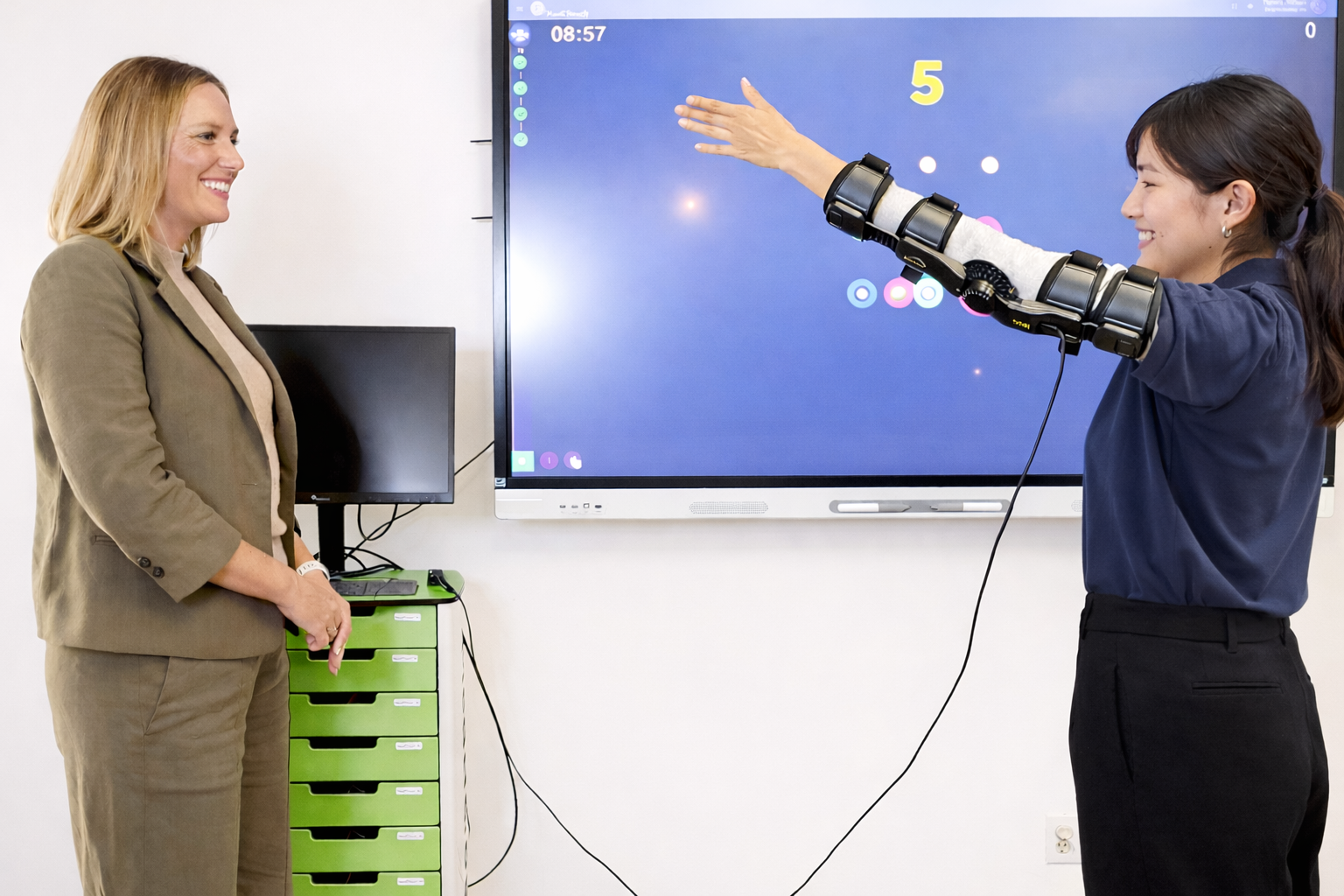
Adult occupational therapists often help people regain, adapt, or maintain everyday skills after illness, injury, disability, or another change in function.
Clients may receive occupational therapy following stroke, traumatic brain injury, spinal cord injury, orthopedic surgery, neurological conditions, or other health changes.
Treatment may address:
- Dressing and bathing
- Meal preparation
- Cognition
- Home management
- Upper-extremity function
- Work
- Community mobility
- Adaptive equipment
- Environmental modification
For example, an adult recovering from a stroke may practice one-handed dressing techniques, use adaptive equipment, or develop strategies for cognitive changes.
Adult OT can also help people maintain independence and safety as their needs change, such as by working to prevent falls in an older adult.
How Do Pediatric and Adult OT Goals Differ?
Pediatric OT often helps a child develop a skill, while adult rehabilitation may help someone restore, adapt, or compensate for a skill.
Consider dressing. A child may be learning how to manipulate buttons or zippers for the first time. A pediatric OT might incorporate those skills into a game before practicing with clothing. An adult recovering from a stroke often already understands how to dress, but needs to relearn the activity using one-handed techniques or adaptive equipment. In both cases, the meaningful occupation is dressing. The difference is the client’s developmental and clinical context.
This same principle applies across OT. Pediatric intervention may center on play, school, or developmental routines, while adult intervention may focus on work, household management, caregiving, hobbies, or community participation.
Family Involvement and OT Settings
Pediatric occupational therapy often involves close collaboration with parents, caregivers, teachers, and school staff because children’s occupations are closely connected with home and school.
Adult clients may take a more direct role in establishing their own priorities. However, family or caregiver involvement can still be important, particularly after significant illness, injury, or cognitive change.
Practice settings also differ:
| Pediatric OT Settings | Adult OT Settings |
| Schools | Hospitals |
| Early intervention | Inpatient rehabilitation |
| Pediatric outpatient clinics | Outpatient rehabilitation |
| Children’s hospitals | Skilled nursing facilities |
| Home and community settings | Home health and community settings |
There is substantial overlap in the settings where pediatric and adult clients receive OT care. Both children and adults can receive occupational therapy in hospitals, outpatient clinics, rehabilitation settings, homes, and community programs.
Tailoring Treatment to Each Individual
Often, pediatric occupational therapy focuses on helping children develop skills, while adult OT involves restoring, adapting, or maintaining function. However, age alone does not determine the type of occupational therapy someone needs. Some children may require rehabilitation after surgery, injury, or serious illness. Conversely, adults with lifelong disabilities may receive OT focused on adaptation and participation, rather than recovering a previously independent skill.
Occupational therapy students learn to work with this broad scope of client needs by studying development, aging, client factors, occupational performance, evaluation, and intervention across the practice.²
How Do OT Students Learn to Work With Children and Adults?
To become an occupational therapy professional, students must complete an accredited program, including both theory and fieldwork, then pass the NBCOT exam and apply for certification or licensure through their state board of occupational therapy. In order to achieve these goals, it’s important to carefully consider different occupational therapy programs before selecting one. Stanbridge University’s Master of Science in Occupational Therapy curriculum includes graduate-level study in areas such as pediatrics, physical rehabilitation, gerontology, psychosocial practice, clinical reasoning, evidence-based practice, and fieldwork.³ Fieldwork provides additional opportunities to apply occupational therapy knowledge in supervised practice environments.
Stanbridge’s MSOT program is accredited by the Accreditation Council for Occupational Therapy Education (ACOTE) and is structured for completion in approximately 26–27 months. Recent Stanbridge graduates achieved a 94% NBCOT-OTR certification pass rate for 2023–2025 for the Orange County and Riverside campuses.³
Occupational therapy assistants can also work with children and adults under the supervision of occupational therapists. Stanbridge University’s Occupational Therapy Assistant program prepares students for entry-level OTA practice across populations and settings and is accredited by ACOTE at the Orange County and Los Angeles campuses.⁴
Pediatric or Adult OT: Do You Have to Choose?
If you’re interested in occupational therapy but not yet sure where your niche will be in the field, there’s no need to worry. Occupational therapists enter the profession with generalist preparation for practice across populations and settings, though many develop deeper expertise in a particular population or practice area over time.
Pediatric OT may appeal to someone interested in child development, play, school participation, and family-centered care. On the other hand, adult OT may appeal to someone interested in rehabilitation, complex health conditions, activities of daily living, adaptive equipment, or helping clients maintain or regain independence.
However, professional interests can change. Fieldwork and early career experience can help occupational therapists determine which populations, environments, and clinical challenges align with their interests. Ultimately, pediatric and adult OT apply the same central question across different stages of life: What does this person need or want to do, what is limiting their participation, and how can we overcome it?
To learn more about becoming an occupational therapist, explore Stanbridge University’s Master of Science in Occupational Therapy program. Students interested in the occupational therapy assistant pathway can also review the Occupational Therapy Assistant program.

Frequently Asked Questions
Yes. Occupational therapists receive generalist entry-level preparation and may work with different populations throughout their careers. Changing practice areas may involve additional orientation, mentorship, continuing education, or professional development.
No. Children may receive occupational therapy for developmental, neurological, orthopedic, sensory, cognitive, or other conditions that affect participation in everyday activities.
No. Adult occupational therapy can serve young adults, working-age adults, and older adults following injury, surgery, neurological conditions, chronic illness, disability, or other changes in function.
No. Occupational therapists enter practice with generalist preparation. Some later develop deeper expertise in pediatrics, physical rehabilitation, gerontology, mental health, hand therapy, or other areas.
Yes. Fieldwork can help students better understand different occupational therapy populations, settings, and professional responsibilities. Specific placements and patient populations depend on program requirements and availability.
Footnotes
¹ Stanbridge University, Master of Science in Occupational Therapy https://www.stanbridge.edu/program/msot
² National Board for Certification in Occupational Therapy, 2022 OTR Practice Analysis https://www.nbcot.org/-/media/PDFs/2022_OTR_Practice_Analysis.pdf
³ Stanbridge University, Master of Science in Occupational Therapy https://www.stanbridge.edu/program/msot
⁴ Stanbridge University, Occupational Therapy Assistant https://www.stanbridge.edu/program/ota