For Stanbridge University vocational nursing alumna Joyce Tejada, the motivation to become a nurse began years before she entered a classroom. Caring for her grandmother after a stroke introduced her to the importance of compassionate care at a young age. Since graduating from Stanbridge, Joyce has progressed from post-acute nursing into acute dialysis, where she now cares for critically ill patients. Along the way, she says the lessons she learned about teamwork, patient advocacy, safety, and lifelong learning have continued to shape her approach to nursing.
What Inspired Joyce to Become a Nurse?
Joyce traces her nursing journey back to her childhood in the Philippines. Beginning at age 10, she helped care for her grandmother after she experienced a stroke. Her grandmother became one of the first people to encourage Joyce to imagine herself as a nurse.
“She was the first person to truly believe that I would become a great nurse, and her unwavering encouragement inspired me to pursue a career in nursing.”
Although her grandmother passed away in 2018, Joyce says that influence continues to shape how she approaches patient care today.
“I carry her memory with me in the way I care for my patients and strive to make her proud every day.”
When Joyce later researched vocational nursing programs, recommendations from Stanbridge graduates helped put the university on her radar.
She says the support she experienced from admissions through graduation reinforced her decision. After completing the program, she also worked with Stanbridge career resources as she pursued her first nursing opportunity.
Practicing Collaboration
For Joyce, some of the most valuable learning happened through clinical rotations, simulation labs, classroom collaboration, and hands-on practice. However, one theme connects many of those experiences: teamwork.
“Through group discussions, skills labs, and collaborative activities, we developed meaningful relationships with our instructors and classmates while learning how to communicate, solve problems, and support one another.”
Joyce also credits a friend she met in nursing school with helping her navigate difficult moments throughout the program. They encouraged each other through challenges, celebrated milestones, and remained focused on why they had started nursing school.
The experience reinforced a lesson Joyce still applies in acute dialysis:
“Nursing is never a one-person journey. It’s about supporting one another.”
That collaborative mindset becomes particularly relevant in healthcare environments where nurses must communicate with other professionals, respond to changing patient needs, and coordinate care safely.
Instructor Support
Even with friends and classmates by her side, Joyce still faced difficult moments throughout her education. Pharmacology was one of Joyce’s greatest academic challenges. She remembers struggling enough that at times, she questioned whether she would pass the course. During that period, her professor became an important source of instruction and encouragement. After Joyce passed her final pharmacology exam, she wrote that professor a thank-you note. Joyce later discovered at her pinning ceremony that her instructor had saved a photograph of it.
“That moment meant a lot to me because it reminded me how much she believed in and supported her students.”
For Joyce, the experience became more than passing one difficult class. Learning to persist when a subject felt challenging helped reinforce the importance of continuing to ask questions, accept guidance, and keep developing professionally.
“The lessons she taught me continue to guide me every day in my nursing practice.”
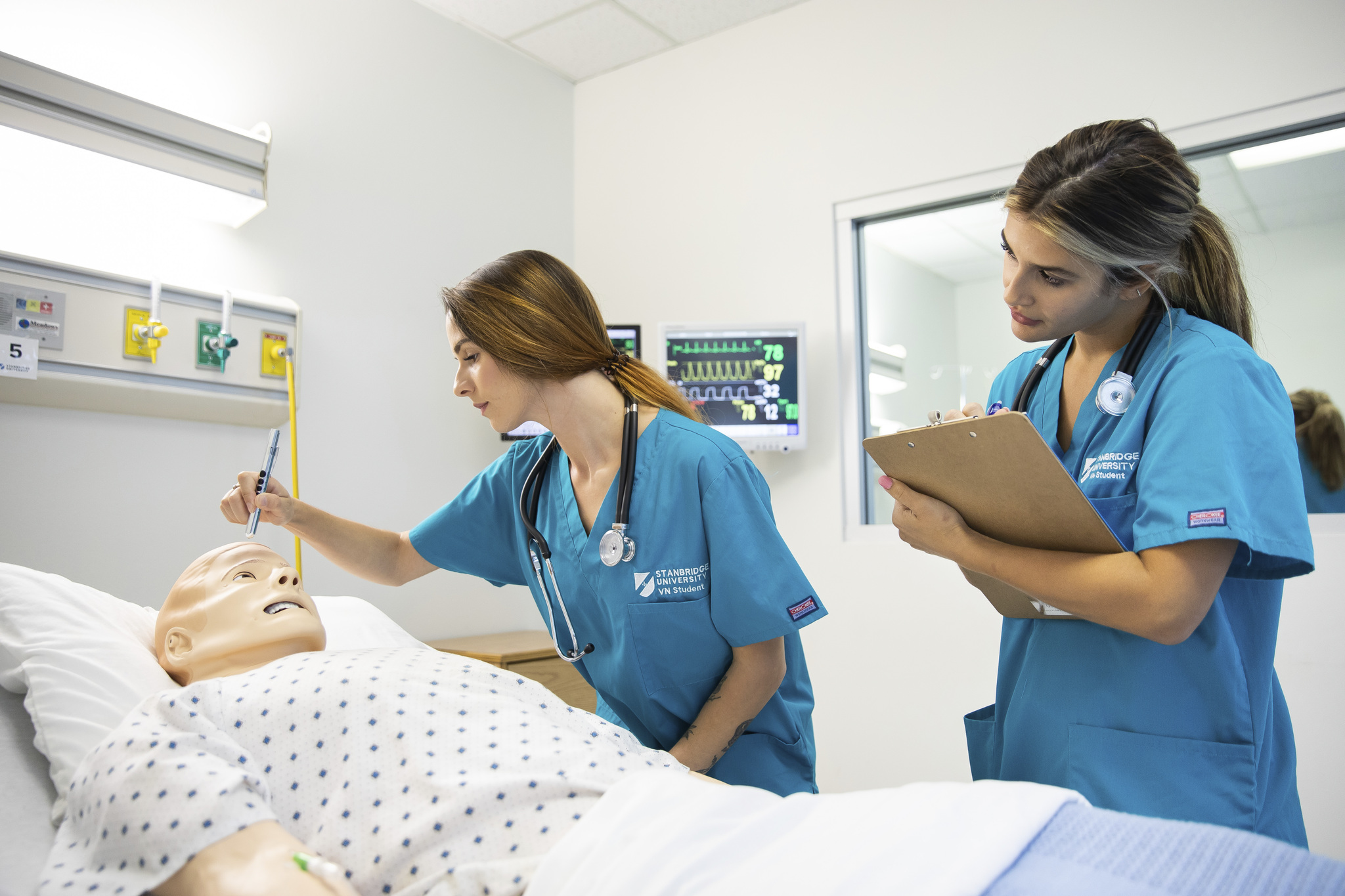
Hands-on nursing education gives students opportunities to practice patient care skills in a simulated clinical environment.
Beginning Her Career
After graduating from Stanbridge, Joyce began working in a post-acute medical-surgical setting, caring for patients who needed continued nursing care after hospitalization. That first professional role gave her opportunities to strengthen the clinical skills she had begun developing during nursing school. She learned to manage patient-care responsibilities, establish priorities, delegate appropriately, and adapt to the pace of professional nursing.
Joyce also found opportunities to help others. She recalls teaching students, nursing assistants, and fellow nurses skills they wanted to strengthen or better understand. Those early experiences helped her transition from nursing student to practicing nurse while continuing to build her own confidence and clinical knowledge.
The Transition into Acute Dialysis
Joyce eventually moved from post-acute nursing into acute dialysis. Today, she works as an acute dialysis nurse, providing dialysis treatment to hospitalized and critically ill patients.
According to Joyce, her current practice includes several forms of dialysis treatment, including hemodialysis (HD), peritoneal dialysis (PD), and continuous renal replacement therapy (CRRT), which is often used for critically ill patients who need continuous kidney support. She also monitors patients receiving blood transfusions during hemodialysis under RN supervision.
The transition changed the structure of her patient care. Instead of managing several patients in a post-acute environment, acute dialysis allows her to provide more specialized care focused on patients undergoing renal replacement therapies.
However, Joyce says the foundation she developed earlier in her career is still important to her work as a nurse.
“Stanbridge gave me the foundation and confidence to apply those skills in the workplace through classroom learning, skills labs, simulations, and clinical experiences.”
She says she continues to draw on clinical knowledge, critical thinking, communication, and compassion when caring for medically complex patients.
What Has Joyce Learned About Caring for Critically Ill Patients?
Acute dialysis can involve patients with significant and changing healthcare needs. For Joyce, succeeding in that environment requires more than completing technical treatment. She emphasizes paying attention to the individual behind the diagnosis.
“Every patient has a different story, and I always try to make them feel heard, respected, and cared for.”
Her approach centers on trust, compassion, advocacy, patient safety, and professionalism. These values become especially important when caring for patients who may already be coping with hospitalization, serious illness, and complex treatment.
Joyce says one lesson from nursing school remains particularly important:
“Always put the patient first while maintaining professionalism, teamwork, and patient safety.”
Professional Milestones
Since beginning her nursing career, Joyce has continued developing experience in post-acute and acute dialysis care. In this time, she has achieved several professional milestones:
Employee of the Month – May 2025
Nurse of the Month – August 2025
Recognition for the highest patient satisfaction scores – May 2026
Participation in a Guinness World Records CPR event at Allegiant Stadium – June 2026
Joyce attributes her professional recognition largely to how she treats patients.
“I believe my success comes from genuinely caring for my patients and treating them the way I would want my own family to be treated.”
For her, recognition is secondary to consistently providing safe, respectful, and compassionate care.
What Advice Does Joyce Have for Future Nursing Students?
Joyce describes nursing as a career that requires continuous learning. One habit she has carried into professional practice is regularly asking herself:
“What can I do better?” and “What can I contribute?”
Those questions apply whether she is supporting a patient, helping a coworker, serving her community, or developing her own nursing knowledge. Her grandmother’s advice on staying humble has also remained with her.
“No matter how much you accomplish, there is always something new to learn and someone you can learn from.”
For students beginning vocational nursing education, Joyce encourages confidence, curiosity, and a willingness to ask questions. She also emphasizes recognizing how individual choices can shape a professional journey.
“Nursing is a lifelong journey of learning, and the foundation you build today will stay with you throughout your career.”
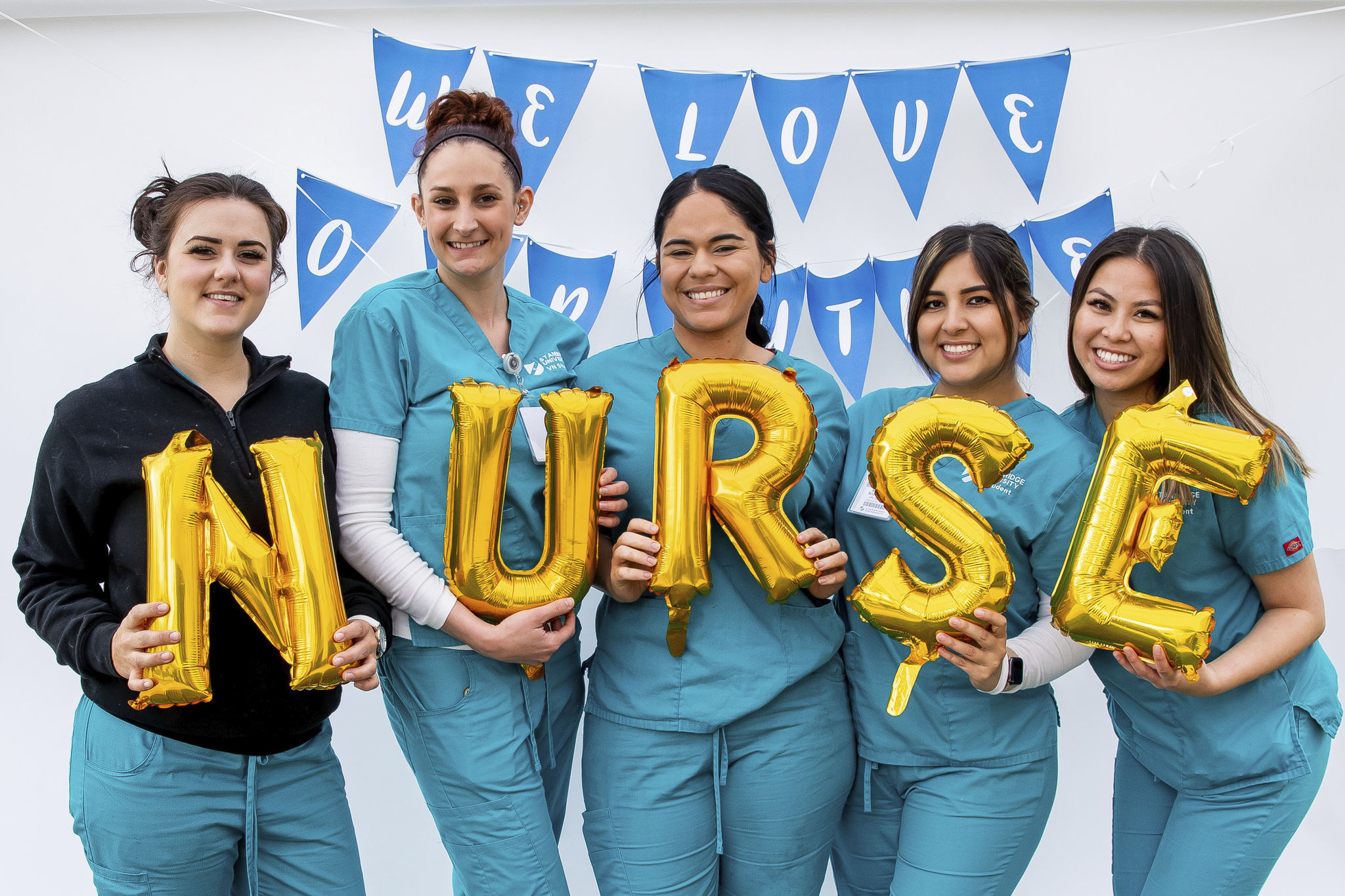
Joyce’s journey from vocational nursing graduate to acute dialysis nurse reflects the foundation she built through nursing education and hands-on learning.
What Comes Next for Joyce?
Joyce does not view becoming a licensed nurse as the end of her educational journey. Her long-term goal is to continue developing professionally and eventually become a registered nurse. She also plans to remain focused on the values that have guided her career so far: compassion, excellence, integrity, humility, patient advocacy, and service.
Her journey demonstrates how a vocational nursing education can be one chapter in a much longer professional story. For Joyce, that story began with caring for her grandmother. It continued through nursing school, post-acute care, and eventually acute dialysis. Today, the motivation behind her work remains closely connected to where she started.
From a Personal Calling to a Nursing Career
Joyce’s path into nursing was shaped by family, persistence, mentorship, teamwork, and continued professional growth. The clinical rotations, skills labs, simulations, classroom experiences, and relationships she developed during nursing school provided a foundation she says she continues to draw from in her professional practice.
Meanwhile, each stage after graduation has introduced new responsibilities and opportunities to learn. Her experience in post-acute care strengthened her nursing skills. Acute dialysis gave her an opportunity to develop specialized experience with critically ill patients. Professional recognition provided moments to reflect on the importance of patient-centered care.
Yet Joyce’s advice for future nurses remains simple:
“Stay humble, keep learning, and never be afraid to advocate for your patients.”
To learn more about vocational nursing education at Stanbridge University, explore the Associate of Occupational Science in Vocational Nursing program. The program is currently offered in full-time and part-time formats and is approved by the California Board of Vocational Nursing and Psychiatric Technicians at Stanbridge University’s Orange County, Los Angeles, Riverside, and San Diego campuses.¹
Frequently Asked Questions
What program did Joyce graduate from at Stanbridge University?
Joyce graduated from Stanbridge University’s vocational nursing program before beginning her nursing career in post-acute care and later transitioning into acute dialysis.
What does Joyce do now?
Joyce currently works in acute dialysis in Nevada, providing hemodialysis, peritoneal dialysis, and continuous renal replacement therapy to hospitalized patients.
How did Stanbridge help prepare Joyce for nursing practice?
Joyce identified classroom learning, clinical rotations, skills labs, simulation, teamwork, and faculty support as important parts of her educational experience. She says those experiences provided a foundation she continued developing after graduation.
What nursing experience did Joyce have before acute dialysis?
After graduation, Joyce began working in a post-acute medical-surgical environment, where she developed experience with patient-care management, prioritization, delegation, and clinical nursing skills.
What advice does Joyce give future nursing students?
Joyce encourages future students to believe in themselves, ask questions, remain humble, continue learning, and advocate for patients. She also emphasizes that professional development continues throughout a nursing career.
What are Joyce’s future nursing goals?
Joyce plans to continue developing professionally and ultimately pursue becoming a registered nurse while continuing to serve patients and her community.
² Joyce Tejada, Written Stanbridge University Alumni Spotlight responses and alumni survey materials, 2026
Joyce’s statements, professional experiences, recognitions, and career progression reflect her individual experience as a Stanbridge University graduate. Individual student and graduate experiences, licensure outcomes, employment opportunities, career progression, recognition, and professional outcomes vary and are not guaranteed.