What BSN Students Learn in Their First Year at Stanbridge University
Summary of What BSN Students Learn in Their First Year
- During the first year of the BSN program, from Term 1 to Term 5,1 Stanbridge University students can complete foundational general education and science courses such as biology, chemistry, anatomy, physiology, psychology, sociology, and written communication. These courses form the academic base needed for later nursing coursework.
- Students begin building essential nursing school study habits early. Effective strategies include structured time management, active review, clinical skills practice, and engagement with faculty and academic support resources.
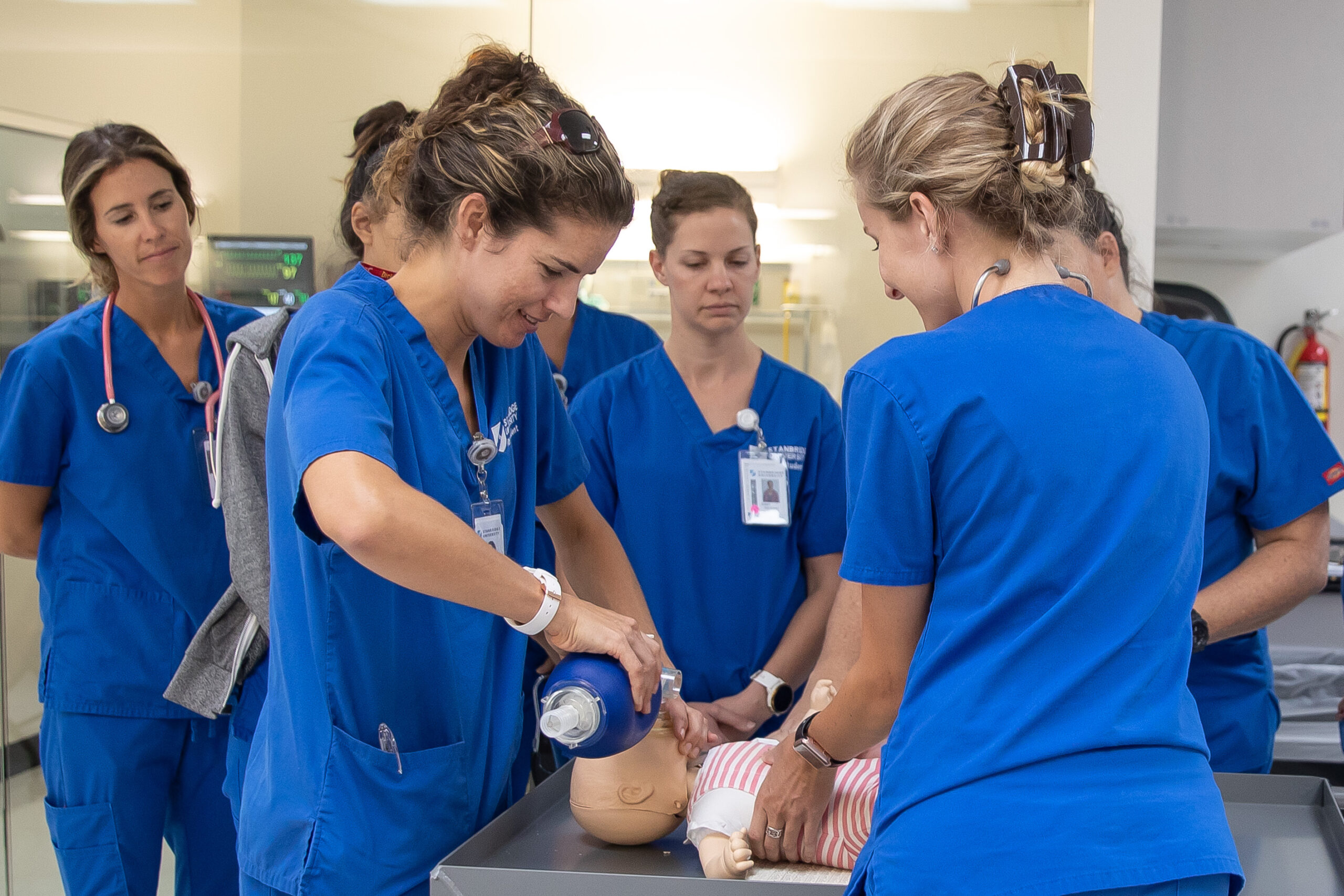
- As the program progresses, students move from theory-based learning into simulation-based training, followed by clinical rotations later in the curriculum.
- The BSN program at Stanbridge University spans 36–37 months and includes advanced simulation learning, technology-enhanced instruction, and preparation for the NCLEX-RN exam.1
- Eligible BSN graduates at Stanbridge University may continue into the MSN-Ed program at no tuition cost if they meet the program’s enrollment and timing requirements.2
- Stanbridge BSN graduates have demonstrated strong NCLEX-RN outcomes, including a 100% first-time pass rate in 2023–2024, according to the California Board of Registered Nursing.3
Beginning a Bachelor of Science in Nursing program marks an important transition into professional nursing education. During your first year in Stanbridge University’s BSN program, you begin building the scientific and academic foundation that will carry you through every stage of nursing school. Many students find this year to be a meaningful transition, as introductory courses help them understand the principles that guide safe and effective patient care.
As you move through your BSN first year courses, you will explore subjects that connect directly to nursing practice, from human biology to communication and early professional skills. This year also offers the chance to develop study habits, time-management strategies, and learning frameworks that support long-term success in a rigorous and rewarding field. Understanding what to expect can help you enter your program with confidence and a clear sense of purpose.
What Classes Do BSN Students Take in Their First Year?
During the first year of Stanbridge University’s BSN program, students complete general education and foundational science courses that establish the groundwork for later nursing coursework. These courses strengthen communication, scientific reasoning, and quantitative literacy.
First-year BSN students typically take courses such as:
- College Algebra
- Introduction to Written Communication
- Chemistry with Lab
- Introduction to Sociology
- Biology with Lab
- Advanced Written Communication
- Introduction to Psychology
As students move further into the first year, in Term 3,1 they complete additional science-based courses such as General Microbiology with Lab and Human Anatomy with Lab. These courses provide the conceptual preparation necessary for subsequent nursing-specific content and careers, such as becoming a Registered Nurse.
Would you like an inside view of what being a nursing student at Stanbridge entails? Here’s what to expect on your journey through nursing school.
How Soon Do BSN Students Begin Clinical Rotations?
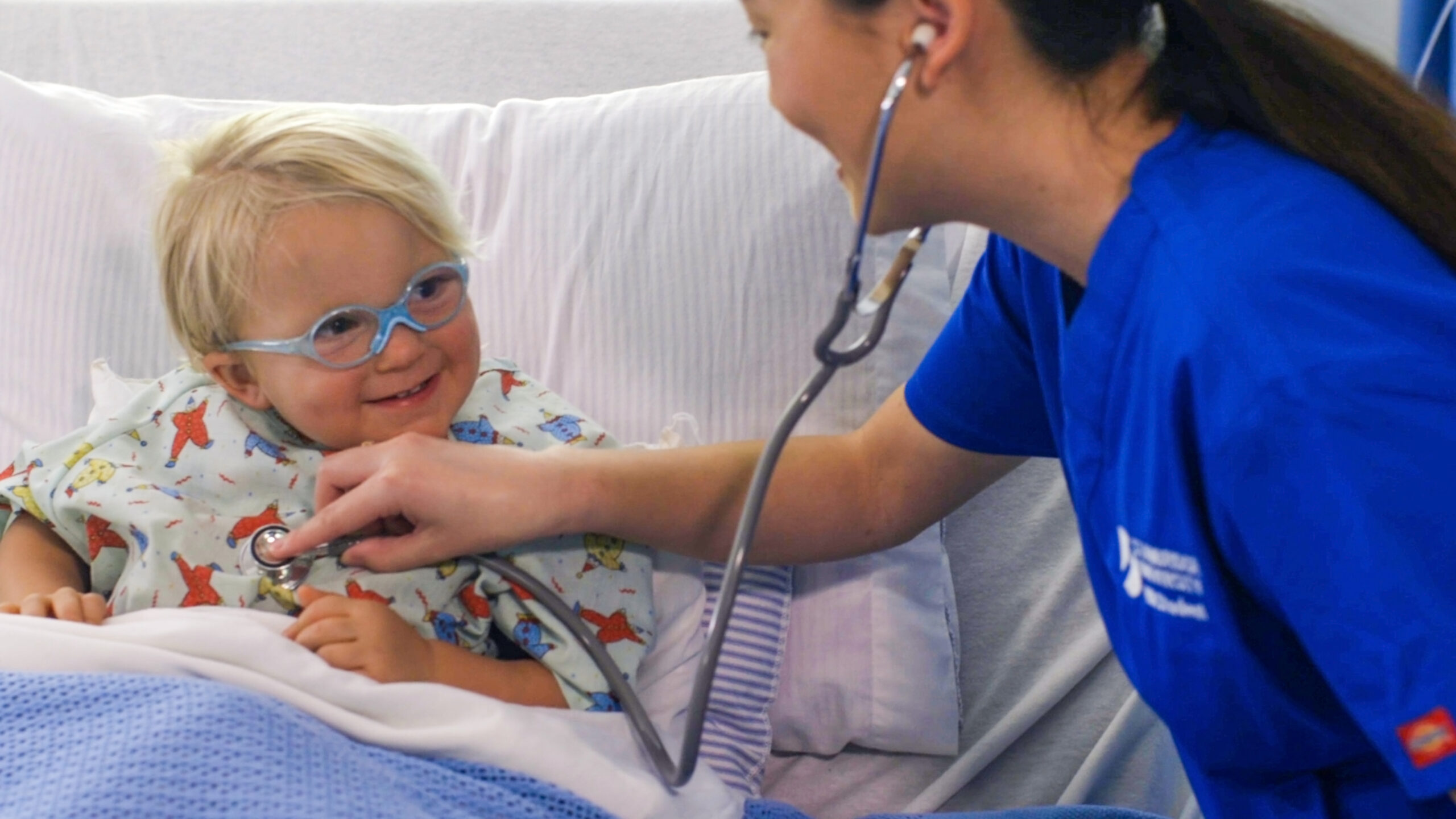
Clinical rotations at Stanbridge University begin once students progress from general education and foundational science courses into core nursing coursework. Early clinical experiences typically occur after the completion of subjects such as Fundamentals of Nursing. This sequence ensures that students enter patient care environments with appropriate preparation in anatomy, physiology, assessment, and foundational nursing concepts.
Clinical placements accompany many upper-division courses, including Medical-Surgical Nursing, Behavioral Health, Maternal and Newborn Nursing, and Community-Based Nursing. These supervised experiences allow nursing school students to apply academic concepts through structured skill development while learning essential components of the nursing profession.
What Study Habits Help BSN Students Succeed in Their First Year?
Strong study habits support both short-term academic success and long-term preparation for licensure. Students will benefit from:
- Distributed study routines that reinforce comprehension over time
- Active learning strategies, such as rewriting notes and completing practice questions
- Frequent self-assessment to identify areas needing further review
- Scheduled study sessions with peers for shared problem-solving
- Regular use of tutoring, library resources, and faculty office hours
These strategies help students manage the academic demands of nursing school and build confidence as they progress through increasingly complex coursework.
About the BSN Program at Stanbridge University
The Bachelor of Science in Nursing program at Stanbridge University is accredited by the Commission on Collegiate Nursing Education (CCNE)4 and approved by the California Board of Registered Nursing (BRN).5 The curriculum spans general education, foundational sciences, nursing theory, clinical practice, leadership development, and evidence-based care principles.
The BSN program takes approximately 36 to 37 months to complete, providing an accelerated path to RN qualification.1 Graduates of the BSN program may also be eligible to continue into the Master of Science in Nursing Education program at no additional cost, provided they meet the outlined eligibility criteria.2
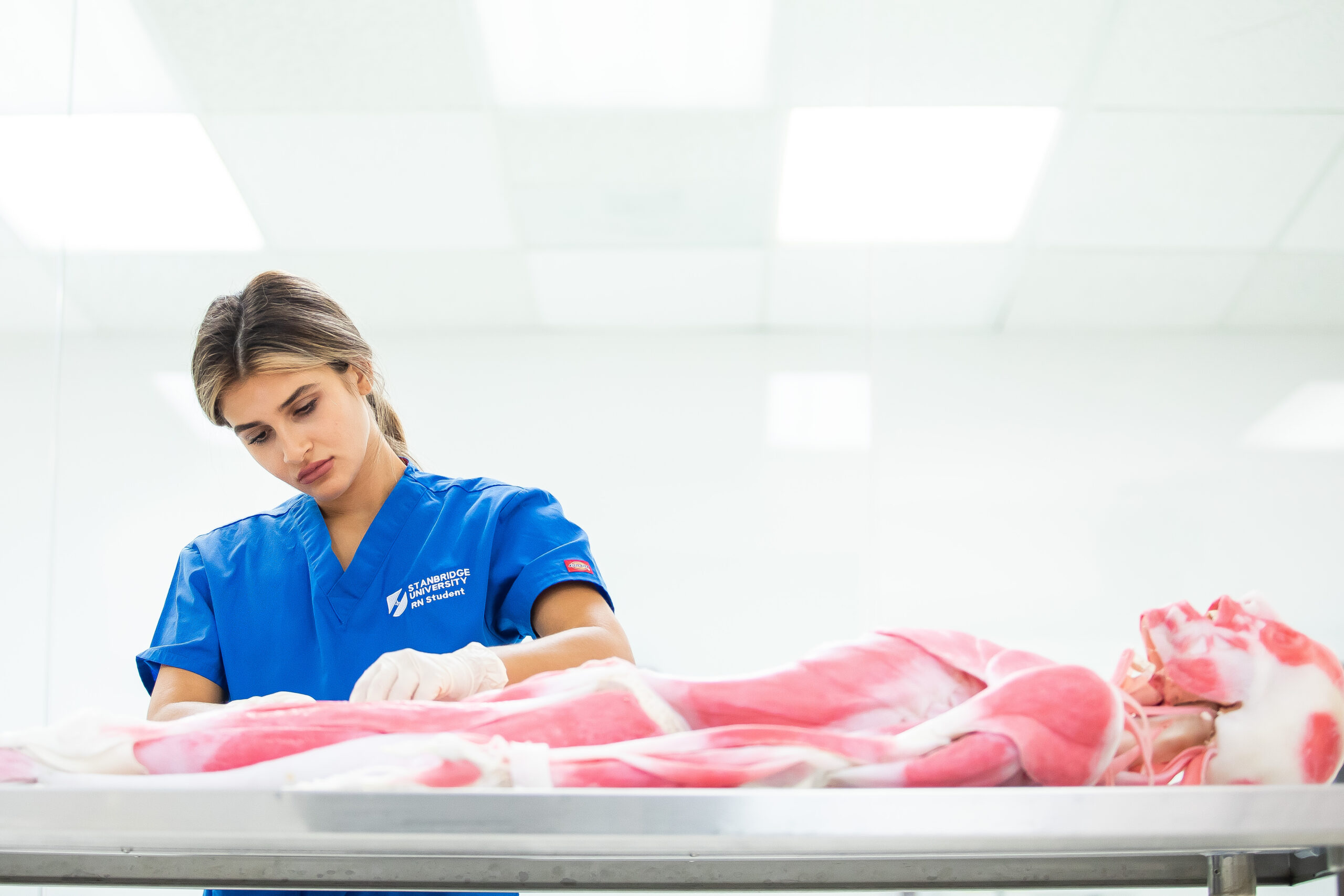
Throughout the program, students engage in advanced training environments, including skills laboratories, high-fidelity simulation suites, and supervised clinical rotations. These experiences promote competency development across diverse areas of patient care while fostering professional growth and preparation for the NCLEX-RN exam.
Stanbridge University’s BSN program also reflects strong NCLEX-RN performance. Recent results from the California Board of Registered Nursing show a 100% NCLEX-RN pass rate for BSN graduates in the 2023–2024 reporting year, demonstrating the effectiveness of the program’s academic preparation and support resources.3
Stanbridge University Recognition
Stanbridge University offers healthcare degree programs across its Southern California campuses in Irvine, Alhambra, Riverside, and San Marcos. The university has been recognized for both academic excellence and workplace culture, including recognition in the 2025 Carnegie Classifications as an Opportunity College and in Research.com’s 2024 Best Healthcare Degree Programs in America.
Its Orange County campus earned the 2024–2025 ACCSC School of Excellence Award, and in 2025, Georgetown University’s Center on Education and the Workforce ranked Stanbridge among the top 5% of U.S. colleges for 10-year return on investment, based on earnings and tuition data from qualifying programs. Stanbridge is accredited by Investors in People (London) and certified as a Great Place to Work.
Complete award listings and sources are available at stanbridge.edu/awards.
Conclusion: What BSN Students Learn in Their First Year
The first year of Stanbridge University’s Bachelor of Science in Nursing program in Terms 1 through 5,1 provides the essential academic and scientific foundation for professional nursing practice. Students build core competencies through general education and introductory science courses while preparing for future clinical rotations and advanced nursing coursework. By developing effective study habits early and engaging fully with foundational subjects, students strengthen the skills that will support them throughout nursing school. Understanding the structure and purpose of BSN first-year courses helps aspiring nurses begin their academic journey with clarity, confidence, and a strong sense of direction as they progress toward their professional goals.
Are you considering a future in professional nursing? Visit the Stanbridge University BSN program page to learn more about this program, or schedule a meeting with an Admissions Representative for individualized guidance as you explore your educational goals.
Frequently Asked Questions
Question: What classes do BSN students take in their first year?
Answer: During the first year of Stanbridge University’s BSN program or Terms 1 through 5, students complete general education and foundational science courses that establish the groundwork for later nursing coursework. These courses strengthen communication, scientific reasoning, and quantitative literacy.
Question: How soon do BSN students start clinical rotations?
Answer: Clinical rotations begin once students progress from general education and foundational science courses into core nursing coursework.
Question: What study habits help BSN students succeed?
Strong study habits support both short-term academic success and long-term preparation for licensure. Students will benefit from:
- Distributed study routines that reinforce comprehension over time
- Active learning strategies, such as rewriting notes and completing practice questions
- Frequent self-assessment to identify areas needing further review
- Scheduled study sessions with peers for shared problem-solving
- Regular use of tutoring, library resources, and faculty office hours
Question: Do BSN first-year courses at Stanbridge include simulation-based learning, or are they only lecture-based?
Answer: Many nursing programs, including Stanbridge University, integrate simulation-based learning early in the curriculum to reinforce classroom concepts in a safe environment. Science labs, synthetic cadavers, and augmented and virtual reality allow students to practice assessments, communication, and clinical decision-making before entering real clinical settings. Research shows that simulation can improve nursing students’ confidence, satisfaction, and performance when integrated into pre-licensure programs.
Question: When should I start thinking about the NCLEX-RN exam during my BSN program?
Answer: It is helpful to begin thinking about the NCLEX-RN exam in your first year by building strong study habits and focusing on core science and nursing concepts. The NCLEX-RN is typically the final step in the RN licensure process after graduating from an approved program. Schools like Stanbridge support this long-term preparation through cumulative practice tests, structured reviews, and mentorship designed to build confidence toward licensure from the earliest terms onward.
References
¹ Program duration subject to change. Completion times vary depending upon the start and end dates of a cohort and any individual circumstances that may impact progression.
² The MSN-Ed program is available at no cost to Stanbridge University Bachelor of Science in Nursing graduates who began their program on or after August 2024 and who enroll in the Master of Science in Nursing Education program beginning immediately after graduating and obtaining their NCLEX-RN licensure.
³ Source: The California Board of Registered Nursing, NCLEX-RN pass rate data for the BSN program, 2023/2024; http://www.rn.ca.gov/education/passrates.shtml. As viewed on December 5, 2024.
⁴ Source: Commission on Collegiate Nursing Education (CCNE), Accredited Nursing Programs in California. https://directory.ccnecommunity.org/reports/rptAccreditedPrograms_New.asp?state=CA&sFullName=California. As viewed on December 5, 2024.
⁵ Source: California Board of Registered Nursing (BRN), Pre-Licensure Registered Nursing Programs in California. https://www.rn.ca.gov/education/rnprograms.shtml. As viewed on December 5, 2024.