Differences Between a Vocational Nurse and a Medical Assistant

MA vs LVN: A Summary
- MA vs LVN: Medical Assistants (MAs) and Licensed Vocational Nurses (LVNs) are different roles with distinct training, licensure, and responsibilities.
- Training: MAs complete short training programs focused on administrative and basic clinical tasks.¹ LVNs complete a state-approved nursing program and must pass the NCLEX-PN licensure exam.²
- Scope of Practice: LVNs can administer medications, perform wound care, and provide skilled nursing procedures, while MAs focus on patient intake, scheduling, vital signs, and office support.¹ ²
- Career Pathways: LVN training may also support future steps toward BSN or MSN programs, though outcomes are never guaranteed.
- Stanbridge University: The Vocational Nursing program includes an associate of occupational science degree with science foundations, simulation labs, and clinical rotations designed to help students build essential nursing skills.
If you are exploring the differences in the MA vs LVN career paths, understanding how each role functions, the training they require, and the responsibilities they carry can help you make an informed decision. Each profession serves a unique purpose in healthcare and supports patients in different ways.
While Medical Assistants focus on administrative tasks and basic clinical duties,¹ Licensed Vocational Nurses provide more advanced, hands-on clinical care under the supervision of Registered Nurses or physicians.²
What Is the Difference Between an MA and an LVN?
MAs handle administrative duties and basic clinical tasks.¹ LVNs provide direct patient care, administer medications, and support care plans under licensed supervision.²
According to the California Employment Development Department (EDD), MAs provide administrative and basic clinical support under the direction of licensed healthcare professionals. They may assist with patient intake tasks such as taking vital signs, preparing exam rooms, scheduling appointments, and recording patient information.¹
On the other hand, the U.S. Bureau of Labor Statistics (BLS) notes that LVNs provide more advanced clinical care. Their responsibilities can include measuring vital signs, wound care, administering medications, documenting patient status, and supporting care plans under the supervision of Registered Nurses or physicians.²
In short:
- MAs focus on administrative tasks and basic clinical duties.¹
- LVNs deliver direct clinical care and have a broader scope of practice.²
To explore more about the LVN role in comparison with others, read our article on the key differences between an LVN and a CNA.
Is a Medical Assistant Higher Than an LVN?
No. While both roles are valuable, an MA is not considered more advanced than an LVN. The distinction lies in education, training depth, and scope.
- MAs typically enter the field through short-term programs and receive on-the-job training for administrative and clinical tasks.¹
- LVNs complete state-approved nursing programs, which prepare them for more advanced patient care tasks.²
While “higher” is not the preferred term professionally, LVNs have a wider clinical scope than MAs because they hold a nursing license. LVNs hold a nursing license and must pass the NCLEX-PN exam before practicing.² MAs are not licensed clinical practitioners in the same way.¹
What Can an LVN Do That an MA Cannot?
According to the BLS, LVNs may perform clinical duties that fall outside an MA’s scope, such as:²
- Administering medications
- Providing wound care
- Documenting patient health changes
- Contributing to patient care plans
- Supervising nursing assistants in some settings
MAs, as the EDD highlights, do not perform these nursing-specific responsibilities.¹ Their work focuses more on assisting with daily tasks, intake procedures, and office operations.
Where Do LVNs and MAs Work?
The role you choose may depend on the type of setting you want to work in and how closely you wish to be involved in patient care. Both professions are employed across healthcare settings, but the work environments differ.
Medical Assistants
According to the EDD, MAs work in physician offices, outpatient clinics, and ambulatory care centers. They are also frequently employed in general medical and surgical hospitals.¹
Licensed Vocational Nurses
The BLS reports that LVNs commonly work in skilled nursing facilities, hospitals, home health agencies, and assisted living centers.²
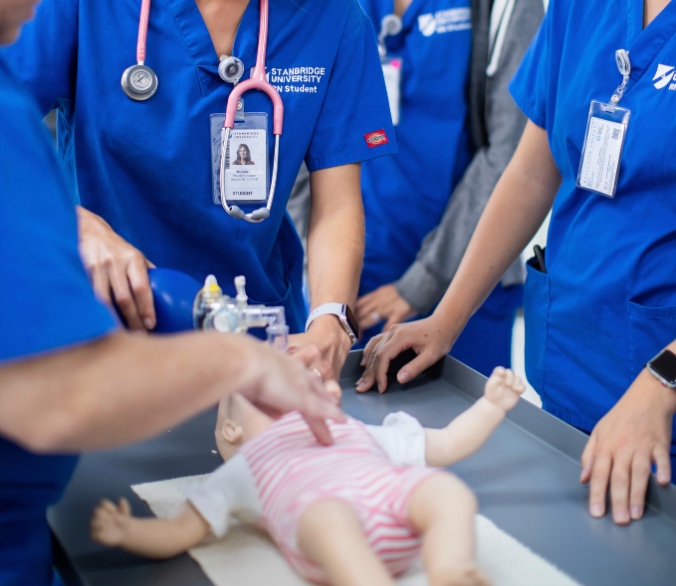
Training Pathways: MA vs LVN
EDD notes that MA positions often require postsecondary education, but many employers also provide short-term on-the-job training.¹
Conversely, becoming an LVN requires completion of a state-approved vocational nursing program followed by passing the NCLEX-PN exam.²
Programs prepare students with coursework in:
- Anatomy
- Pharmacology
- Fundamentals of nursing
- Clinical rotations in supervised settings
Preparing for an LVN Career Through Stanbridge University
The Associate of Occupational Science in Vocational Nursing program supports students as they develop the knowledge and clinical skills needed for vocational nursing practice. The program is approved by the California Board of Vocational Nursing and Psychiatric Technicians (BVNPT)³ and offered at the Orange County, Los Angeles, Riverside, and San Diego campuses.
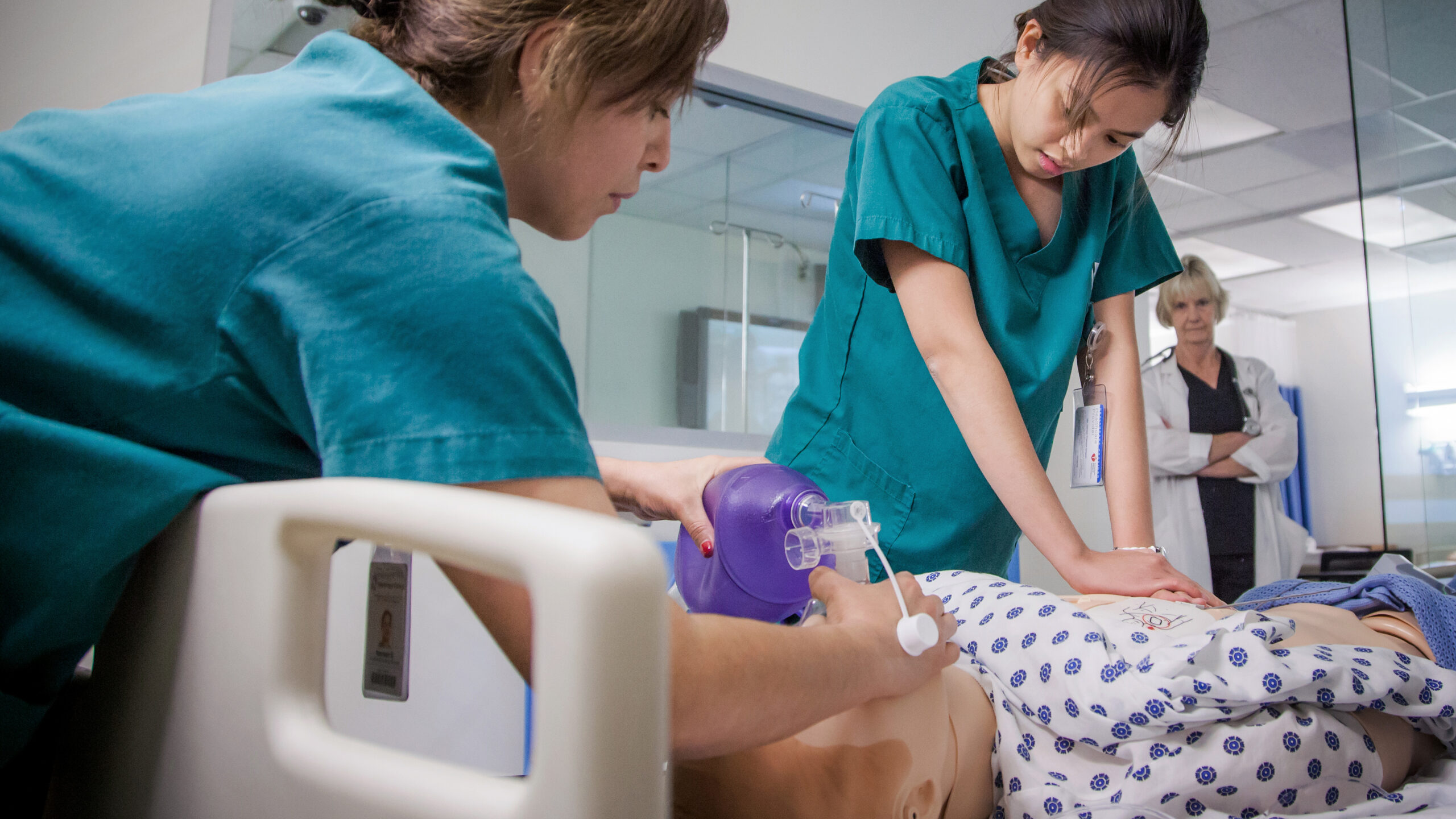
Students complete theory courses online, on campus, or in blended formats. Labs help students practice skills such as patient assessment, vital signs, and medication administration. Clinical rotations are held in healthcare facilities with schedules set by the sites. The full-time track for this Associate degree takes approximately 17 to 19 months, and the part-time track takes approximately 26 to 28 months, including holidays and term breaks.⁴
The university is institutionally accredited by the Accrediting Commission of Career Schools and Colleges (ACCSC).⁵ Graduates also prepare for the NCLEX-PN exam, and recent multi-year first-time pass rates are 95% at the Orange County campus.⁶
Graduates may also choose to continue their education in the Bachelor of Science in Nursing (BSN) and, later, the Master of Science in Nursing Education (MSN-Ed) program.⁷ The MSN-Ed program is available at no cost to Stanbridge University Bachelor of Science in Nursing graduates who began their program on or after August 2024 and who enroll in the Master of Science in Nursing Education program beginning immediately after graduating and obtaining their NCLEX-RN licensure.
These opportunities allow students to build a structured pathway as they advance in nursing. If you’re ready to take the next step into a fully patient-facing nursing role, here’s how to become a registered nurse through a BSN program.
Stanbridge University Recognition
Stanbridge University offers healthcare degree programs across its Southern California campuses in Irvine, Alhambra, Riverside, and San Marcos. The university has been recognized for both academic excellence and workplace culture, including recognition in the 2025 Carnegie Classifications as an Opportunity College and in Research.com’s 2024 Best Healthcare Degree Programs in America.
Its Orange County campus earned the 2024–2025 ACCSC School of Excellence Award, and in 2025, Georgetown University’s Center on Education and the Workforce ranked Stanbridge among the top 5% of U.S. colleges for 10-year return on investment, based on earnings and tuition data from qualifying programs. Stanbridge is accredited by Investors in People (London) and certified as a Great Place to Work.
Complete award listings and sources are available at stanbridge.edu/awards.
Choosing Between MA and LVN: Which Path Fits Your Goals?
Understanding the MA vs LVN distinction can help you make an informed decision about your healthcare career direction. You may prefer the MA pathway if you want a short program that blends administrative and clinical duties in outpatient care.
Alternatively, you may prefer the LVN path if you want a licensed nursing role with expanded responsibilities and the option to pursue higher nursing degrees in the future. Both roles are essential in the healthcare system, and your decision depends on your interests, strengths, and long-term plans.
If you are considering the LVN pathway, you can explore the Vocational Nursing program page at Stanbridge University to learn more about our curriculum, accreditation, and student support. You may also schedule a meeting with the Admissions team to discuss your goals and plan your path into nursing.
Frequently Asked Questions
Question: What is the difference between an MA and an LVN?
Answer: MAs handle administrative duties and basic clinical tasks.¹ LVNs provide direct patient care, administer medications, and support care plans under licensed supervision.²
Question: Is a Medical Assistant higher than an LVN?
Answer: No. While both roles are valuable, an MA is not considered more advanced than an LVN. The distinction lies in education, training depth, and scope.
MAs typically enter the field through short-term programs and receive on-the-job training for administrative and clinical tasks.¹ LVNs complete state-approved nursing programs, which prepare them for more advanced patient care tasks.²
Question: What can an LVN do that an MA cannot?
Answer: According to the BLS, LVNs may perform clinical duties that fall outside an MA’s scope, such as:²
- Administering medications
- Providing wound care
- Documenting patient health changes
- Contributing to patient care plans
- Supervising nursing assistants in some settings
Question: Do both Medical Assistants and LVNs need licensure or certification?
Answer:
Licensed Vocational Nurses must complete a state-approved nursing program and pass the NCLEX-PN exam to obtain licensure before practicing.² Medical Assistants are not licensed nurses; many complete short postsecondary programs, and some employers require certification, but national clinical licensure is not required in the same way.¹
Question: How long does it take to become an MA vs an LVN?
Answer:
Many Medical Assistants complete short postsecondary training programs or receive on-the-job training, which allows them to enter the field relatively quickly.¹ Becoming an LVN takes longer; for example, Stanbridge University’s Vocational Nursing program takes approximately 17–19 months full-time or 26–28 months part-time, including holidays and term breaks.³ Graduates earn an Associate degree on completion of this program.
Question: Where do Medical Assistants and LVNs commonly work?Answer:
Medical Assistants often work in physician offices, outpatient clinics, ambulatory care centers, and hospitals, where they support administrative and basic clinical functions.¹ LVNs typically work in skilled nursing facilities, hospitals, home health agencies, and assisted living centers, providing more advanced hands-on nursing care under RN or physician supervision.²
References
¹ Source: California Employment Development Department (EDD), Occupation Profile: Medical Assistants (SOC 31-9092). https://labormarketinfo.edd.ca.gov/cgi/databrowsing/occExplorerQSDetails.asp?geogArea=0601000000&soccode=319092. As viewed on November 20, 2025.
² Source: U.S. Bureau of Labor Statistics (BLS), Occupational Outlook Handbook, Licensed Practical and Licensed Vocational Nurses. https://www.bls.gov/ooh/healthcare/licensed-practical-and-licensed-vocational-nurses.htm. As viewed on November 20, 2025.
³ Source: California Board of Vocational Nursing and Psychiatric Technicians (BVNPT), Accreditation and Licensing Information. www.bvnpt.ca.gov. As viewed on November 20, 2025.
⁴ Program duration subject to change. Completion times vary based on cohort schedules and individual progression.
⁵ Source: Accrediting Commission of Career Schools and Colleges (ACCSC). www.accsc.org. As viewed on November 20, 2025.
⁶ Source: California BVNPT and NCSBN, Examinations Report 2019–2023, NCLEX-PN pass rates for Orange County and Los Angeles campuses. As viewed on November 6, 2025.
⁷ The MSN-Ed program is available at no cost to Stanbridge University Bachelor of Science in Nursing graduates who began their program on or after August 2024 and who enroll in the Master of Science in Nursing Education program beginning immediately after graduating and obtaining their NCLEX-RN licensure.