Nursing Schools in California: Programs, Requirements, and What to Expect (2026 Guide)
If you’re researching nursing schools in California, understanding how programs are structured can help you evaluate your options.
You may be asking:
- What nursing degree options are available in California?
- What are the typical requirements for admission?
- What does nursing training include?
This guide provides a general overview of nursing education in California and outlines common pathways available to you.
What Types of Nursing Programs Are Available in California?
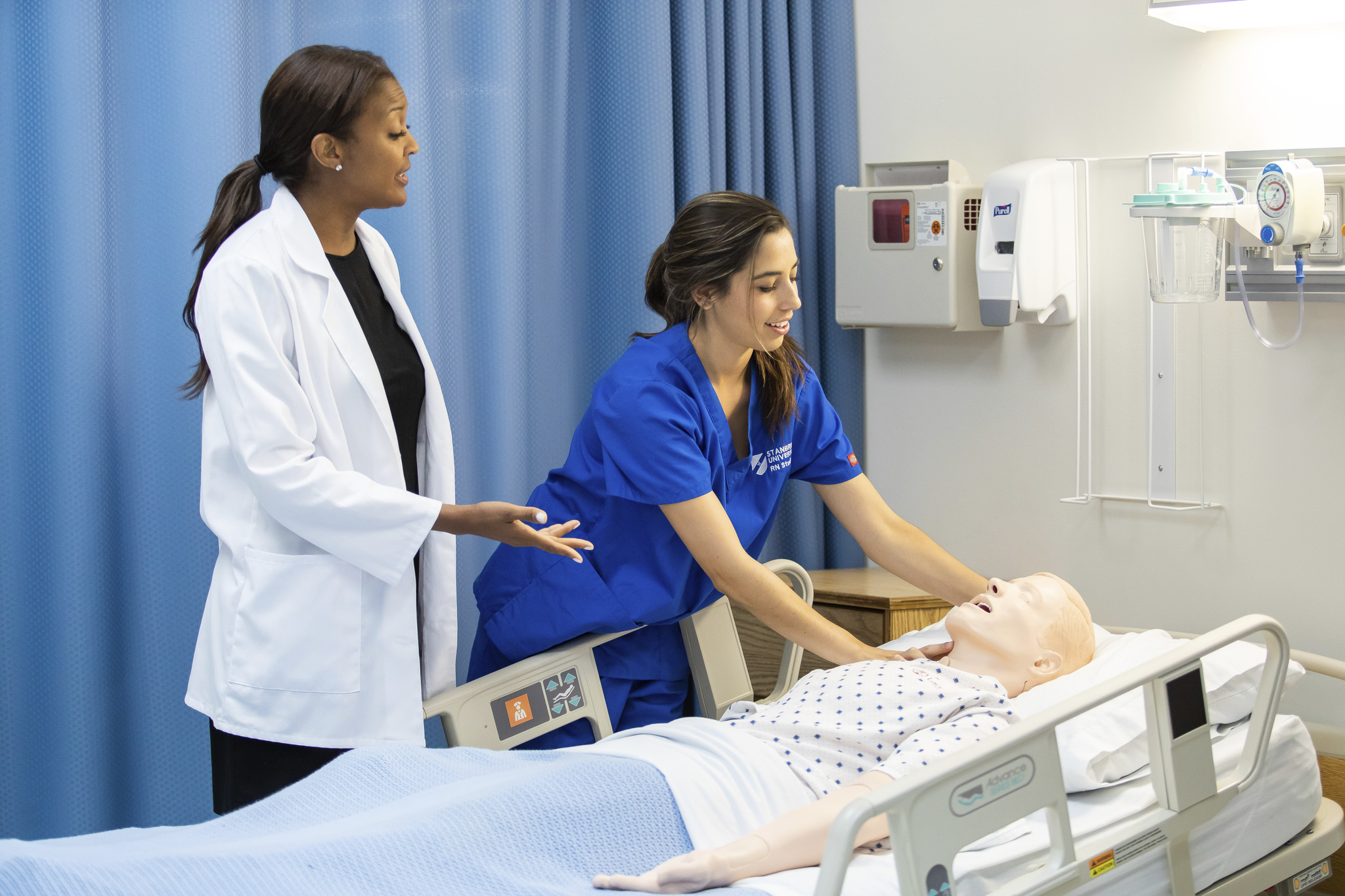
Nursing education includes several program types; each designed for different entry points into the field.
Vocational Nursing (VN)
Vocational Nursing programs focus on foundational patient care knowledge and clinical skills. Individuals who complete an approved program may be eligible to pursue licensure as a Licensed Vocational Nurse (LVN), subject to state requirements.
Associate Degree in Nursing (ADN)
ADN programs provide education in patient care across a variety of healthcare settings. Graduates may be eligible to apply for Registered Nurse (RN) licensure, depending on state requirements.
Bachelor of Science in Nursing (BSN)
BSN programs include additional coursework in areas such as public health, leadership, and research. Graduates of a Bachelor of Science in Nursing program may be eligible to apply for Registered Nurse (RN) licensure, subject to meeting applicable state requirements and successfully completing the NCLEX-RN examination. This pathway may also support expanded responsibilities in healthcare environments.
Master’s of Science in Nursing (MSN-Ed)
For registered nurses interested in teaching, training, mentoring, or leadership-focused educational roles, a Master of Science in Nursing Education (MSN-Ed) may provide advanced knowledge in nursing instruction, curriculum development, and evidence-based educational practices.
What Are the Requirements for Nursing Programs in California?
Admissions requirements vary by program and institution. Common considerations may include:
- High school diploma or equivalent for undergraduate programs
- Bachelor’s degree for master’s program
- Entrance assessments, if applicable
- Background check and health clearances
- Completion of prerequisite coursework (for some programs)
You should review official admissions criteria for each program of interest.
What Does Nursing School Training Include?
Nursing programs are designed to combine academic instruction with applied learning experiences.
Classroom Instruction
Coursework may include anatomy, physiology, pharmacology, and patient care concepts.
Skills Labs and Simulation
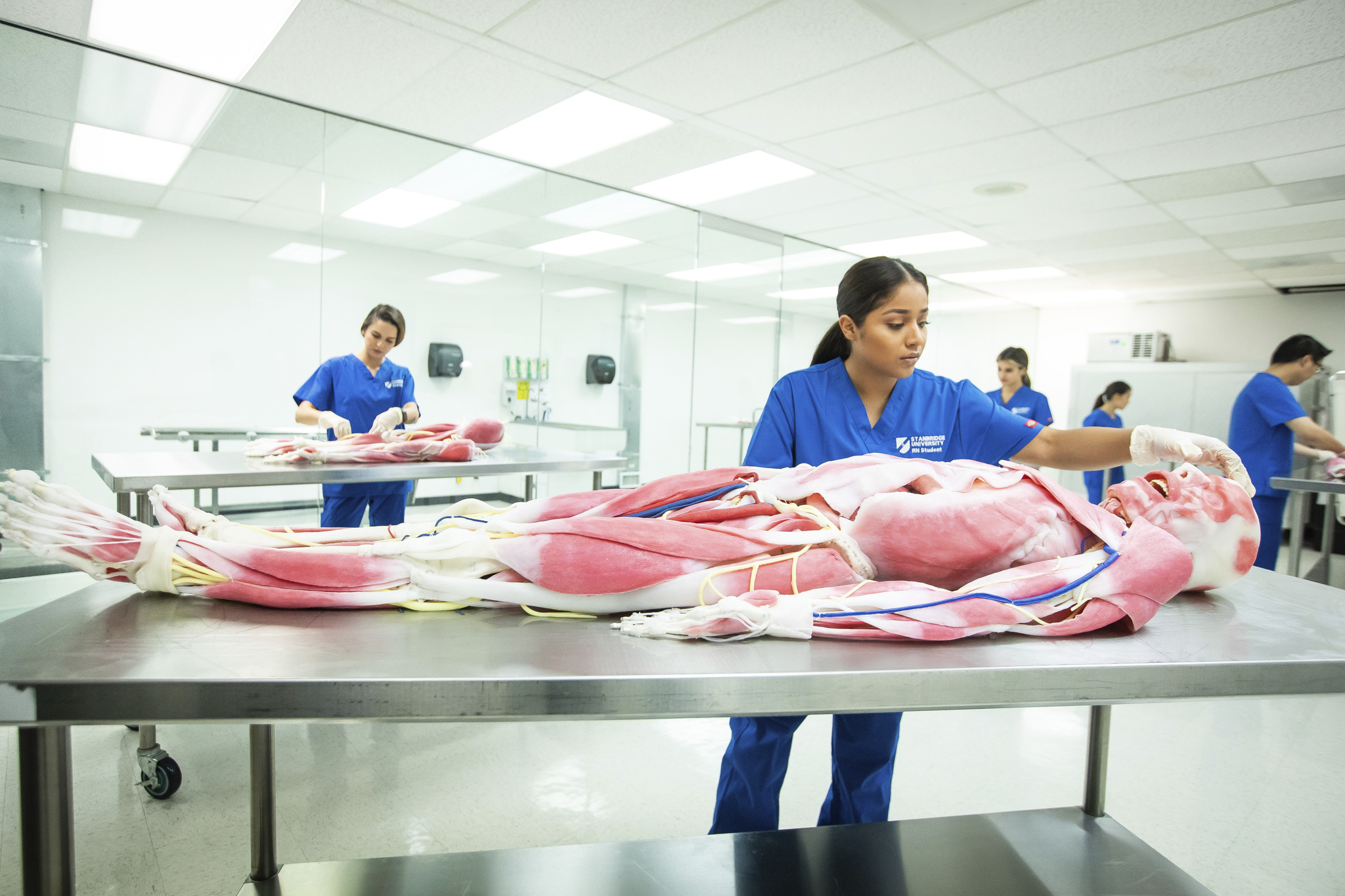
Many programs include simulation-based training, where students practice clinical techniques in a controlled setting.
Clinical Experiences
Programs typically include supervised clinical training, allowing students to observe and participate in patient care activities in healthcare environments such as hospitals, community health settings, long-term care facilities, outpatient clinics, and other clinical practice locations. Clinical experiences help students apply classroom concepts while developing nursing knowledge and professional skills.
How Does Nursing Licensure Work in California?
After completing an approved nursing program, graduates may choose to apply for licensure. Licensing requirements are established by:
- California Board of Registered Nursing (BRN) for ADN and BSN programs
- Board of Vocational Nursing and Psychiatric Technicians (BVNPT) for LVN programs
Graduates pursuing Registered Nurse licensure are required to pass the National Council Licensure Examination for Registered Nurses (NCLEX-RN). Graduates pursuing Licensed Vocational Nurse licensure are required to pass the National Council Licensure Examination for Practical Nurses (NCLEX-PN).
Completion of a nursing program does not guarantee licensure, examination success, or employment.
Nursing Programs at Stanbridge University
Stanbridge University offers nursing programs at campuses across Southern California that incorporate classroom instruction, simulation activities, and clinical experiences.1
Available pathways include:
- Vocational Nursing (LVN)
- Bachelor of Science in Nursing (BSN)
- Master’s of Science in Nursing (MSN-Ed)
Program length, structure, and availability may vary.2 Refer to the University Catalog for complete details.
Stanbridge University’s LVN Program
The Stanbridge University Vocational Nursing program is offered at the Orange County, Los Angeles, Riverside, and San Diego campuses. The program consists of 106.5 quarter credit hours and is designed to be completed in approximately 17–19 months for full-time students and approximately 26–28 months for part-time students, depending on cohort scheduling and individual progression.² San Diego campus schedules are pending approval by the California Board of Vocational Nursing and Psychiatric Technicians (BVNPT).2
Recent NCLEX-PN licensure pass rates for the Orange County and Los Angeles campuses were reported as 95% for 2023–2024.3 These figures reflect reported first-time licensure pass rate data within one year of graduation.
Stanbridge University’s BSN Program
The BSN program at Stanbridge University is offered at the Orange County, Los Angeles, Riverside, and San Diego campuses. The program at the San Diego campus is pending BRN approval. The BSN program is 180 quarter credit hours and takes approximately 36–37 months to complete for full-time students depending on cohort scheduling and individual progression.2
Recent NCLEX-RN licensure pass rates for the Orange County, Los Angeles, and Riverside campuses were reported as 100% for 2023–2024. These figures reflect reported first-time licensure pass rate data within one year of graduation.4
Stanbridge University’s MSN-Ed Program
The MSN-Ed program at Stanbridge University is offered online and is designed for working nurses. The program is 45 quarter credit hours and takes approximately 13-14 months to complete.2
The MSN-Ed program is available at no cost to Stanbridge University Bachelor of Science in Nursing graduates.5
Exploring Nursing Education Pathways
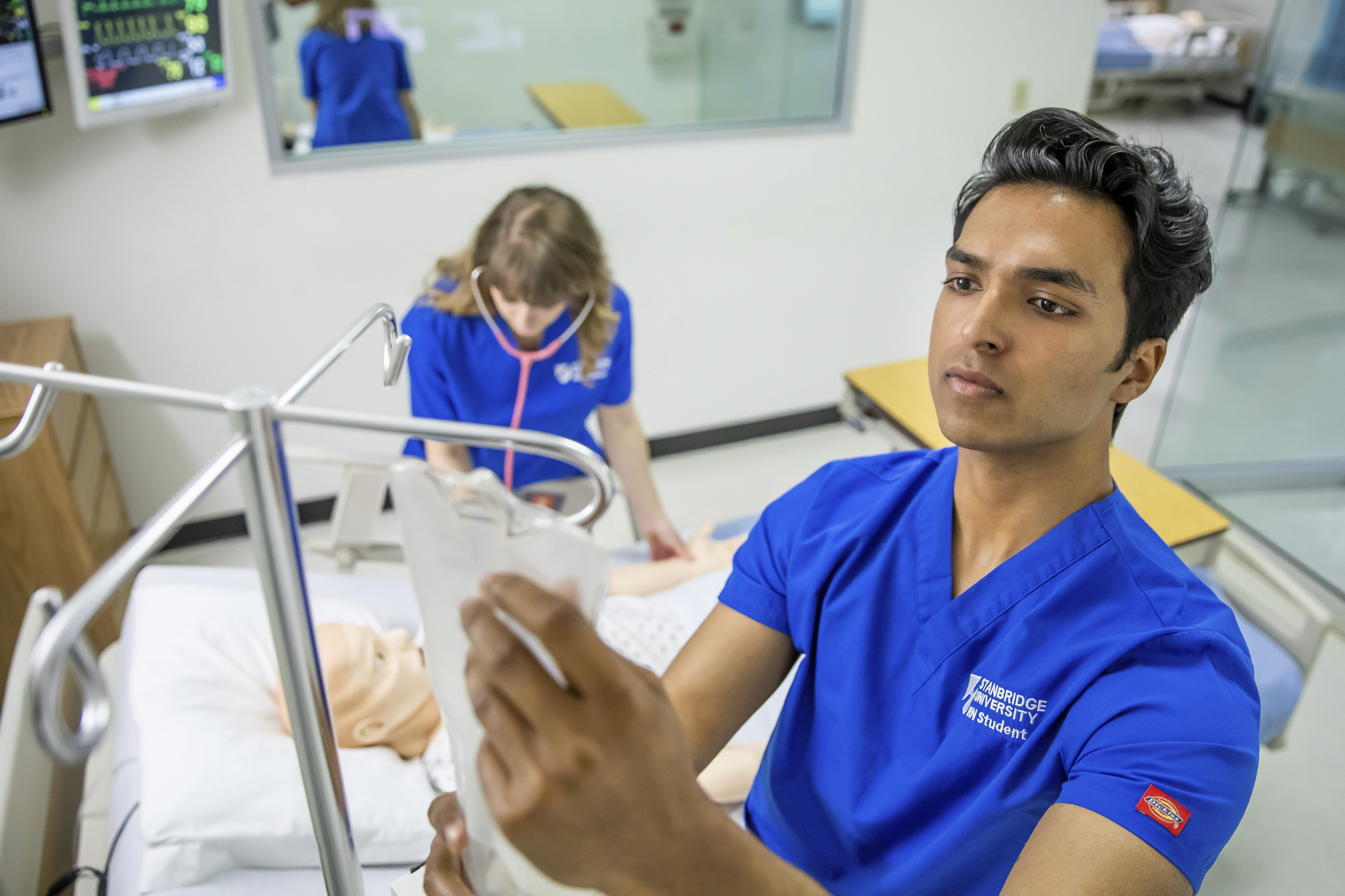
Nursing schools in California offer multiple pathways for individuals interested in healthcare. Reviewing program structure, requirements, and training components can help you make an informed decision.
Stanbridge University provides nursing programs designed to support the development of foundational knowledge and skills in a structured academic environment.
Frequently Asked Questions
California offers vocational, associate degree, bachelor’s degree, and master’s degree nursing programs.
Program timelines vary depending on the credential and enrollment status. The Stanbridge University LVN program is 106.5 quarter credit hours and takes approximately 17–19 months to complete for full-time students, and approximately 26–28 months to complete for part-time students. The BSN program is 180 quarter credit hours and takes approximately 36–37 months to complete for full-time students. The MSN-Ed program is 45 quarter credit hours and takes approximately 13-14 months to complete.2
Most programs include supervised clinical experiences as part of the curriculum.
Consider program type, accreditation, NCLEX pass rates, schedule, location, and learning format when evaluating options.
Footnotes
1Stanbridge University Nursing Programs, https://www.stanbridge.edu/programs#nursing
2Program duration subject to change. Completion times vary depending upon the start and end dates of a cohort and any individual circumstances that may impact progression.
3Source: California Board of Vocational Nursing and Psychiatric Technicians (BVNPT) and the National Council of State Boards of Nursing (NCSBN) Examinations Report 4 Rolling Quarter – Jurisdiction Program Summary of all First-Time Candidates Licensed in All Jurisdictions 01 Jan 2019 to 31 Dec 2023, Orange County campus only, NCLEX-PN. First-Time Candidates Licensed in All Jurisdictions 01 Jan 2019 to 31 Dec 2023, Los Angeles campus only, NCLEX-PN. https://www.bvnpt.ca.gov/pdf/vn_pass_rates.pdf. The Associate of Occupational Science in Vocational Nursing program at Riverside and San Diego campuses does not have current graduates yet and therefore, no annual licensure pass rates.
4Source: The California Board of Registered Nursing, NCLEX-RN pass rate, NCLEX-RN, Bachelor of Science in Nursing (BSN) program, 2023/2024; http://www.rn.ca.gov/education/passrates.shtml. As viewed on January 10, 2025. The program at the San Diego campus is pending BRN approval and does not have current graduates yet and therefore, no annual licensure pass rates.
5The MSN-Ed program is available at no cost to Stanbridge University Bachelor of Science in Nursing graduates who began their program on or after August 2024 and who enroll in the Master of Science in Nursing Education program beginning immediately after graduating and obtaining their NCLEX-RN licensure.