LVN Programs in California: Requirements, Timeline, and Career Guide
If you’re researching LVN programs in California, you’re likely looking for clear answers to:
- What are the requirements to become an LVN?
- How long does an LVN program take?
- What should you look for in a training program?
This guide explains the step-by-step process, timelines, and key considerations to help you move toward a career in vocational nursing.

What Is an LVN?
A Licensed Vocational Nurse provides basic nursing care under the supervision of registered nurses and physicians.¹
Typical responsibilities include:
- Monitoring patient vital signs
- Assisting with daily care needs
- Administering basic treatments
- Supporting clinical teams
LVNs work in a variety of healthcare settings, including long-term care facilities, clinics, and home healthcare environments.¹
LVN Programs in California: Requirements
To become an LVN in California, you must complete the following steps:
- Graduate from a state-approved vocational nursing program²
- Complete required clinical training hours²
- Pass the NCLEX-PN exam²
- Apply for licensure through the California Board of Vocational Nursing and Psychiatric Technicians²
These requirements ensure that LVNs are prepared to deliver safe, entry-level patient care.
To explore how these requirements are applied in a structured training environment, review the Stanbridge University Vocational Nursing program.
How Long Do LVN Programs Take?
The length of vocational nursing programs in California can vary depending on program structure and scheduling:
- Full-time programs typically take about 12 to 18 months³
- Part-time programs may take up to 24 months³
Program timelines generally include:
- Classroom instruction
- Skills lab training
- Supervised clinical experience
For program-specific details, including structure, scheduling, and curriculum, refer to the Stanbridge University Vocational Nursing program page.
What to Look for in an LVN Program
Choosing the right program can impact your readiness for licensure and employment.
- Hands-On Clinical Training
- Programs that include in-person clinical experience help prepare students for real patient care.
- Skills-Based Learning
- Simulation labs and practical exercises reinforce classroom learning.
- Structured Curriculum
- A clear progression of coursework supports skill development over time.
- Student Support
- Academic support services can help students stay on track throughout the program.
Career Outlook for LVNs in California
Vocational nurses remain an important part of the healthcare workforce.
LVNs may work in:
- Skilled nursing facilities
- Clinics
- Hospitals
- Home healthcare
This role can serve as a direct entry point into nursing and broader healthcare careers, with opportunities across multiple healthcare settings.¹
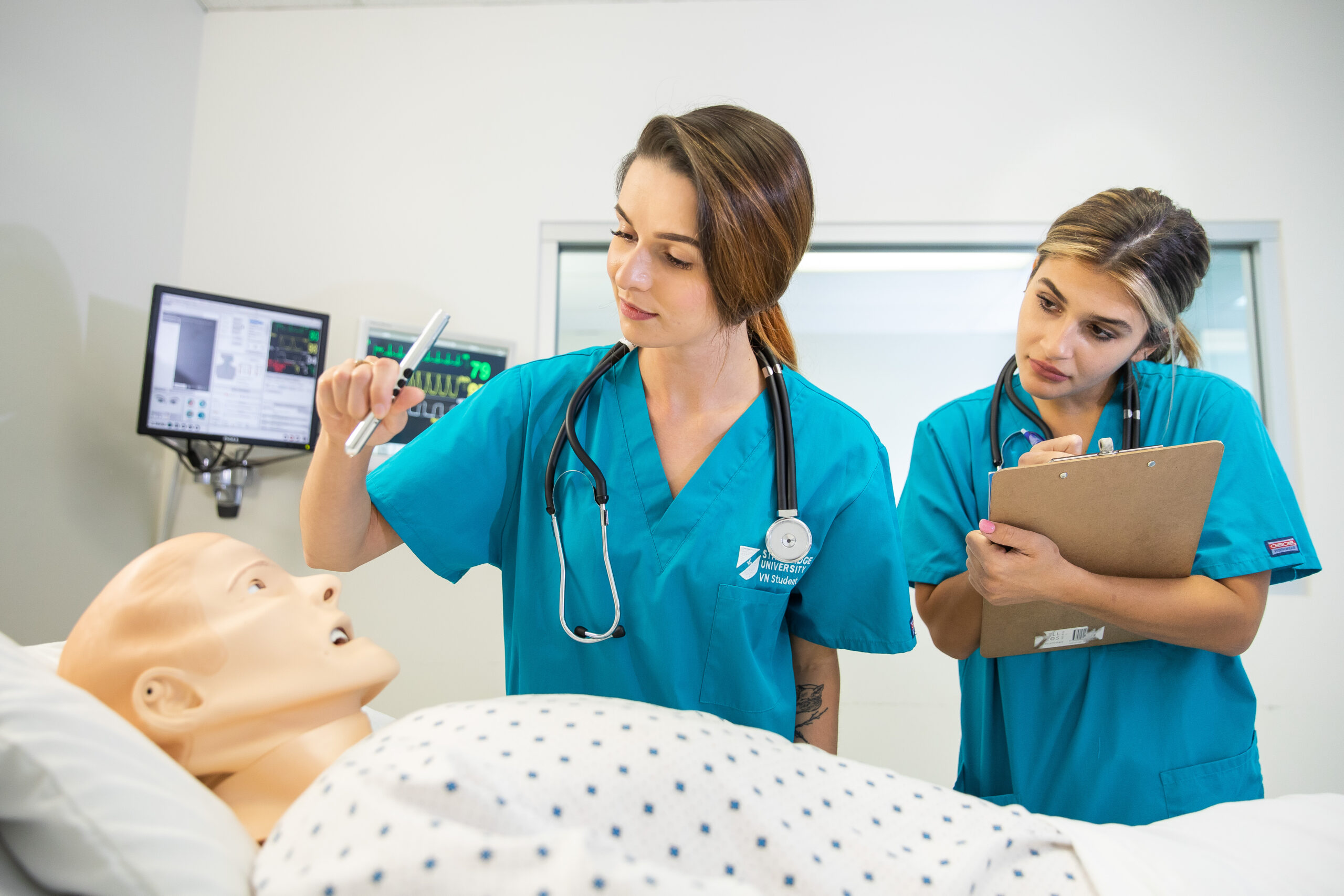
Advancing Beyond LVN: Continuing Your Nursing Education
Many students choose to continue their education after becoming an LVN, depending on their long-term career goals.
One common next step is pursuing a Bachelor of Science in Nursing (BSN), which can expand your scope of practice and prepare you for broader responsibilities in registered nursing, including patient assessment and care planning.
For those interested in advanced practice, leadership, or education, continuing to a Master of Science in Nursing (MSN) can provide additional training in areas such as leadership, administration, or advanced clinical concepts.
Each step along the nursing education pathway can build on prior experience and training. Exploring available options can help determine which path aligns with your professional goals.
For more information about nursing pathways, you can contact Stanbridge University.
Additional Resources
To better understand state requirements and program expectations, review:
- California Board of Vocational Nursing and Psychiatric Technicians (BVNPT)
- National Council of State Boards of Nursing (NCSBN) for NCLEX-PN information
- Approved Vocational Nursing Programs
- California Vocational Nursing Program Licensure Examination Pass Rates
- LVN Program Overview by Practical Nursing
These resources provide additional context when evaluating your options.
Start Your Path in Vocational Nursing
Understanding LVN program requirements in California is an important first step toward entering the healthcare field.
With the right training, you can develop the skills needed to support patients and healthcare teams in a variety of settings.
Explore Stanbridge University nursing programs:
Request more information or speak with an admissions representative:
Contact Stanbridge University
You must complete a state-approved vocational nursing program, complete clinical hours, pass the NCLEX-PN exam, and apply for licensure through the BVNPT.
Most LVN programs take 12 to 18 months full-time or up to 24 months part-time, depending on the program structure.³
You can verify approved programs through the BVNPT.
You can review California pass rate data here: https://www.bvnpt.ca.gov/education/vn_stats.shtml
LVNs provide basic patient care under supervision, while registered nurses have a broader scope of practice.¹
Yes, approved vocational nursing programs include hands-on clinical experience as part of training requirements.²
LVNs may work in long-term care, clinics, hospitals, and home healthcare settings.¹
You can review official resources from the BVNPT.
Sources and Disclosures
¹ U.S. Bureau of Labor Statistics and O*NET OnLine
https://www.bls.gov/ooh/healthcare/licensed-practical-and-licensed-vocational-nurses.htm
https://www.onetonline.org/
² California Board of Vocational Nursing and Psychiatric Technicians
https://www.bvnpt.ca.gov/
³ Stanbridge University Vocational Nursing Program
https://www.stanbridge.edu/program/vn
Program duration is subject to change, and completion times may vary based on cohort start and end dates and individual circumstances that may impact progression. Program schedules are also subject to change.