A Day in the Life of a PTA Student
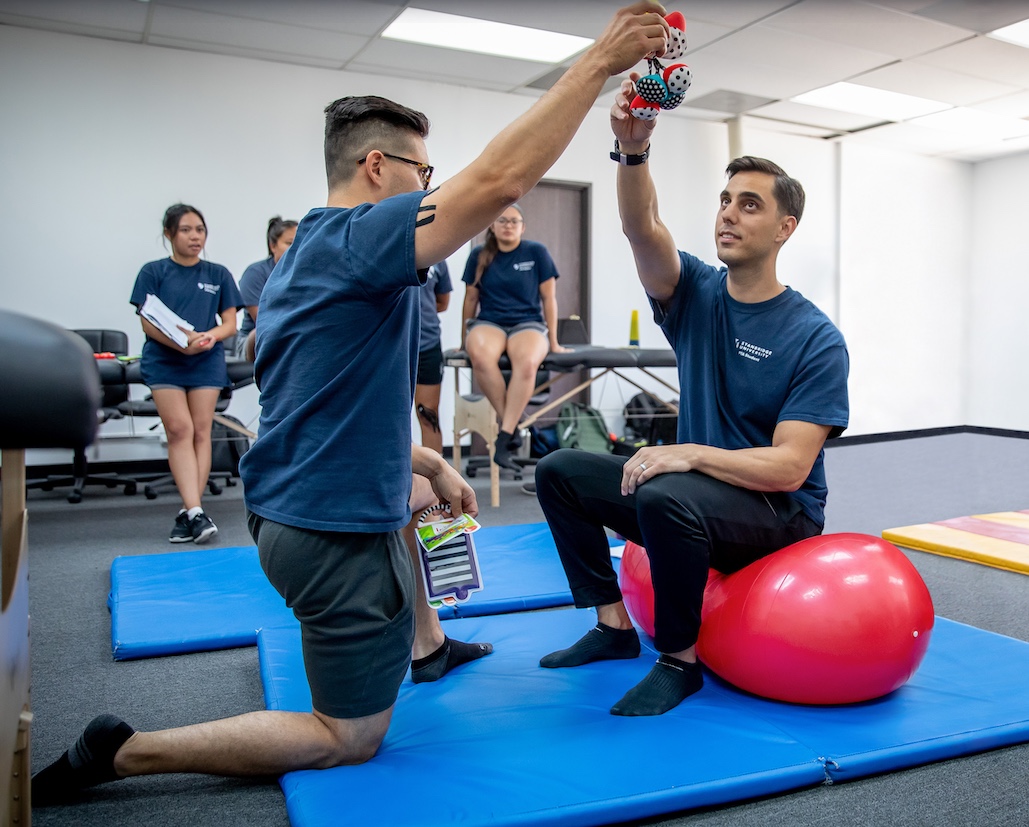
Quick Overview
- A PTA student day in the life includes lectures, hands-on labs, and structured study time.
- Students typically attend classes four to five days per week, with labs reinforcing classroom learning.
- Anatomy and physiology courses are rigorous but foundational for safe patient care.
- Students with prior college coursework can ask about transfer credit for select general education courses.
- Clinical rotations begin later in the program and may include full-time placements of up to 40 hours per week.
One of the ways to prepare mentally for a career is to get a clear picture of what a day in the role is like. If you are considering a career in physical therapy, you may be wondering what a day in the life of a PTA student actually involves.
Students in the Associate of Science in Physical Therapist Assistant degree program follow a structured academic schedule that blends classroom learning, laboratory practice, and progressive clinical preparation. Each component plays a distinct role in helping students develop the technical knowledge and professional behaviors required for patient care.
Understanding the physical therapist assistant school schedule can help you prepare mentally and practically for the demands of training. From anatomy and clinical labs to supervised clinical education, each day builds upon the last. This progression is designed to support steady skill development while preparing Stanbridge University students for licensure and professional practice.
What Does a Typical Day Look Like for a PTA Student?
A typical day often begins with a lecture session focused on core subjects such as anatomy, physiology, therapeutic exercise, or documentation. These sessions provide the scientific foundation behind every intervention a PTA performs.
Later in the day or week, students may transition into the lab. During lab sessions, they apply what they learned in class. They practice safe patient transfers, joint measurements, therapeutic exercises, and communication techniques. Lab time reinforces safety, accuracy, and clinical reasoning.
Inside the Classroom: The Academic Foundation
A typical day in the PTA program often starts with foundational coursework. While Stanbridge does not require prerequisite classes, students in the Associate of Science in Physical Therapist Assistant degree program complete general education, science, and PTA-specific coursework as part of the curriculum. Students who have completed prior college coursework can ask whether select general education classes may be reviewed for transfer credit.
In the early terms, students build a foundation in anatomy, physiology, communication, behavioral science, and introductory PTA coursework. Depending on approved transfer credit, some general education requirements may already be satisfied. Mornings might include learning muscle origins and insertions in anatomy, while afternoons or other days focus on building professional communication skills that will be essential in clinical settings.
This early focus on anatomy and movement science builds a strong foundation for advanced courses such as therapeutic exercise, orthopedic, and neurological interventions later in the program.
Classes are typically scheduled four to five days per week, often beginning around 8:00 AM PT and running up to 7.5 hours per day, creating a structured routine that mirrors the pace of real healthcare environments.
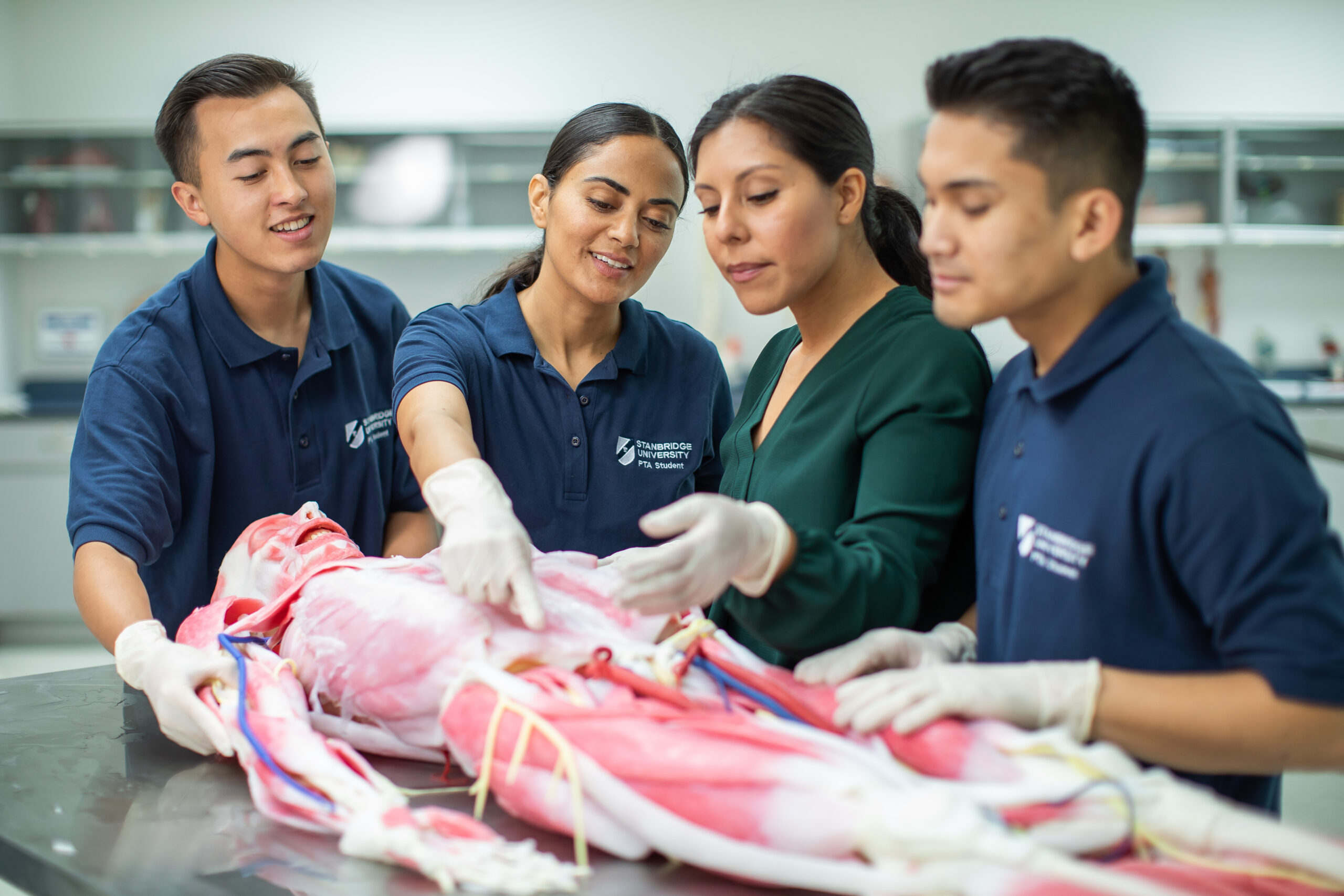
PTA Clinical Lab: Learning Through Practice
The PTA clinical lab is where theory becomes application. Students learn to identify muscle groups, analyze movement patterns, and measure joint range of motion using tools such as goniometers.
Anatomy and physiology can be challenging because they require both memorization and application. However, repetition in the lab, guided faculty instruction, and collaborative practice help reinforce learning. These courses are essential because accurate movement analysis directly affects patient safety and treatment outcomes.
You’ll also need to master essential soft skills during training. Strong communication is essential for patient safety and collaboration. Learn more in our article on three key communication skills for PTAs.
How Much Time Do PTA Students Spend in Lab Versus Classroom Each Week?
In most terms, students divide their week between didactic instruction and lab practice. While exact hours vary by term, lab sessions commonly follow lecture days so students can immediately apply new concepts.
As the program progresses, clinical practicum hours increase. In Term 5, clinical education is commonly scheduled for four weeks, up to 40 hours per week. In Terms 7 and 8, students will complete two six-week clinical affiliations, also up to 40 hours per week. Clinical site schedules may vary depending on availability and facility requirements.
PTA Clinical Preparation
Clinical preparation begins well before students enter healthcare facilities. PTA clinical preparation includes skills check-offs, documentation training, and professional communication practice.
Students learn how to record patient responses accurately and report findings to supervising physical therapists. They also practice patient interaction scenarios that help them build confidence when working with individuals who may be recovering from injury, surgery, or chronic conditions.
When Do PTA Students Usually Begin Clinical Rotations?
Clinical rotations typically begin in the later stages of the program. Structured clinical experiences at Stanbridge University begin in Term 5, followed by extended affiliations in Terms 7 and 8. These placements allow students to apply classroom knowledge in supervised healthcare settings.
Looking forward to the future? Explore 10 careers you can pursue with a PTA degree.
Preparing for a PTA Career at Stanbridge University
The Associate of Science in Physical Therapist Assistant program at Stanbridge University is offered at the Orange County and Los Angeles campuses. The program consists of 122 quarter credit hours and takes approximately 20–21 months to complete.1 Completion times vary depending on cohort scheduling and individual progression.
The program is accredited by the Commission on Accreditation in Physical Therapy Education (CAPTE).² Stanbridge University is institutionally accredited by the Accrediting Commission of Career Schools and Colleges (ACCSC).3
Graduates are eligible to sit for the National Physical Therapy Examination (NPTE) for PTAs. According to reported data for 2024 graduates, the NPTE ultimate pass rate for Stanbridge University graduates was 100%.⁴ Individual results vary. These results reflect the program’s academic structure and exam preparation resources.
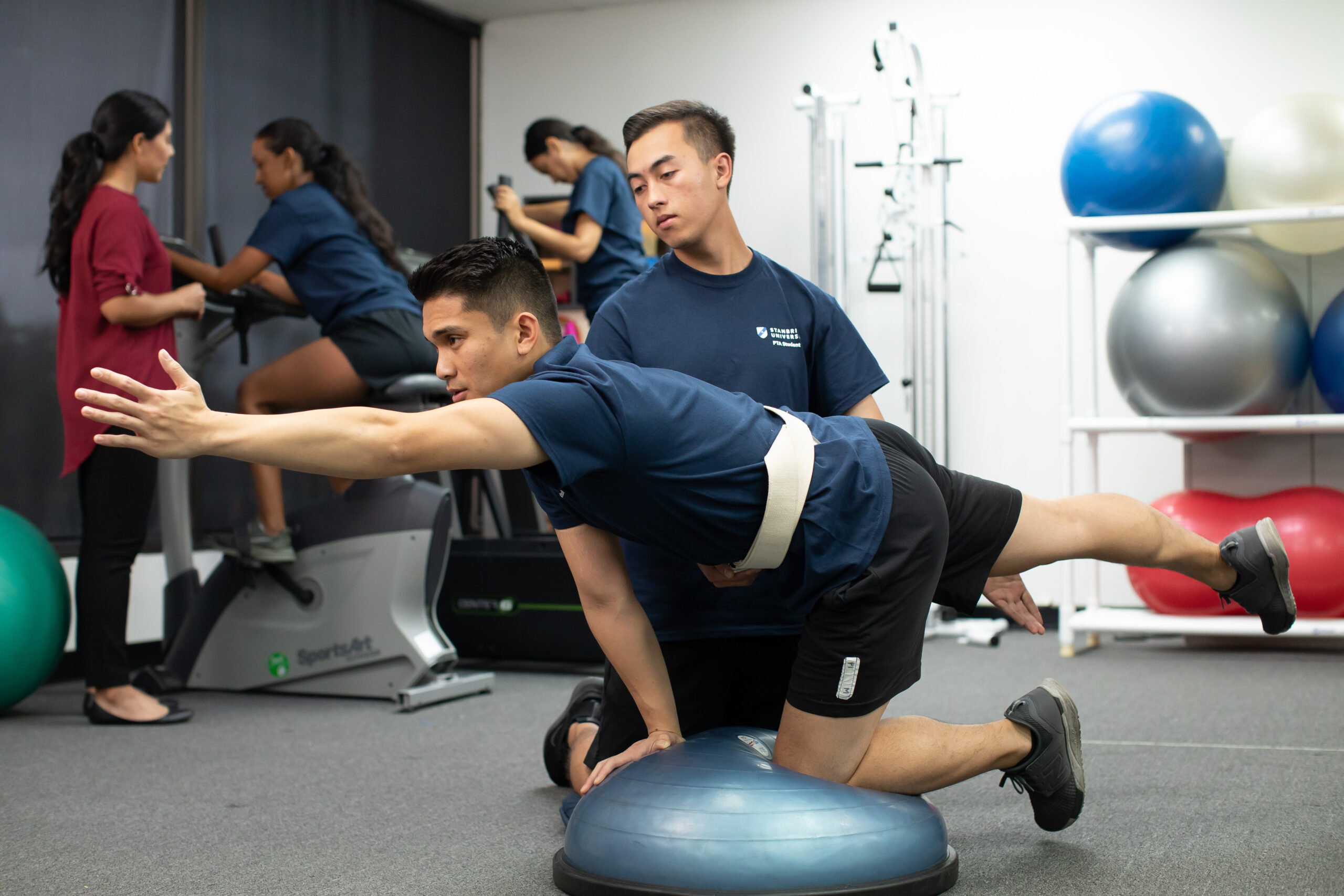
Stanbridge University Recognition
Stanbridge University offers healthcare degree programs across its Southern California campuses in Irvine, Alhambra, Riverside, and San Marcos. The university has been recognized for both academic excellence and workplace culture, including recognition in the 2025 Carnegie Classifications as an Opportunity College and in Research.com’s 2024 Best Healthcare Degree Programs in America.
Stanbridge University’s Orange County campus earned the 2024–2025 ACCSC School of Excellence Award, and in 2025, Georgetown University’s Center on Education and the Workforce ranked Stanbridge among the top 5% of U.S. colleges for 10-year return on investment, based on earnings and tuition data from qualifying programs. Stanbridge is accredited by Investors in People (London) and certified as a Great Place to Work.
Complete award listings and sources are available on the Stanbridge University awards page.
Begin Your PTA Journey
A say in the life of a PTA student is structured, demanding, and purposeful. Each lecture, lab session, and clinical experience contributes to professional development.
If you are exploring a career supporting patient recovery and mobility, please visit the program page to learn more about the Physical Therapist Assistant program at Stanbridge University. You may also schedule a meeting with an admissions representative to discuss your goals and determine whether this path aligns with your plans.
Have prior college credits? Ask Admissions about PTA transfer credit options.
Financial aid is available for those who qualify.
FAQs
What does a typical day look like for a PTA student?
A typical day includes lecture sessions in foundational subjects and hands-on lab practice where students apply therapeutic techniques and patient handling skills.
How much time do PTA students spend in the lab versus the classroom each week?
Students commonly attend classes four to five days per week, with both lecture and lab components. Clinical rotations later in the program may require up to 40 hours per week.
Do you need prerequisite courses before starting a PTA program?
No. Stanbridge does not require prerequisite coursework. The PTA curriculum includes general education, foundational science, and PTA-specific classes. Students with prior college coursework may ask whether select general education courses can be reviewed for transfer credit.
How challenging are anatomy and physiology courses in a PTA program?
These courses are academically rigorous because they require detailed knowledge of body mechanics and movement analysis. Lab repetition and guided instruction help reinforce learning.
When do PTA students usually begin clinical rotations?
Clinical rotations typically begin in the later terms of the program, with structured placements starting around Term 5.
Can prior college coursework apply to the PTA program?
Some prior college coursework may be reviewed for transfer credit in the PTA program. Students should speak with an Admissions Representative to learn which general education courses may qualify.
References
¹ Program duration and schedule subject to change. Completion times vary depending on the start and end dates of a cohort and any individual circumstances that may impact progression.
² Source: Commission on Accreditation in Physical Therapy Education (CAPTE), Accredited Physical Therapist Assistant Programs. https://www.capteonline.org. As viewed on December 10, 2025
³ Source: Accrediting Commission of Career Schools and Colleges (ACCSC), Accreditation Information. www.accsc.org. As viewed on November 5, 2024
⁴Source: NPTE for PTA Ultimate Pass Rate for Graduates, 2018/2019–2022/2023, Orange County and Los Angeles campuses; Federation of State Boards of Physical Therapy, Basic Pass Rate Report. As viewed on December 10, 2024