A Day in the Life of an OTA Student at Stanbridge University
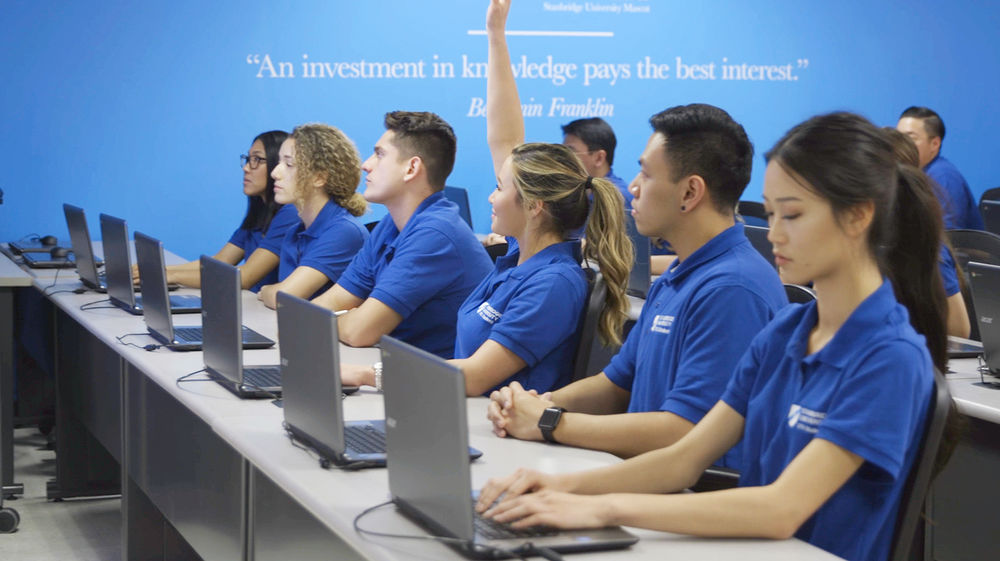
A Basic Overview: A Day in the Life of an OTA Student: Inside Stanbridge University’s Schedule
- OTA students follow a structured occupational therapy assistant school schedule that balances lectures, labs, and independent study.
- Coursework focuses on foundational knowledge, clinical reasoning, and professional skills needed for OTA fieldwork preparation.
- Skills labs and simulations are integrated throughout the program to reinforce classroom learning.
- Level I fieldwork begins earlier in the program, while Level II fieldwork provides immersive clinical experience later on.
- Stanbridge University’s OTA program is ACOTE-accredited and offered at the Orange County and Los Angeles campuses.1
- Students are supported through academic advising, faculty guidance, and career-focused student services.
Pursuing a career in occupational therapy begins long before graduation. For students enrolled in an Occupational Therapy Assistant (OTA) program, each day is structured to build both academic understanding and practical competence. From classroom learning to skills labs and fieldwork preparation, the experience is intentionally designed to support steady professional growth.
Understanding what a typical day looks like can help prospective students set realistic expectations. The occupational therapy assistant school schedule at Stanbridge University balances coursework, practice, and experiential learning, allowing students to gradually develop the knowledge, confidence, and organizational skills required for clinical practice.
What Does a Typical Day Look Like for an OTA Student?
A typical day for an OTA student varies depending on the term, course sequence, and delivery format. During early terms, most days focus on didactic coursework such as occupational therapy foundations, medical terminology, lifespan development, and movement anatomy. These courses are delivered through on-ground, online, or blended learning environments, depending on the term and course structure.
Class meetings commonly occur between four and five days per week, with scheduled instructional time often beginning in the morning and concluding in the afternoon. Coursework emphasizes clinical reasoning, documentation, communication skills, and understanding patient populations across the lifespan. As students progress through the program, their schedules increasingly integrate lab courses and fieldwork components alongside academic instruction.
Learning Through Skills Labs and Simulations
Students regularly participate in laboratory-based courses designed to reinforce classroom concepts through practical application. OTA lab courses are embedded throughout the program and provide structured opportunities to practice intervention techniques, therapeutic activities, and professional skills in a controlled environment.
Labs are held on campus and focus on skill development related to physical dysfunction, psychosocial practice, pediatrics, and documentation. These experiences support OTA fieldwork preparation by allowing students to demonstrate competencies, receive faculty feedback, refine techniques, and develop key OTA traits before entering clinical settings. Simulation-based activities are incorporated to help students apply theoretical knowledge while developing confidence in professional decision-making.

When Do OTA Students Begin Level I and Level II Fieldwork?
Fieldwork is a required component of occupational therapy assistant education and is sequenced to align with students’ academic progression. OTA students begin Level I fieldwork after completing foundational coursework. Level I fieldwork experiences are shorter in duration and are designed to introduce students to clinical environments while reinforcing classroom learning.
Level II fieldwork occurs later in the program and consists of extended, full-time clinical placements. Students complete two Level II fieldwork rotations, each requiring full-time participation under supervision at approved facilities. These experiences allow students to apply occupational therapy knowledge, develop professional behaviors, and demonstrate entry-level clinical proficiency. Successful completion of required fieldwork is necessary for program completion and eligibility to sit for the national certification examination administered by the National Board for Certification in Occupational Therapy.
Would you like to know more about the intricacies of the OTA role? Here’s a detailed look at what OTAs really do.
Balancing Coursework With Fieldwork Preparation
Balancing coursework with fieldwork requires time management, organization, and consistent engagement. During terms that include fieldwork, students are expected to prioritize clinical schedules, which typically follow the operating hours of the assigned facility. Coursework during these terms is structured to complement fieldwork responsibilities and may include asynchronous assignments or reduced on-campus class hours.
Faculty and academic support resources help students plan effectively and understand expectations throughout each phase of the program. The occupational therapy assistant school schedule is designed to support progression by sequencing academic, lab, and clinical components in a structured manner. Students are encouraged to plan, communicate proactively, and maintain compliance with attendance, health, and documentation requirements to remain on track.

Preparing for an OTA Career at Stanbridge University
The Associate of Occupational Science in Occupational Therapy Assistant program at Stanbridge University is offered at the Orange County and Los Angeles campuses. The program is accredited by the Accreditation Council for Occupational Therapy Education (ACOTE®) of the American Occupational Therapy Association, ensuring alignment with national educational standards.¹ Stanbridge University is also institutionally accredited by the Accrediting Commission of Career Schools and Colleges (ACCSC).²
The program is designed to be completed in approximately 22–23 months, including required fieldwork.³ Graduates are eligible to apply for the NBCOT® Certified Occupational Therapy Assistant (COTA®) examination, subject to meeting certification and state licensure requirements.
Recent outcomes show that OTA graduates from Stanbridge University achieved an 83% NBCOT pass rate in 2024 across the Orange County and Los Angeles campuses.⁴ These results reflect the program’s structured approach to academic preparation and supervised clinical education.
Stanbridge University Recognition
Stanbridge University offers healthcare degree programs across its Southern California campuses in Irvine, Alhambra, Riverside, and San Marcos. The university has been recognized for both academic excellence and workplace culture, including recognition in the 2025 Carnegie Classifications as an Opportunity College and in Research.com’s 2024 Best Healthcare Degree Programs in America.
Stanbridge University’s Orange County campus earned the 2024–2025 ACCSC School of Excellence Award, and in 2025, Georgetown University’s Center on Education and the Workforce ranked Stanbridge among the top 5% of U.S. colleges for 10-year return on investment, based on earnings and tuition data from qualifying programs. Stanbridge is accredited by Investors in People (London) and certified as a Great Place to Work.
Complete award listings and sources are available at stanbridge.edu/awards.
Your OTA Journey Starts With Support
Understanding the occupational therapy assistant school schedule helps clarify how OTA students move through coursework, lab experiences, and clinical fieldwork over time. Each phase of the program is structured to support learning without overwhelming students, allowing academic responsibilities and OTA fieldwork preparation to develop side by side. Together, these experiences reflect the rhythm of OTA education at Stanbridge University and the commitment required throughout the program journey.
Beyond academics, Stanbridge University offers a range of student support services designed to guide learners throughout their OTA journey. These include academic advising, faculty mentoring, tutoring resources, and career services support. Together, these services help students navigate program expectations and prepare for the transition into professional practice.
If you are considering a career that focuses on helping individuals improve daily function and quality of life, learning more about Stanbridge University’s Occupational Therapy Assistant program is a meaningful next step.
Explore the program page to understand the curriculum, fieldwork structure, and campus locations, or schedule a meeting with the admissions team to discuss how the OTA program may align with your academic and professional goals.
FAQs
Q: What does a typical day look like for an OTA student?
A: A typical day for an OTA student varies depending on the term, course sequence, and delivery format. During early terms, most days focus on didactic coursework such as occupational therapy foundations, medical terminology, lifespan development, and movement anatomy.
Q: How often do OTA students participate in labs?
A: Labs and simulations are integrated throughout the program to reinforce coursework and clinical skills.
Q: When does OTA fieldwork begin?
A: Level I fieldwork occurs earlier in the program, while Level II fieldwork takes place later and involves immersive clinical experiences.³
Q: How do students balance coursework and fieldwork hours?
A: Time management, structured coursework, and faculty guidance help students manage academic and fieldwork responsibilities effectively.
Q: Is the OTA program accredited?
A: Yes. The Occupational Therapy Assistant program at Stanbridge University is accredited by the Accreditation Council for Occupational Therapy Education (ACOTE®), ensuring the curriculum meets national educational standards required for professional practice.¹
References
¹ Source: Accreditation Council for Occupational Therapy Education (ACOTE®), Accredited Occupational Therapy Assistant Programs. https://acoteonline.org. As viewed on December 22, 2025.
² Source: Accrediting Commission of Career Schools and Colleges (ACCSC), Accreditation Information. www.accsc.org. As viewed on December 22, 2025.
³ Program duration subject to change. Completion times vary depending on the start and end dates of a cohort and individual student progression.
⁴ Source: National Board for Certification in Occupational Therapy (NBCOT), NBCOT-COTA® School Performance Data, 2024, Orange County and Los Angeles campuses. https://www.nbcot.org. As viewed on December 22, 2025.